The other day, Gideon went off to meet up with an old friend who is from Santiago, Chile. Sarah and I, having been eating rather monotonously a home, went to lunch at a vegetarian restaurant. After a fifteen-minute walk through attractively bustling streets (we very much like the parts of Santiago we have seen), in the pleasantly dry heat, 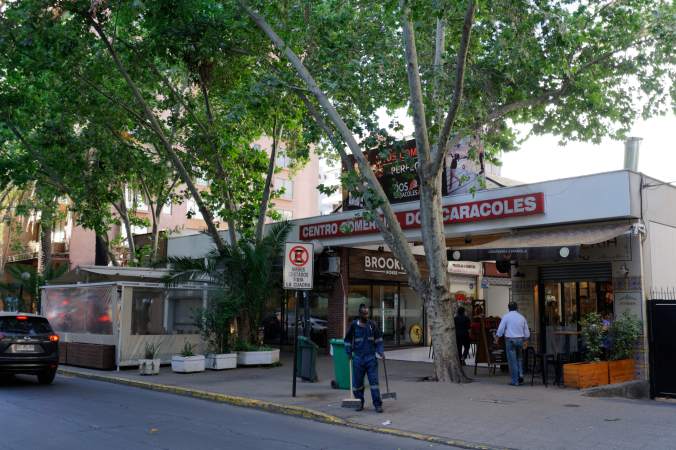
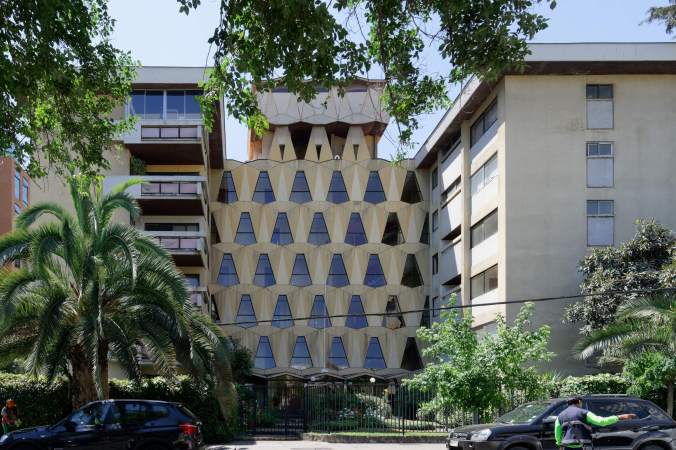 we nabbed the restaurant’s one free sidewalk table. It was a two person, small, square, wood-topped pedestal, separated from its neighbor to the side by just enough inches for us to feel we were at a private table, but not too many inches as not to afford natural-feeling, inter-table conversation.
 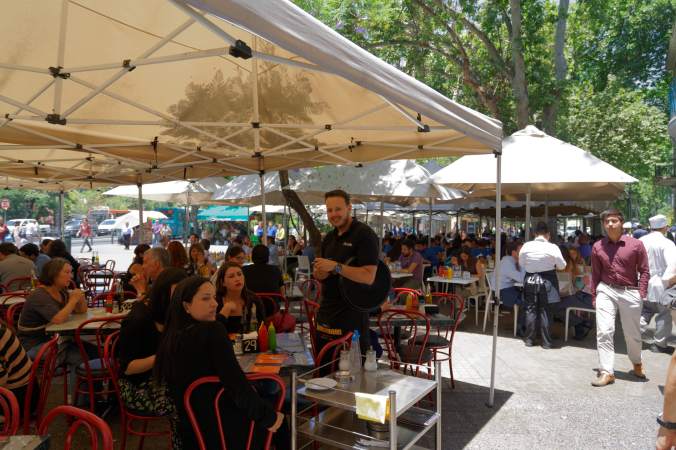 A kind of perfect placement, if conversational options are your eating-taste. Friendly, as we are, we struck up a conversation with our neighbor, which he actually initiated more than we did, which lasted an hour-and-a-half or more of our leisurely lunch of one-course plus coffee. Travelers, it should be a truism, are more likely to converse with strangers than non-travelers are. After all, travelers are underway for adventure and newness and discovery, and their world of available family and friends and colleagues and acquaintances has radically shrunk, so what better way to seek out the new and to fill in the social void than by talking with people seated nearby in cafes, particularly when they turn out also to be travelers and therefore of a similar conversational positioning?
Our neighbor Ash is an aerospace engineer from the UK, working to design the interiors of the sky-high airplane cabins of which we have caught only walk-through-glimpses during our current travels. 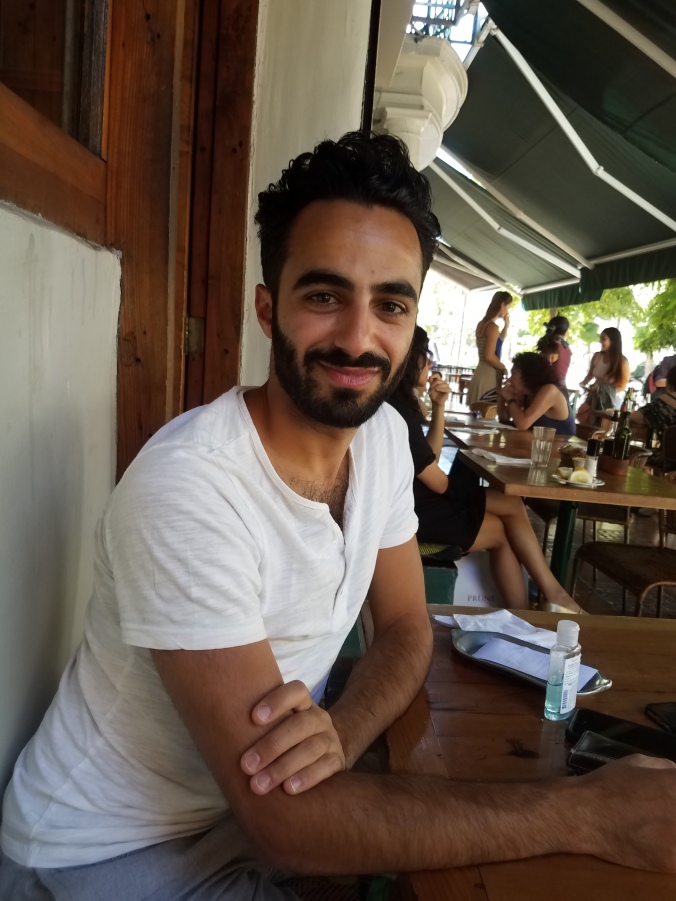 We learned a bunch about his business and saw cell phone photos of the recently unveiled super-first-class 70th anniversary cabins on Singapore Airlines, the production of which (if I understood correctly) he oversaw. We told him that the Boeing 787, called Dreamliner, has, with its better air, quieter interior, expanded overhead clearance, and improved lighting, made our travels notably more pleasant. Beyond the what-do-you-do conversations, which were more extensive and substantive than is usual in such casual encounters, our good-natured exchanges included Iran, as Ash is of Iranian descent, the UK, Brexit, world order, high-tech education, Israel, Jerusalem, and, all but unavoidably, Trump. He told us that he can’t go to the US as he’s subject to the US travel ban. This is so even though he’s a UK citizen and even though he’s through-and-through British, as he was born there. Because he holds dual nationality with Iran, he’s Verboten-fruit.
The conversation, which was fully two ways (us<->him) was lively and respectful throughout. Ash is intelligent, open, and curious. We parted with good cheer and an exchange of contact information (and he received this blog’s address).
I recount this not because the episode was remarkable (such as coursing the Serengeti or visiting a township in South Africa) or because we developed with him a dense and potentially ongoing relationship (as we did with Zadock and with Kevin) but because it wasn’t. Much of traveling consists of non-remarkable moments, events, encounters, which may be thoroughly enjoyable (this was) but which doesn’t rise to guide-book worthiness. I could have just as easily written about the woman whose Airbnb we were renting, as she, a Chilean architect, spent considerable time speaking with Sarah about Sarah’s recent book (which she had begun to read, loved, and said it has finally given her a way to conceptualize and articulate what she does in her work), and about her own architecture, showing Sarah images. She exuded warmth and passion while we sat speaking at the dining table of her Airbnb which — true to her architectural ethos of creating what Sarah champions, “enriching environments” — she had renovated.
Ash came off as an entirely likeable, indeed a lovely, person. Our time with him and so many other incidental people help structure, populate, and enliven our travels and our memories of specific places and moments, as we spend all this time away from our family and friends.
— Danny
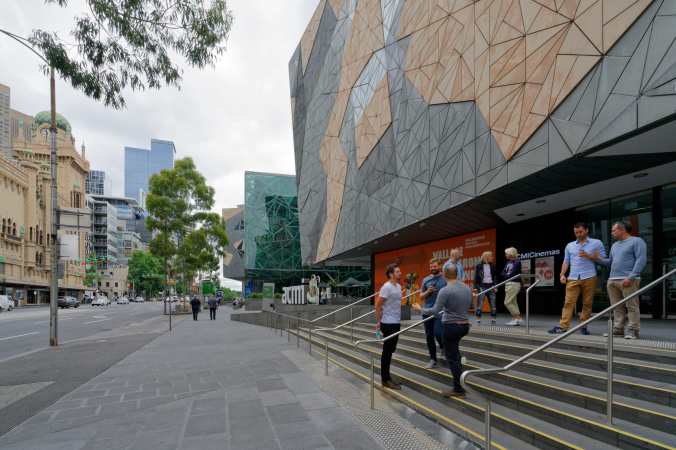 Comprised of a series of buildings, each a slightly different but equally horrible bastardization of some also-horrible Daniel Liebeskind-ish idea (he was on the jury that chose the principal designers), Federation Square nevertheless contains many deep pockets of agreeable urbanity, woven into the eye-smarting silliness of its architecture.
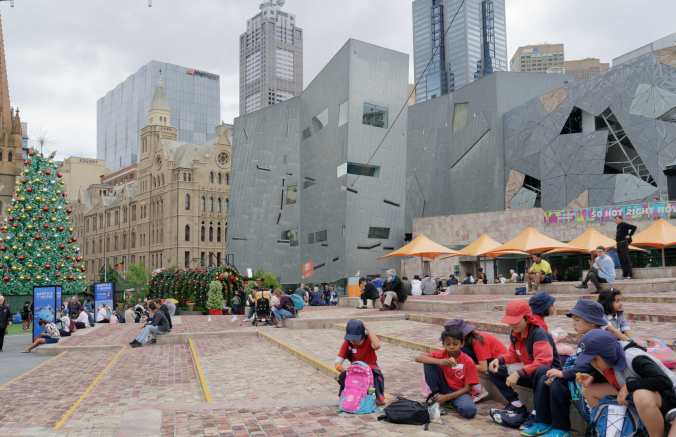 In front of the Christmas tree, we spotted a woman swathed in hajib posing with her daughter for a picture. Later, discussing the ways Australia’s changed in the past two decades, a remarkably voluble Uber driver — who once worked as an advocate for occupational health and safety in the mining industry — told us that the country’s welcoming immigration policies has created a far more tolerant, open society than the one in which he was raised.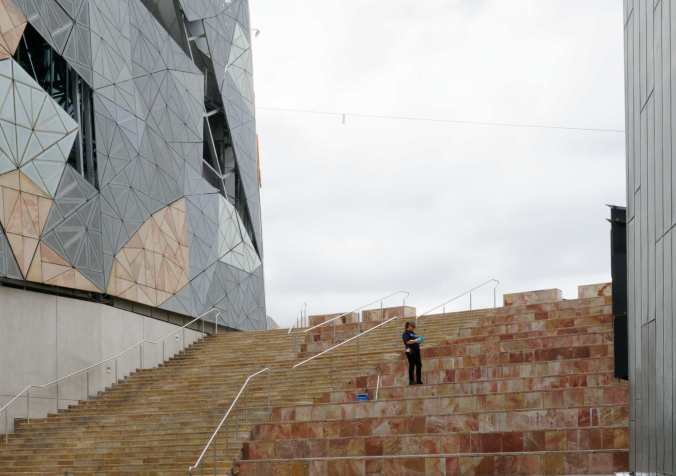
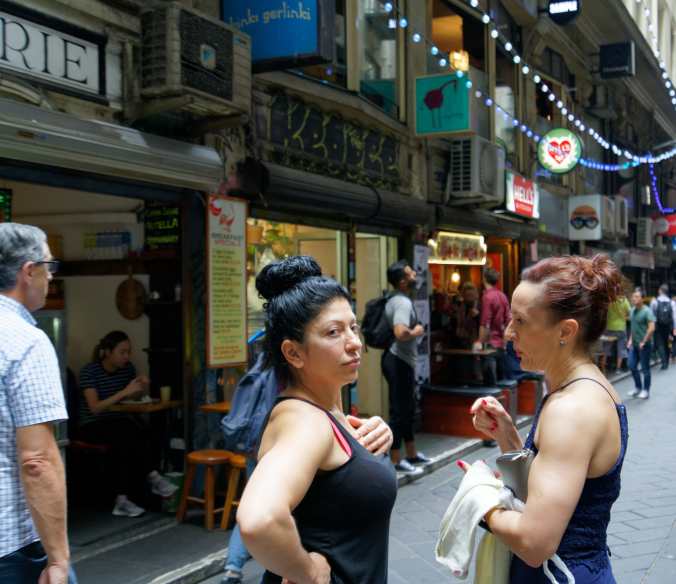
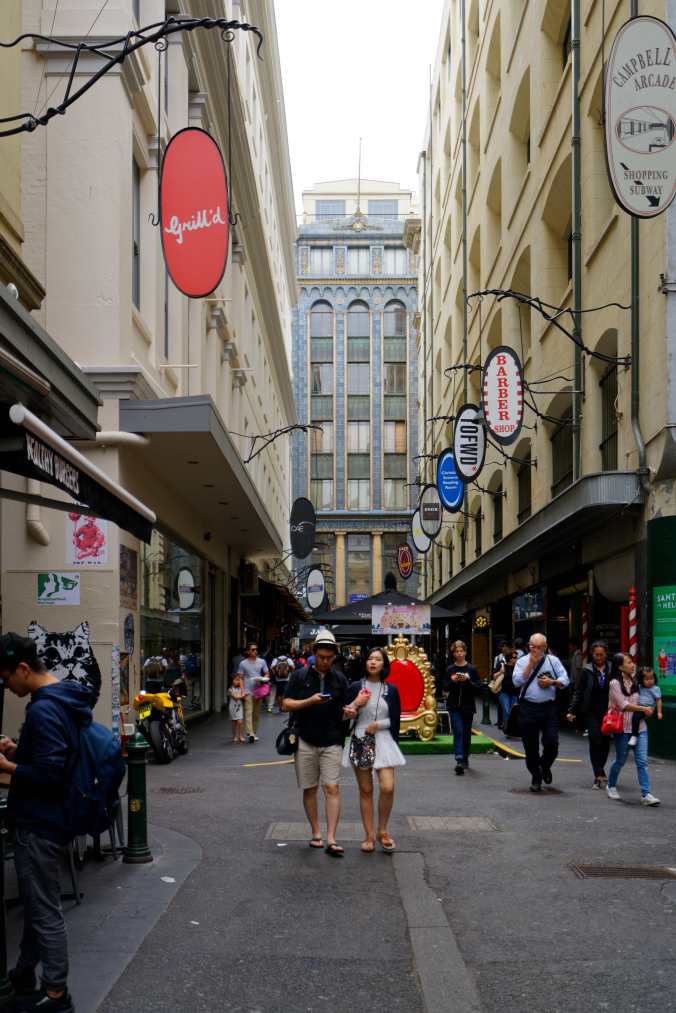 The most clever thing Gehl did was to link together a series of unprepossessing back alleys and reconfigure their street-level frontage to admit teeny-tiny storefronts, just the right size to create arrays of specialized restaurants and shops.
 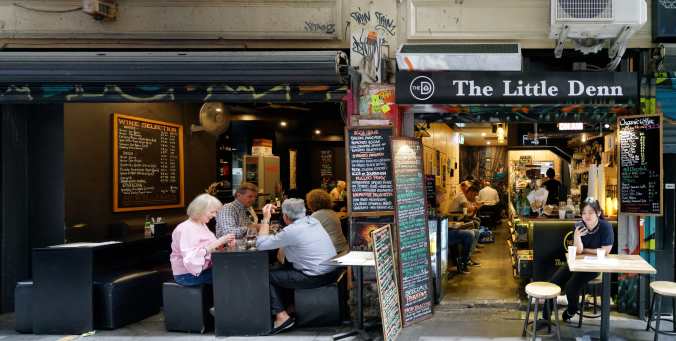 These new open-air pedestrian malls were threaded into the pathways of two preexisting historic shopping arcades; this one, below, even more exquisite than the photo conveys, opened in 1870.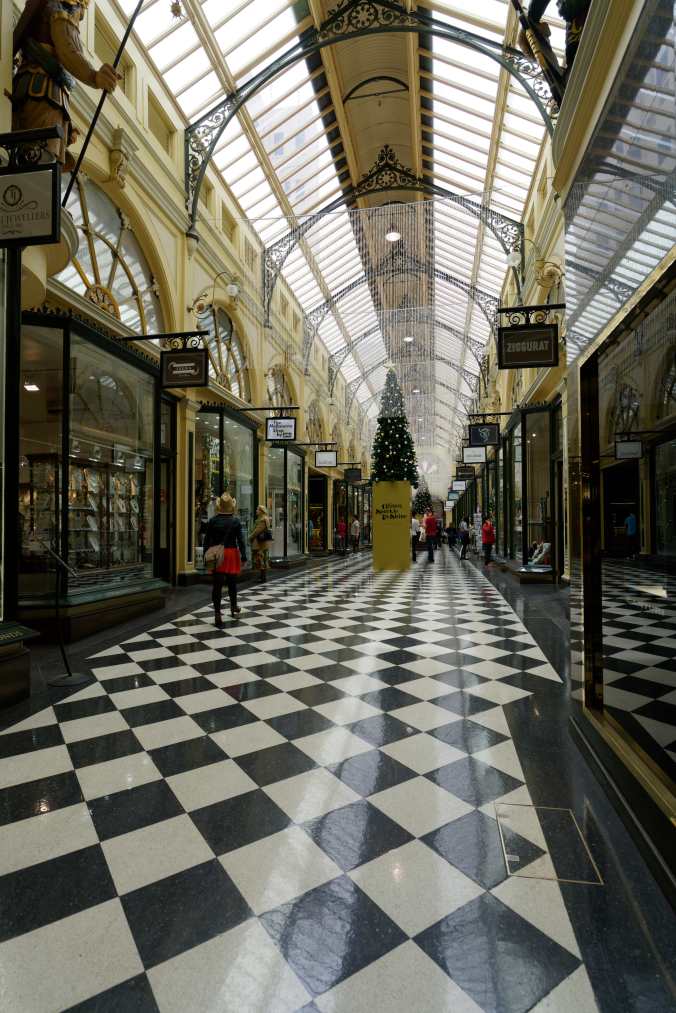
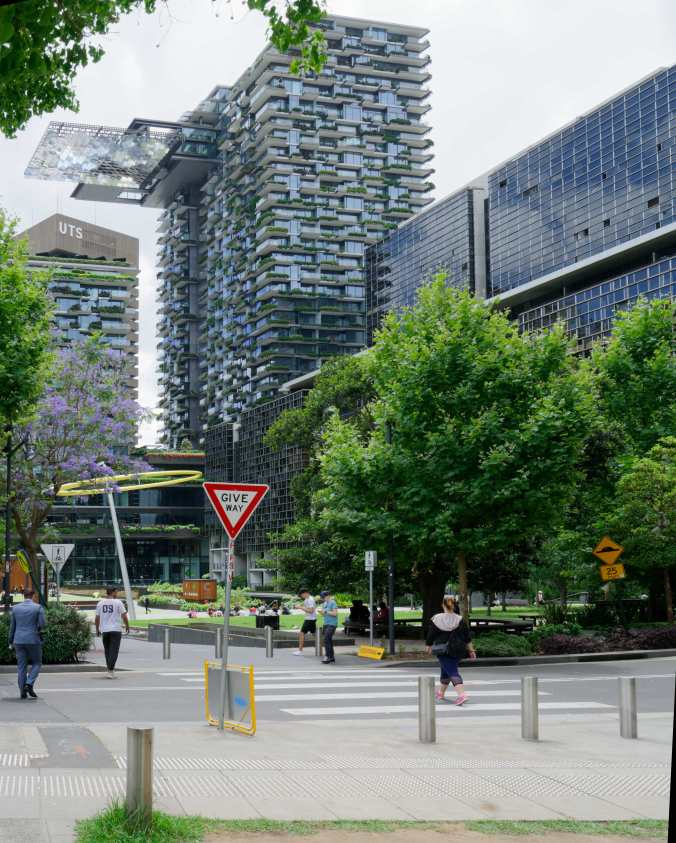
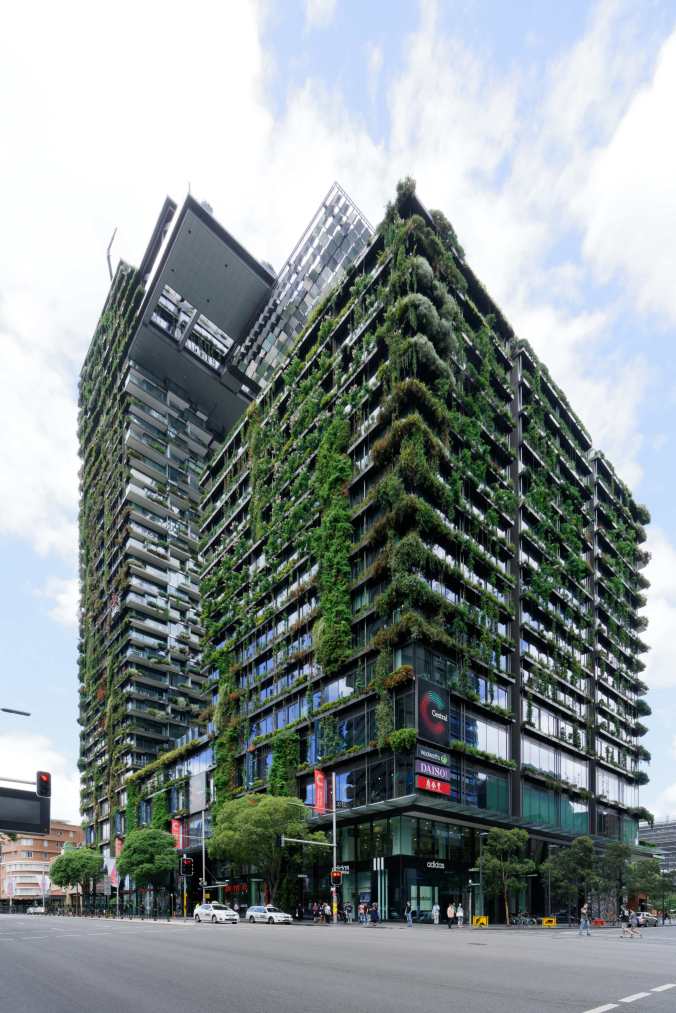
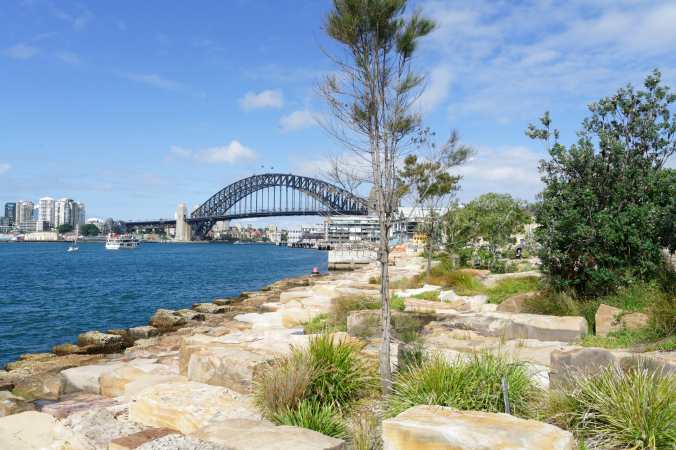
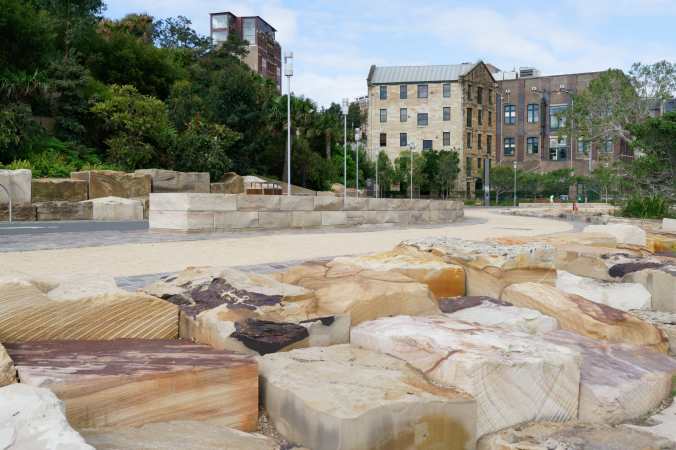
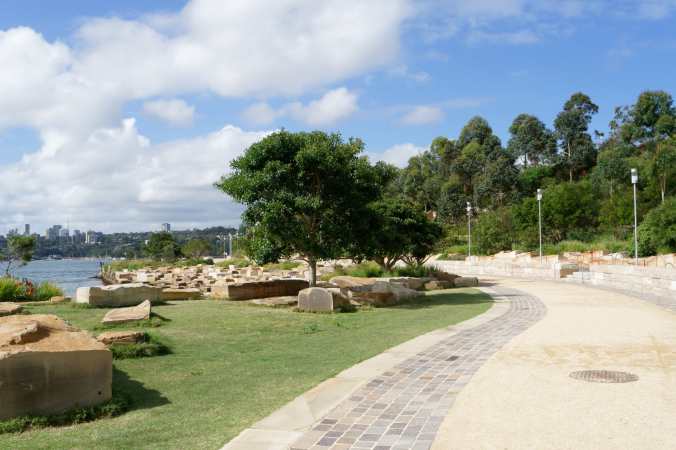
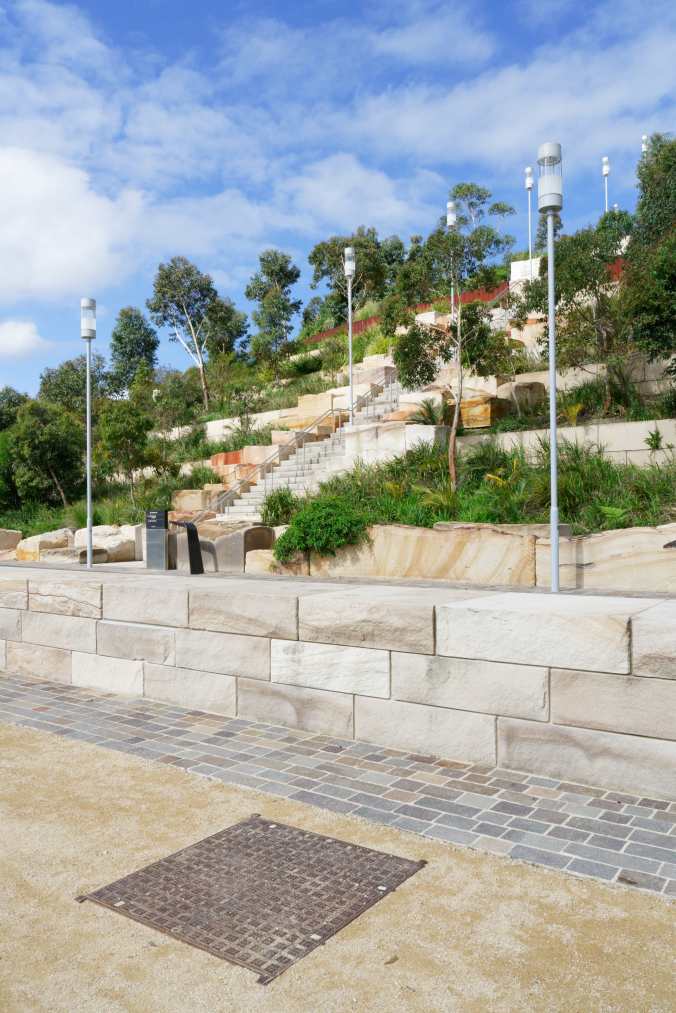
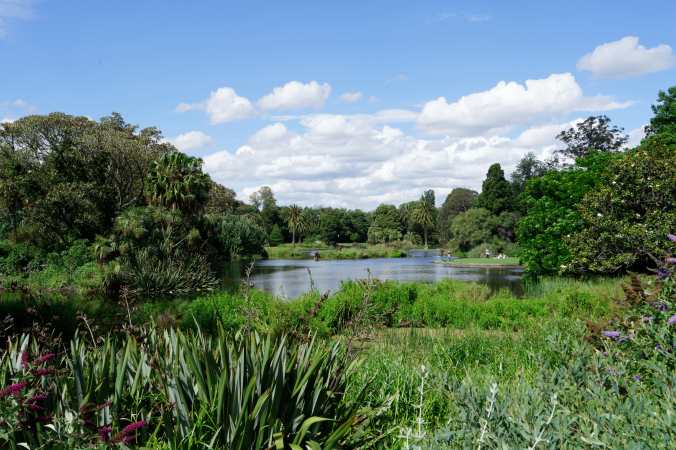
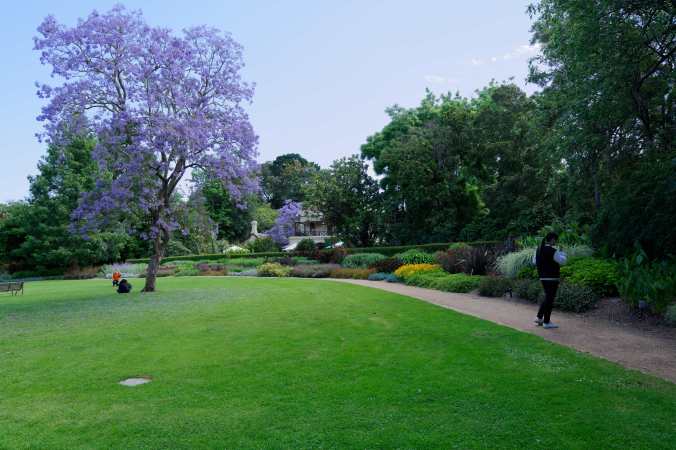
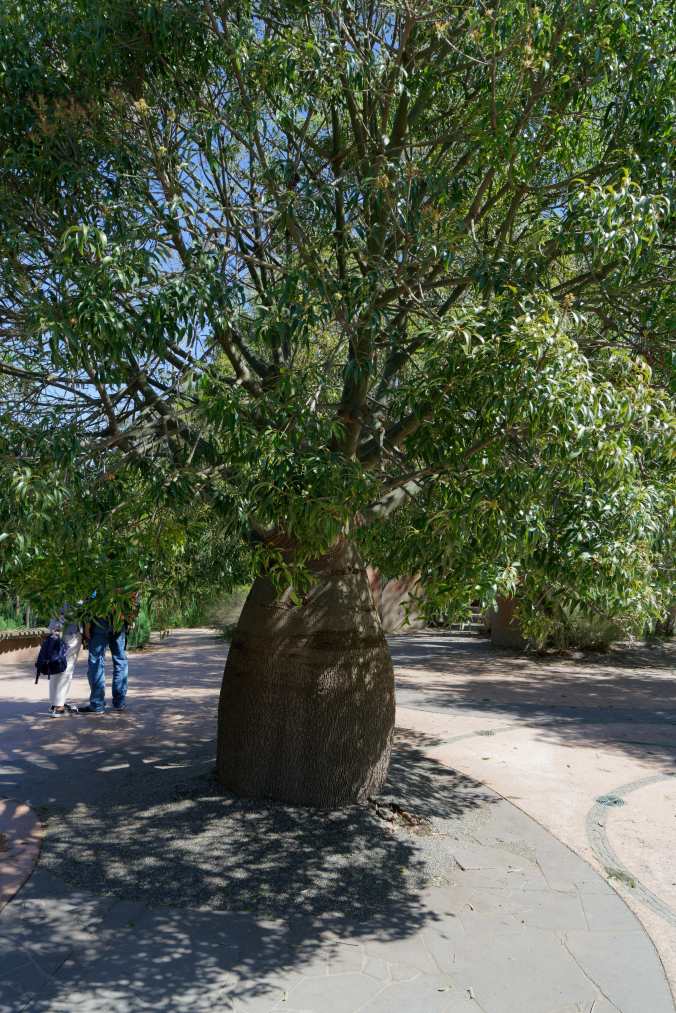 A stubby, fat palm that defiantly sat in our path.
 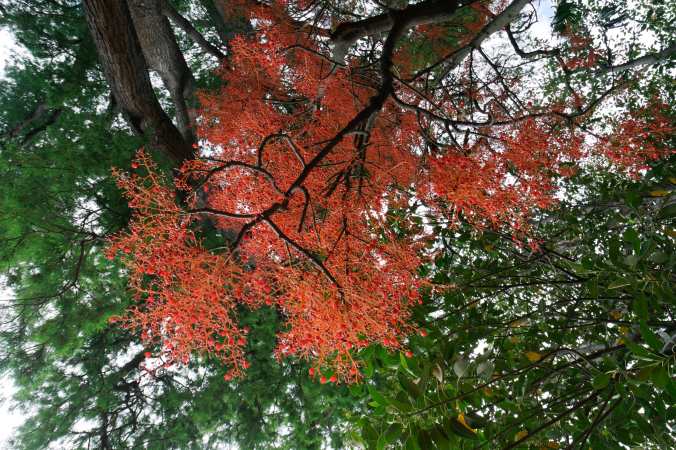 A gossamer, red-berried wonder that you spied only if you looked straight up.
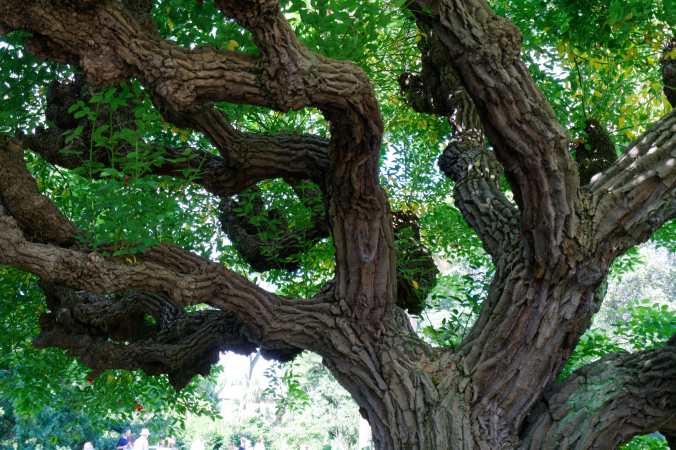 One with gnarly-fingered branches encased in bark so deeply incised that half your hand would fit into each of its grooves.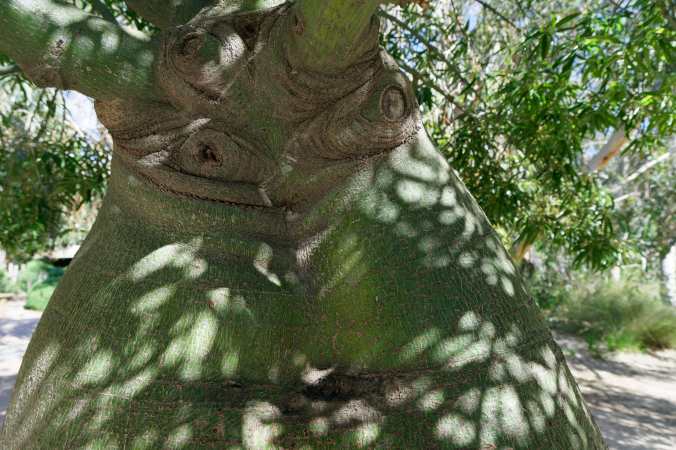
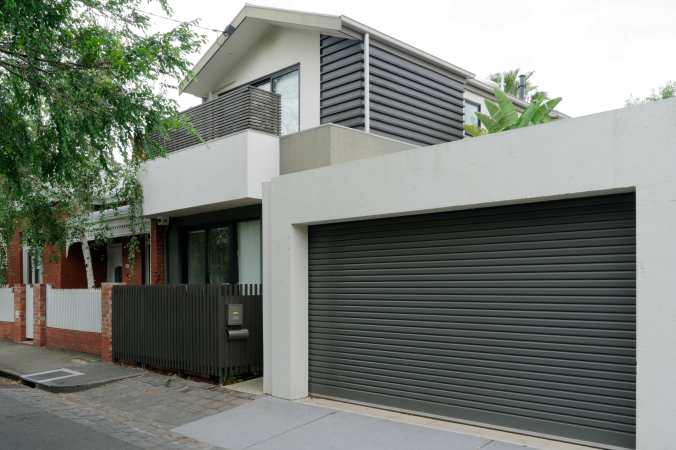
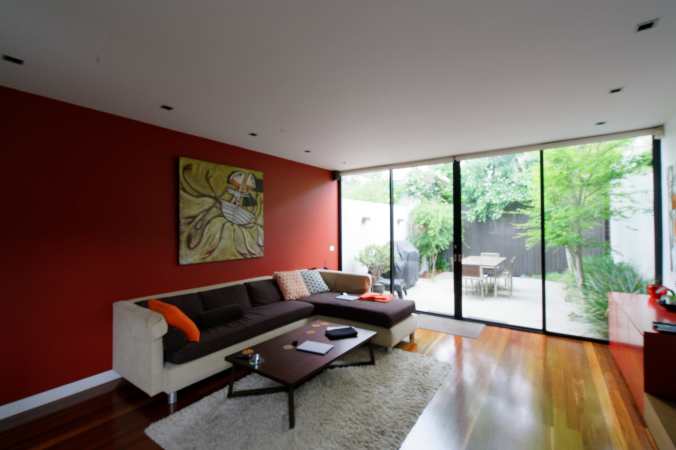
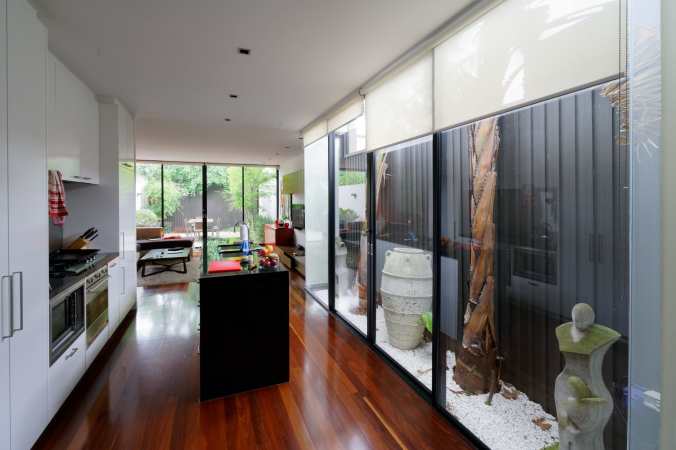 The recessed light well, at right, broke up the linearity of the main living area and admitted all manner of light and weather, including the torrential rains with which we were greeted –four seasons in a day, Uber drivers told us again and again, pontificating about the city’s fickle weather. Anyway, our little Middle Park abode proved a hospitable place to enjoy even the downpours, presenting them artfully, at a slight remove.
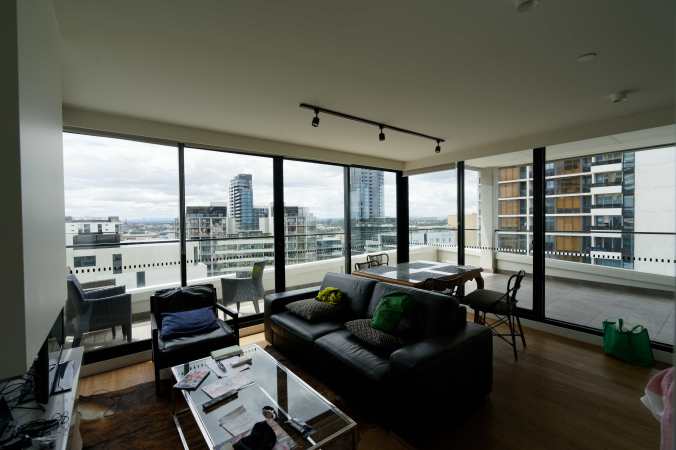 Scattered hillocks of towers, residential and commercial, pop up from the lilyponds of two-to-four story mixed-use buildings which spread in nearly every direction, all the way to the horizon.
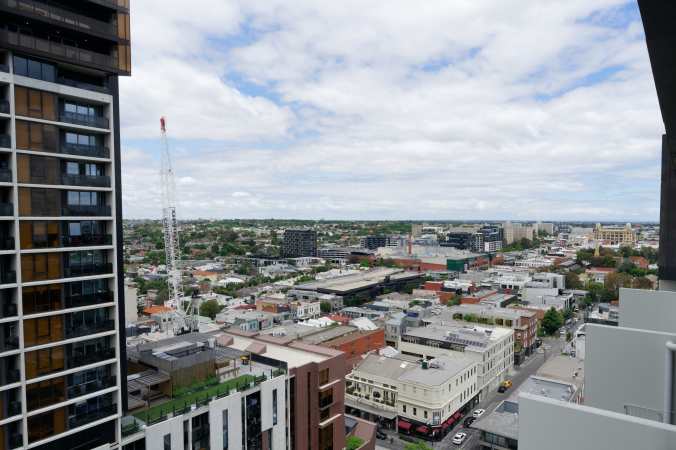 In commerical and higher-density residential neighborhoods, the taller structures indicate that Melbourne, like Sydney, takes its towers seriously.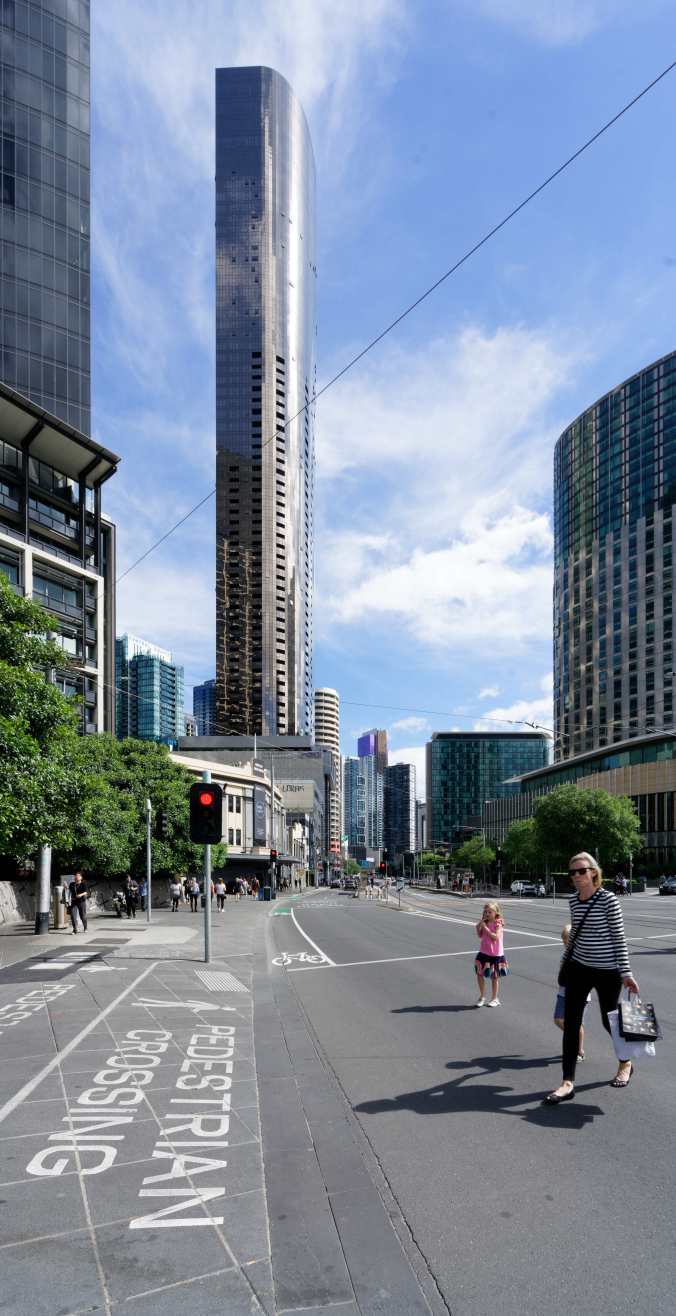
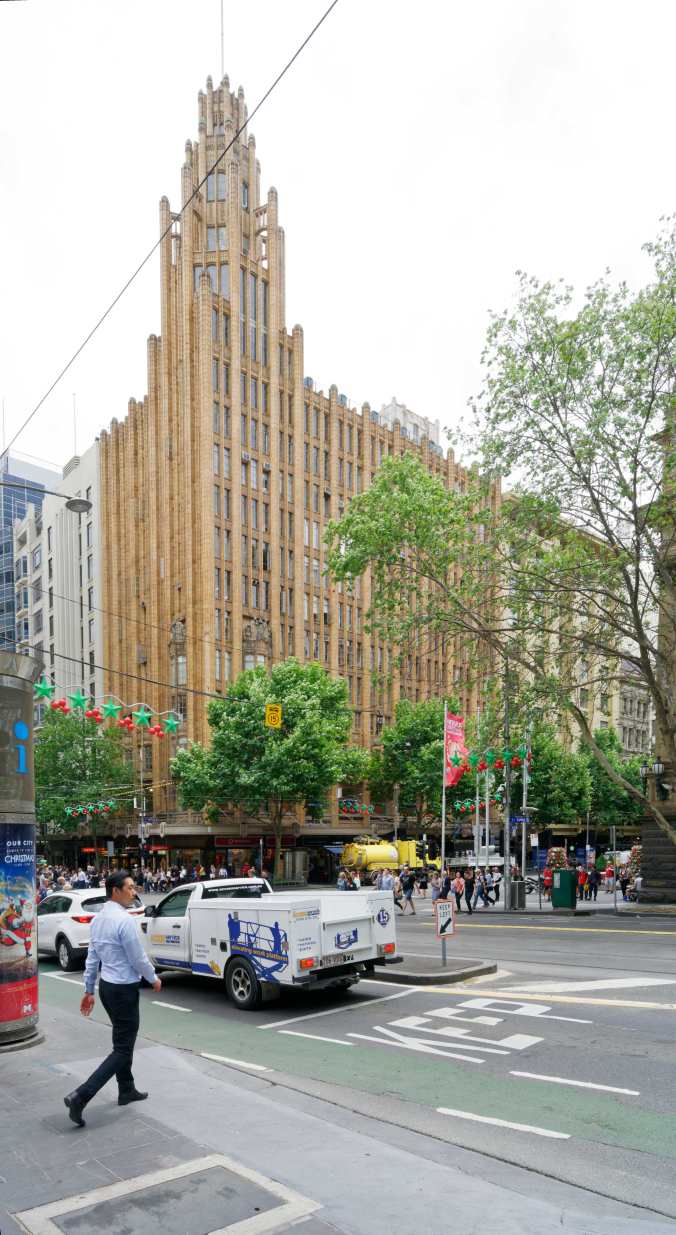
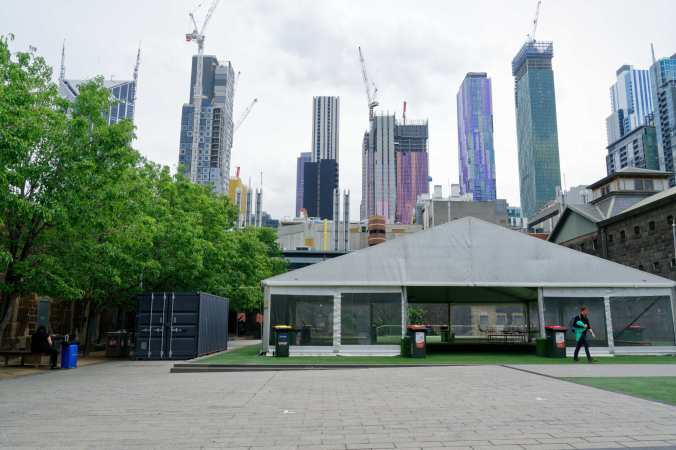 I tried to discover statistics on new residential and office space real estate, but curiosity vanished in the deluge of Google hits beckoning me to bankers’ and developers’ websites, so I’ll just go with the information offered by Meaghan Dwyer of John Wardle Architects: in both cities, there’s a lot of building going on.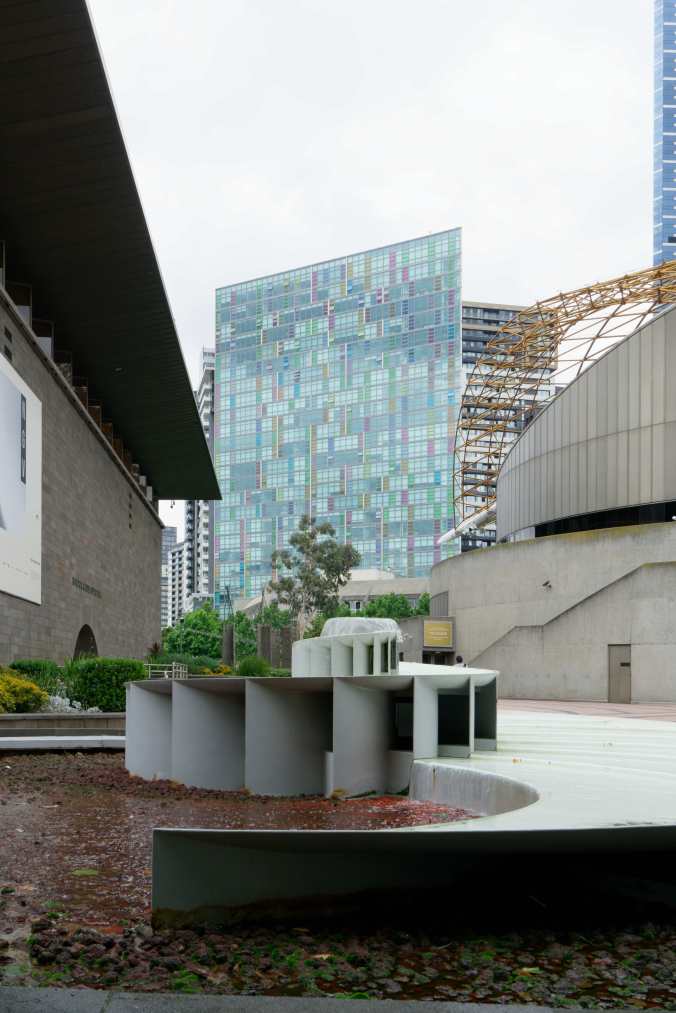
 Then we practically ran straight into one of the best Hans (aka Jean) Arp sculptures, from his “Growth” series, that I’ve ever encountered. I was really tempted to hug it.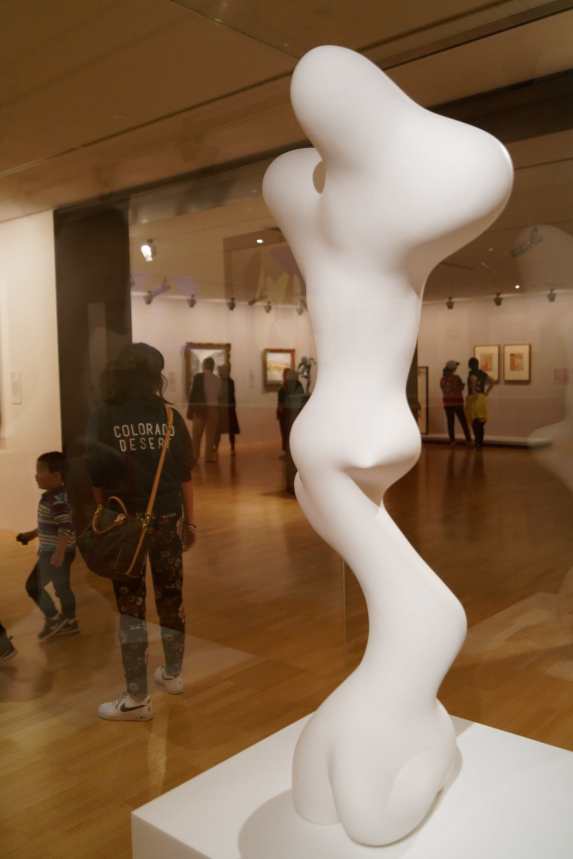

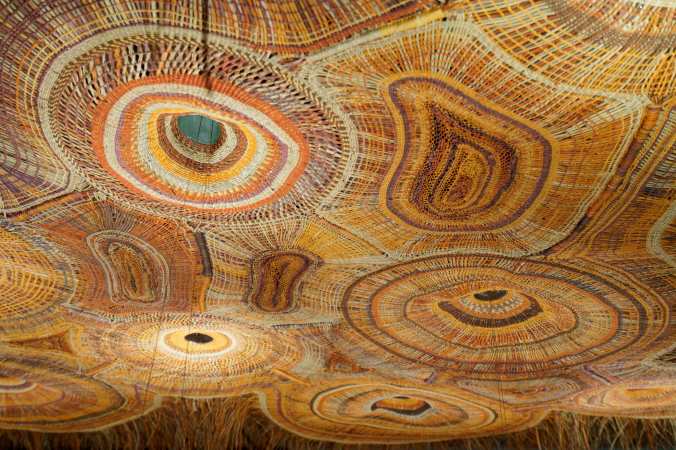
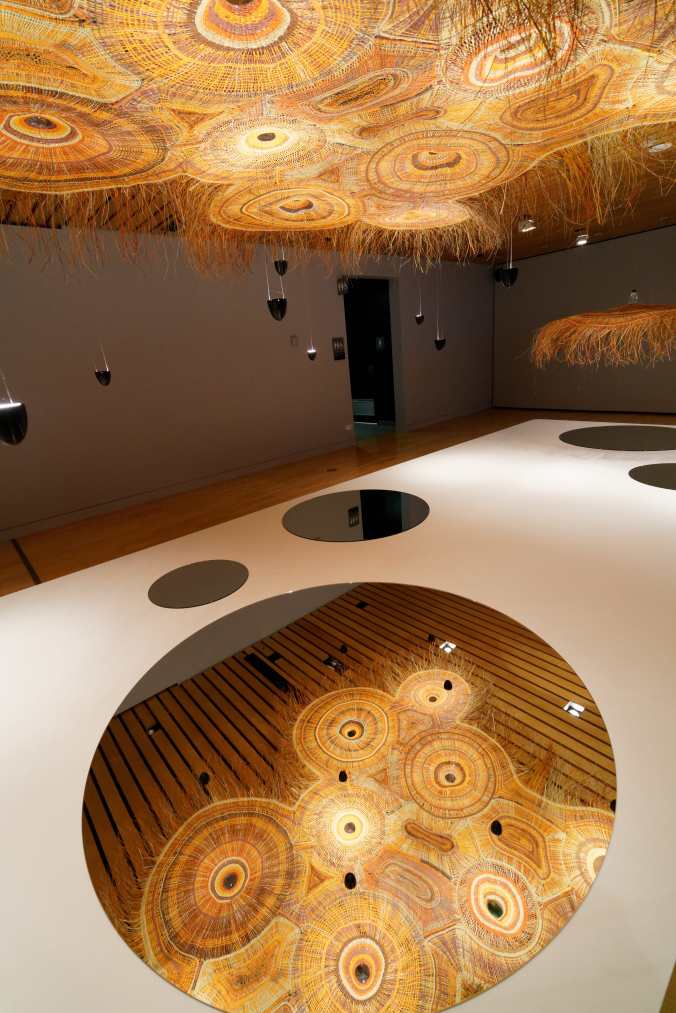 Since mirrors can be used to visually diminish the scale of the object they reflect, you get to experience the piece both as it envelops you, spreading majestically over your head and bleeding into your peripheral vision, and at the same time, regard its entirety by glancing toward the silvery pools of light near your feet.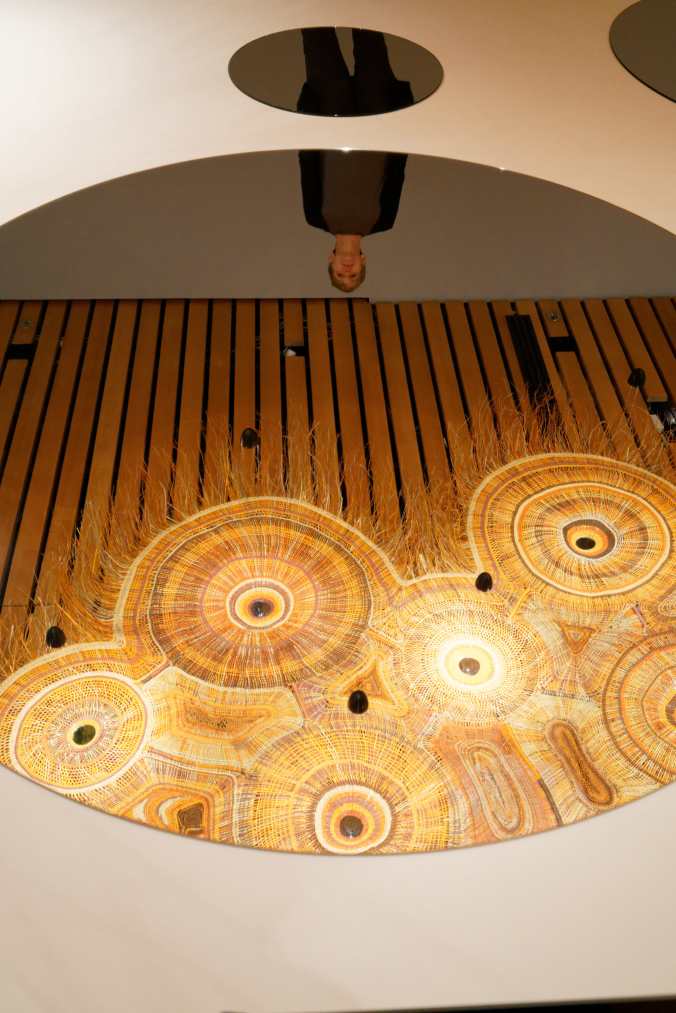
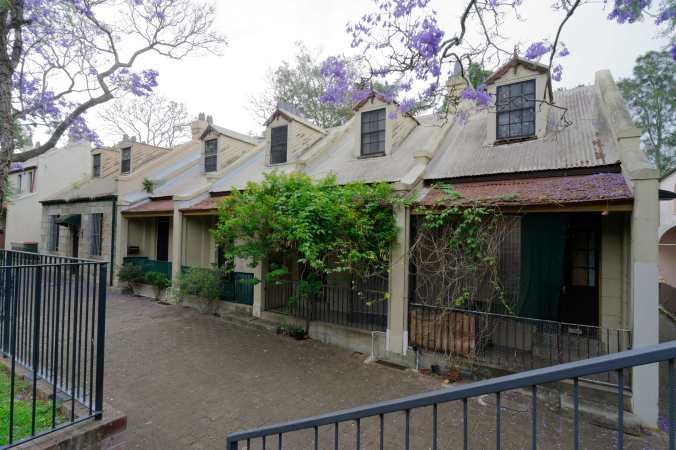
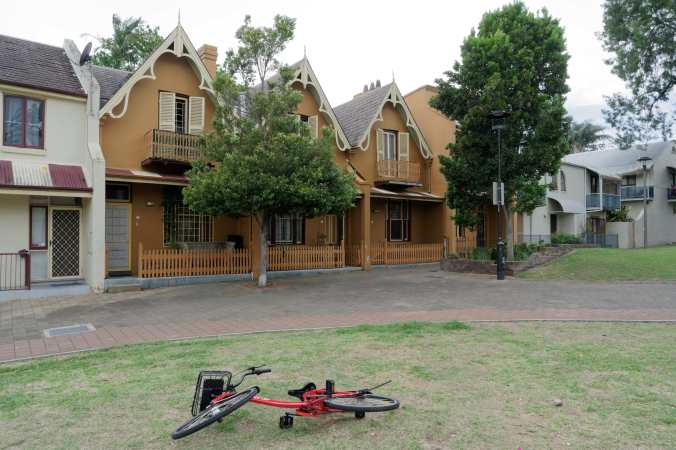
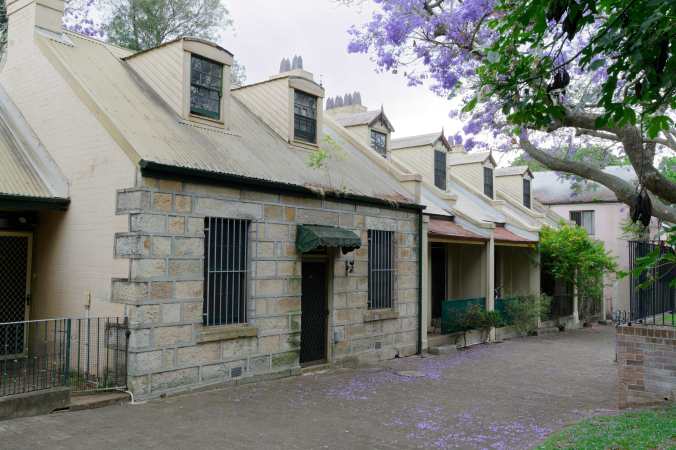 and others masonry. A few of these areas snuggle up to, or surround a little open area akin to a village green– below, look how some kid just dropped her bicycle and walked in her front door with no thought of locks or bike stands. Just as we all used to do, growing up. Right in the middle of Sydney!
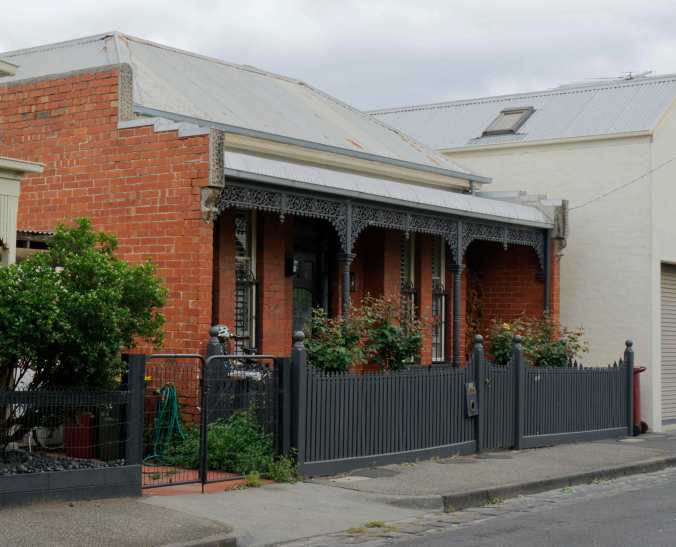
 Nearby stood larger buildings that served the original community — perhaps a library, a school, a church. What the building below was or now is remains a mystery, but it’s fairly typical of the small Victorian public infrastructure in both Sydney and Melbourne.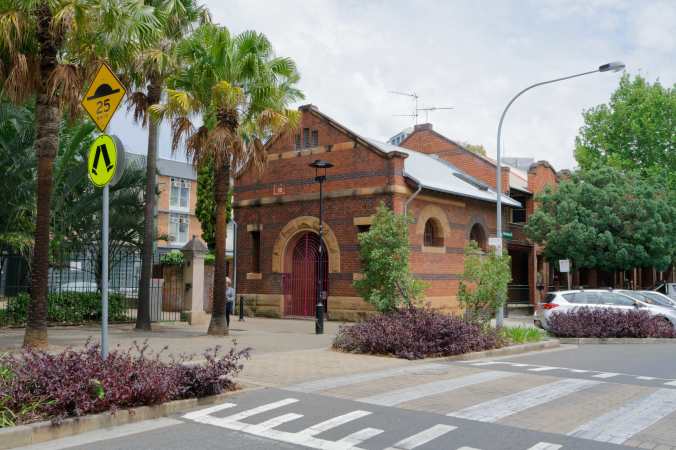
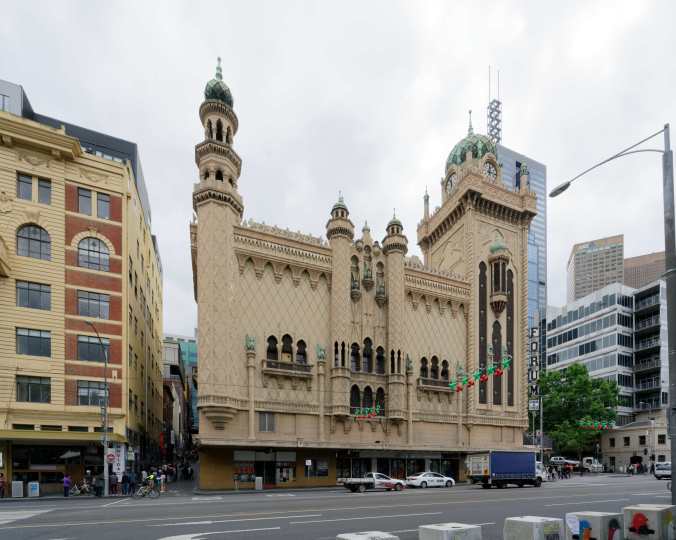
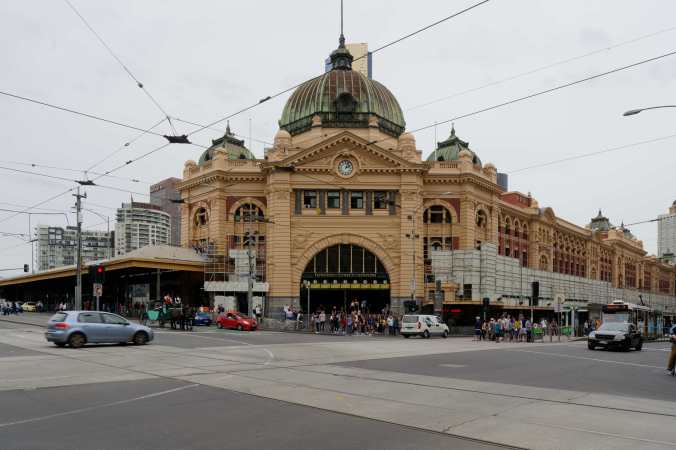
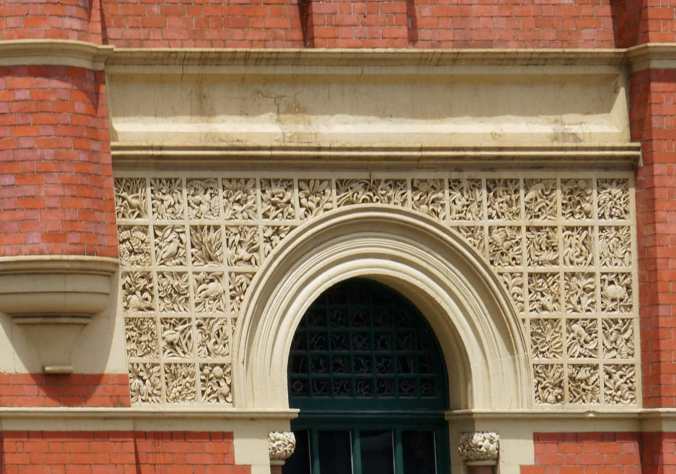
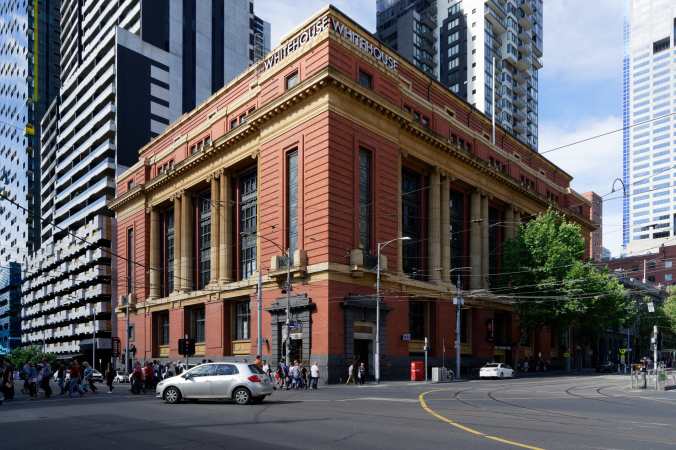 That red-brick/yellow-ochre detailing is a common combination in public buildings in both cities.
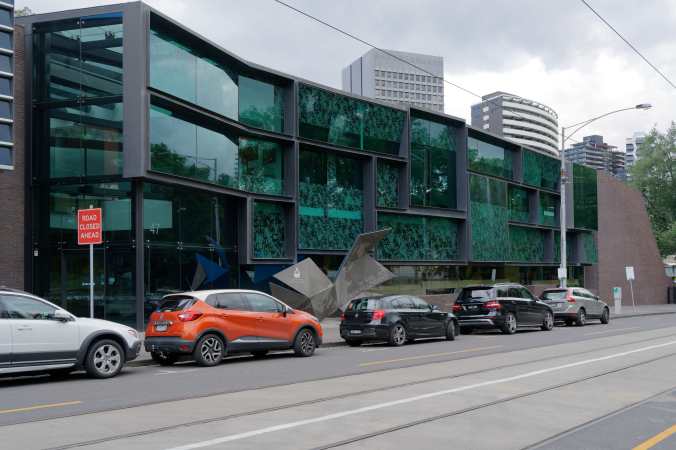
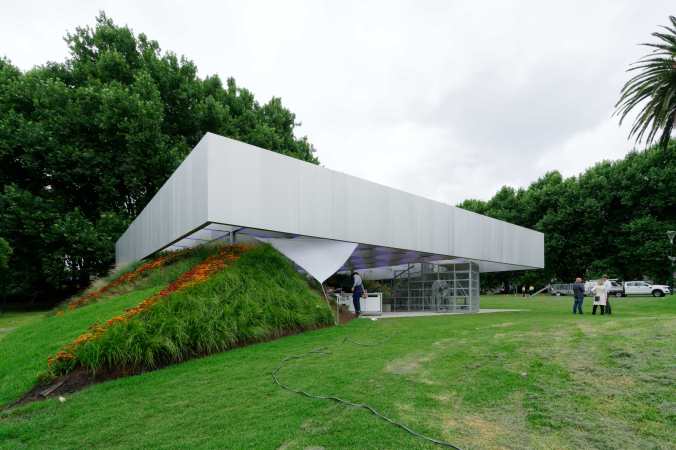


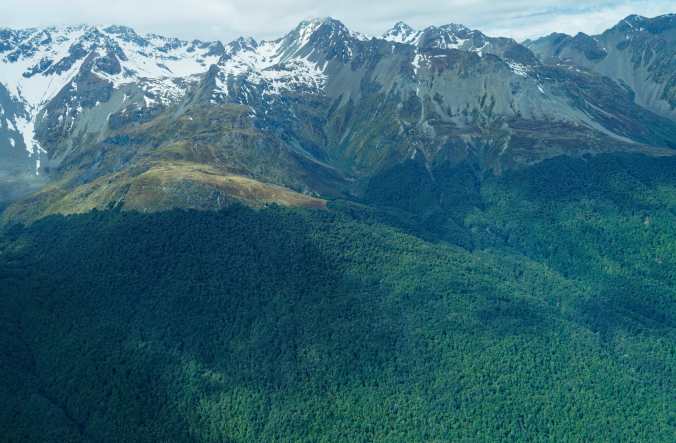 To give Queenstown its due, it is perhaps the most beautiful and monumental setting of any urban area (it’s a small one) we have seen.
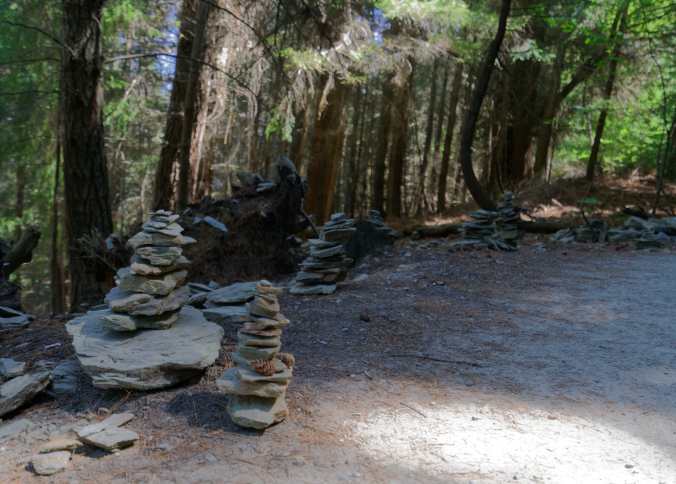
 The landscapes of the region we have justly gushed (never enough) about. Even the humdrum among them – the city park, and an elevation-static walk starting in Queenstown along the lake and then beyond – are memorable and prospectively never tiring. Our one disappointment, not being able to walk/hike the three-day Routeburn Track, reputably among the most exquisite in New Zealand, owing to a minor injury Gideon sustained, turned into a compensatory boon of us getting to explore by car and foot more of the Queenstown region. After leaving the urban and in its own way urbane area of Queenstown, we drove through the seductive temperate rainforest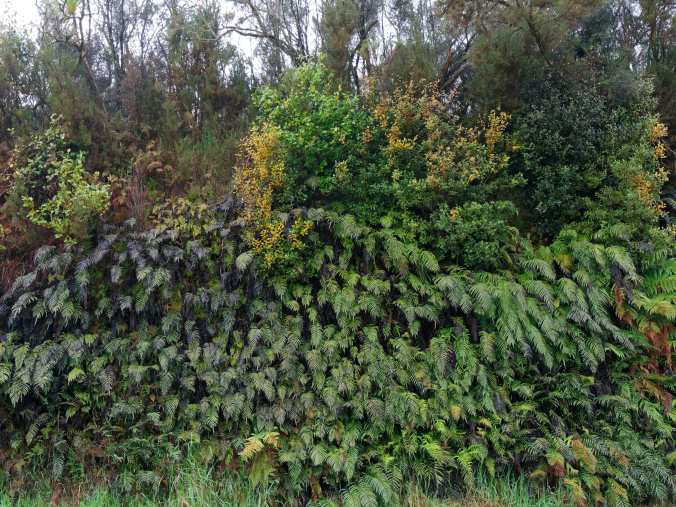
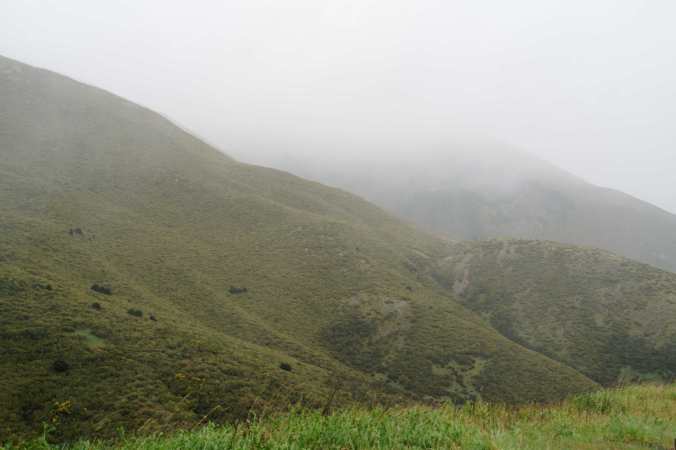 and mountainscapes of the west coast, fittingly named West Coast, and then across the mountain isthmus of Arthur’s Pass to a more conventional and more distinctive urban experience of Christchurch.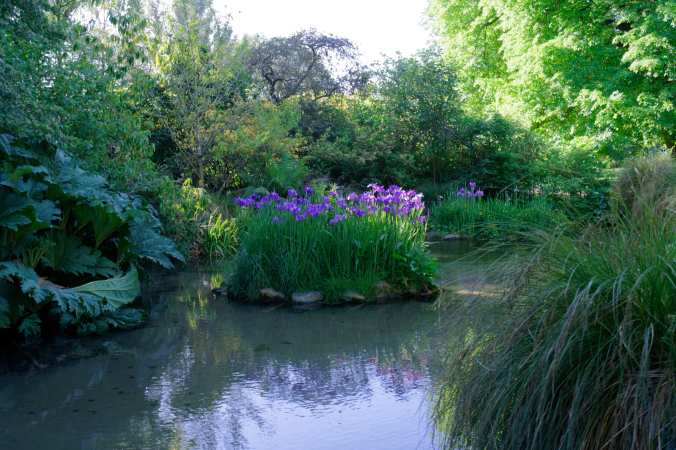
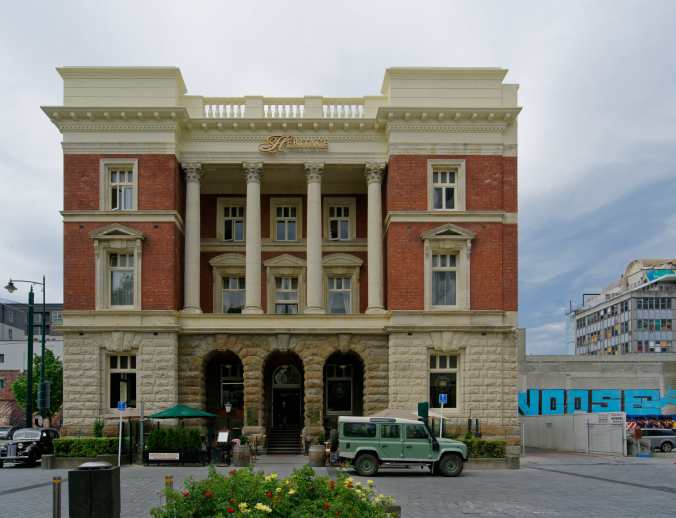


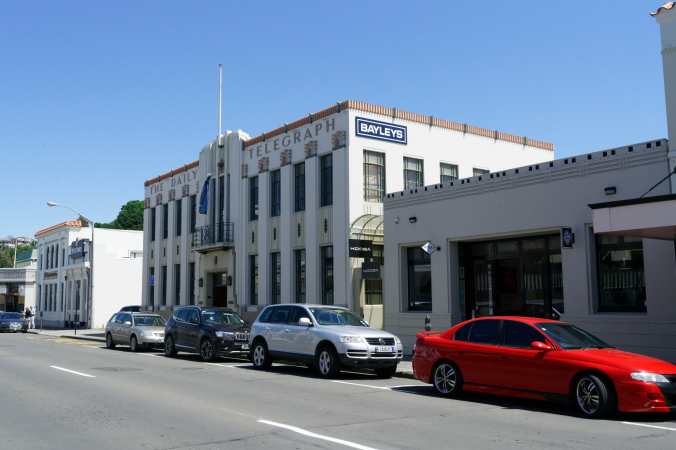
 where we strolled for a few hours thinking of an architecturally unsullied Miami Beach and disputating the desirability of returning to Napier someday for a longer stint, before heading off by car to Tongariro, and its justly famous transalpine tramp. After four days of our rural and hiking wonders of Tongariro
 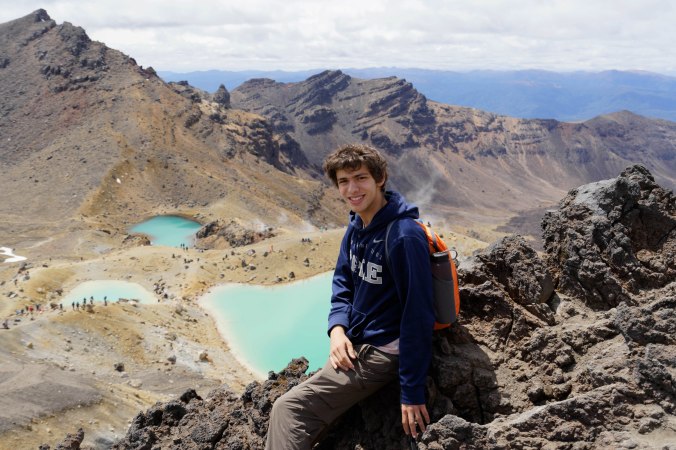 (Sarah: “I would do that hike every year”) and Rotorua – both of Hobbit/Lord of the Rings fame – we finished off our New Zealand romp with two solid days in Auckland’s Viaduct area, with a splendid view of the harbor, urbanity, and enough worthy activities to keep us happy.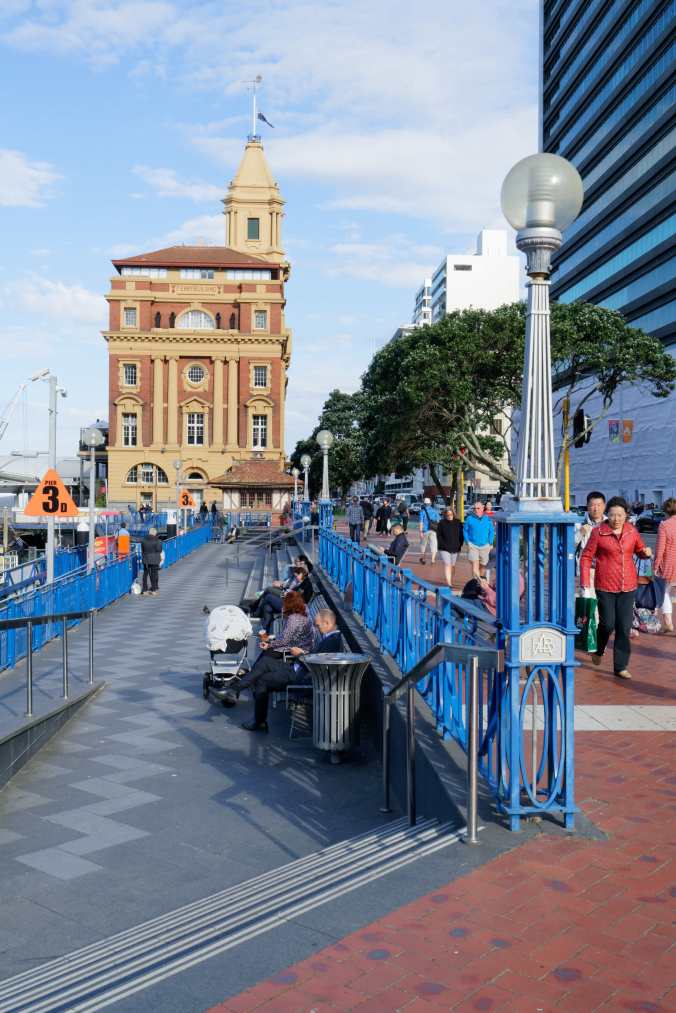
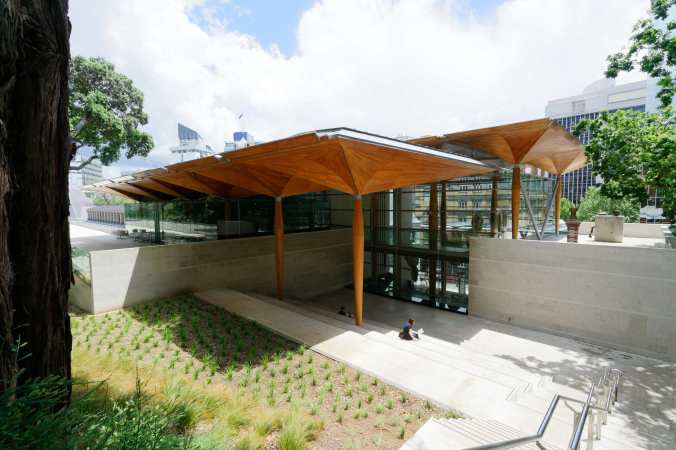

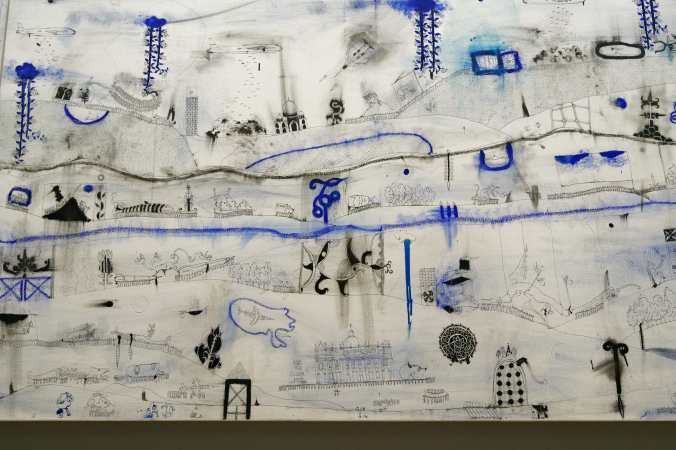
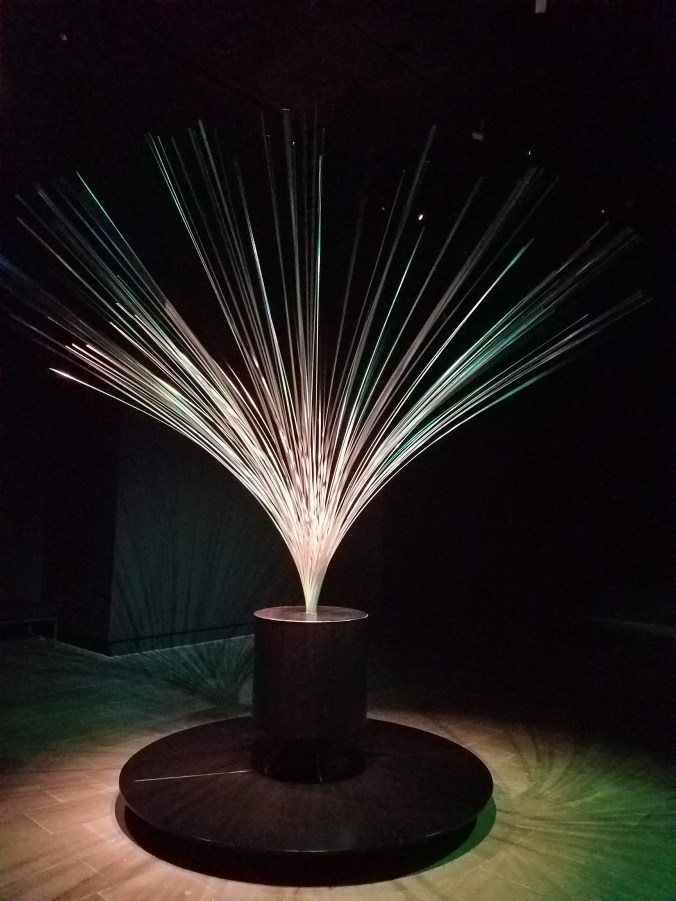
 and in the a Napier museum, receiving the unexpected pleasure of being introduced to a merging of arts we had not imagined in the body (really body-covers) of historic Art Deco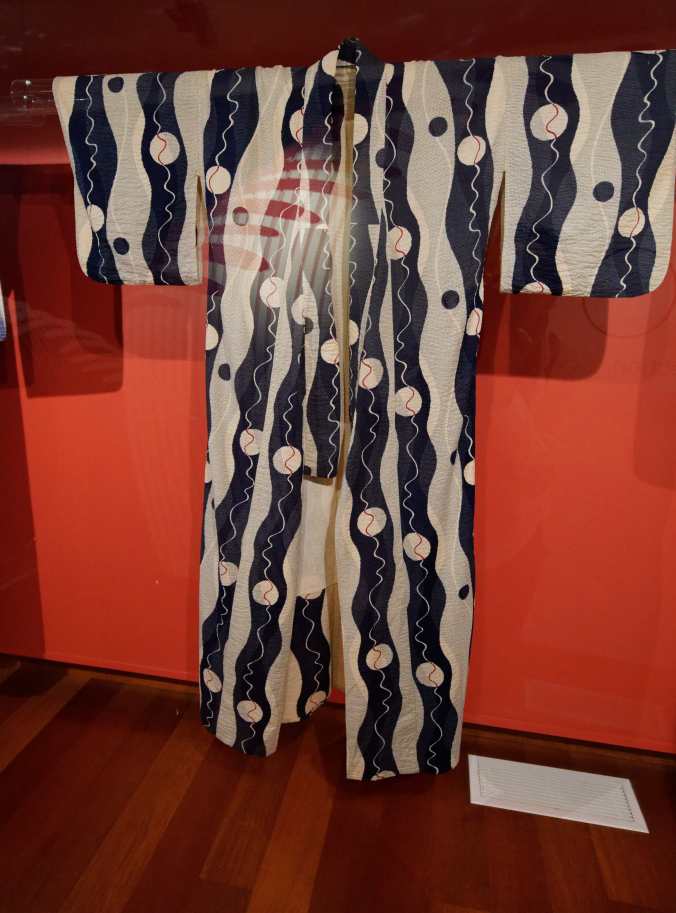
 immersing ourselves in the experience of the most magnificent landscapes of nature’s pacific and tumultuous offerings, getting a taste or more of the largest (Auckland, 1.5M), third largest (Christchurch, 400K), sixth largest (Napier, 130K), tenth largest (Rotorua, 60K), and barely-large-enough-to-be-one, placing 27th (Queenstown, 15K) city, and many larger and smaller towns in-between, and taking pleasure in some of the finer products of human creativity. Everywhere and without exception, the New Zealanders were friendly, helpful, informed, and well-spoken in, at least to me, their charmingly accented English. They appear to know that they have something extraordinary going for them,
 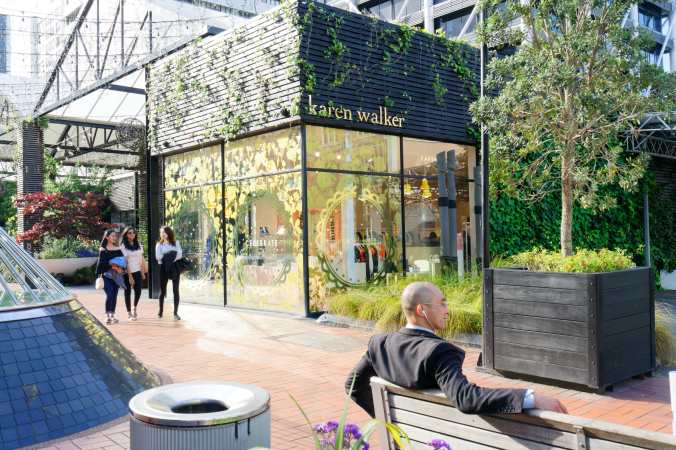 and, generous lot that they are — here’s a woman who runs a weekly open-air soup kitchen in Auckland, offering us a meal —
  they don’t mind sharing the natural and urbanistic wealth.
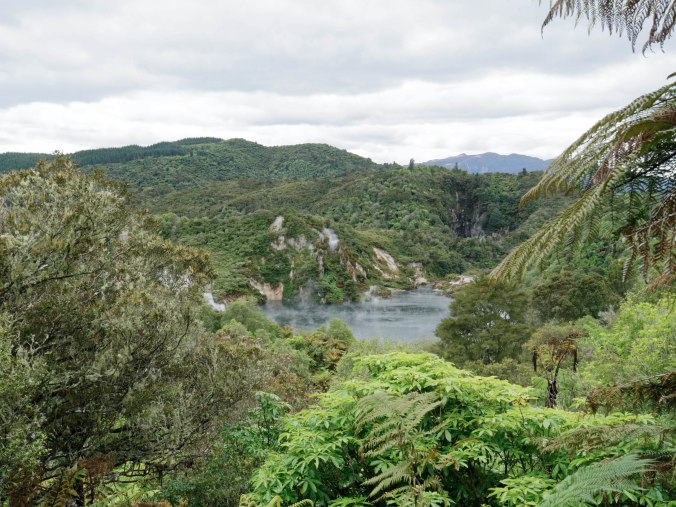 One place that succeeded in earning a top spot in our greatest hits album (maybe that’s this blog) was in the volcanic Rotorua region, which includes the Tarewera, a volcano that has erupted 5 times in last 18,000 years (one so extreme that it cast volcanic dust as far away as Greenland), as well as the Waimangu. The last major eruption of the volcanic craters all along Waimangu valley was in 1886, which falls easily within the era of photography. The
  The Waimangu regaled us with hot waters,
 and hot (and cool, in both senses of the word) colors,
 and with a tiny, even cute little geyser (below, at the left side of the image), wholly unlike the more conventional tower of water we saw a few years ago outside of Reykjavik in the gushing font that gave its name to this natural though relatively rare phenomenon, Geysir.

 that reminded Sarah of one of her newish-ly favorite paintings, by Gustav Klimt, which we saw in an exhibition of landscape art from The Paul G. Allen Family Collection at the Phillips Collection in Washington DC.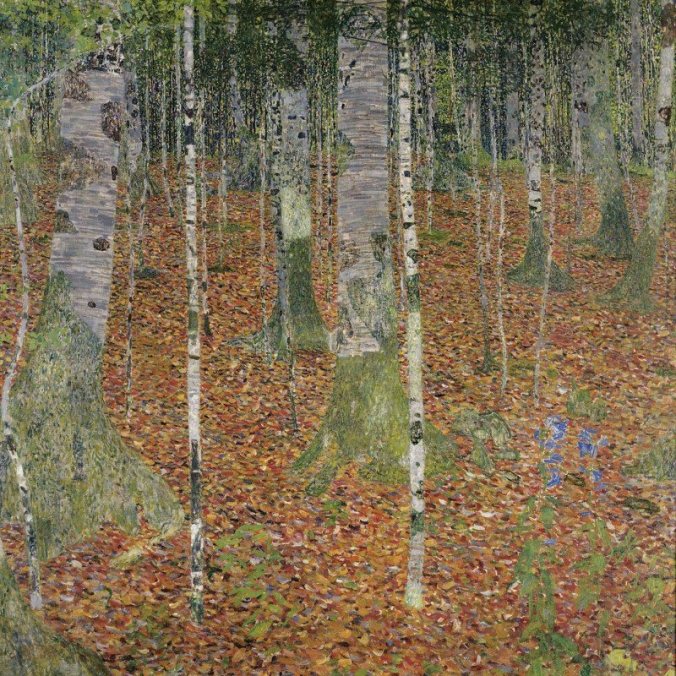
 offering a skylet-high tree walkway,
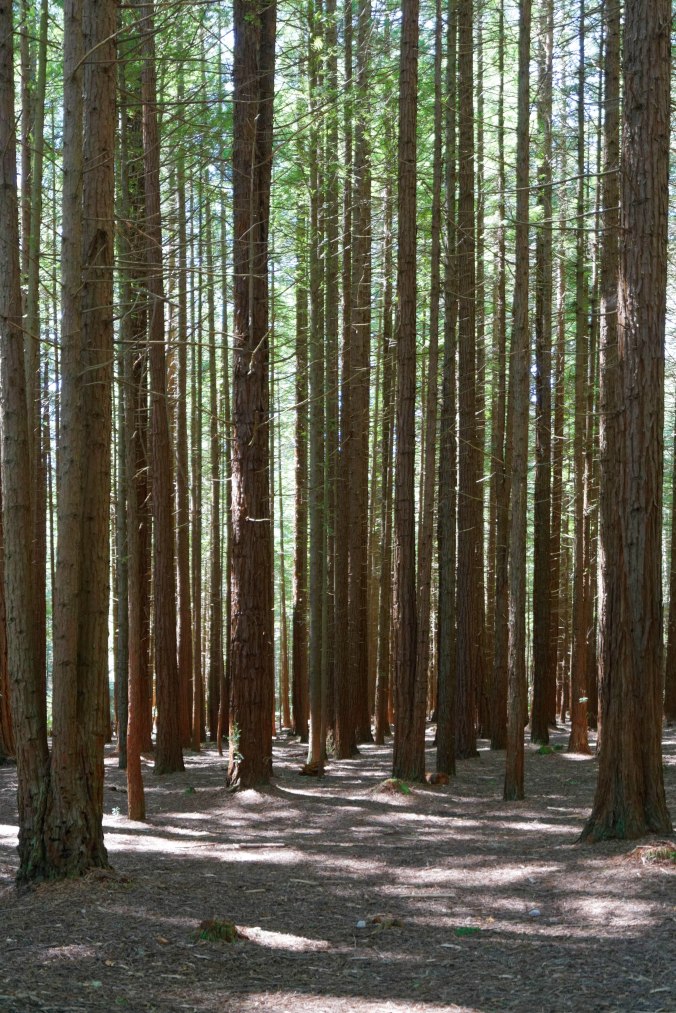
 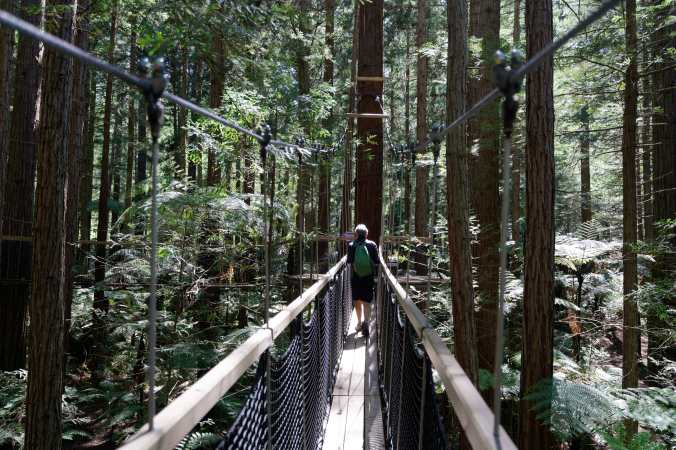 right outside the city of Rotorua, the forest the result of a tree growing commercial experiment which brought the trees over from California way-back-when-enough that the (skinny) redwoods reach (from unverified memory) three hundred feet and more.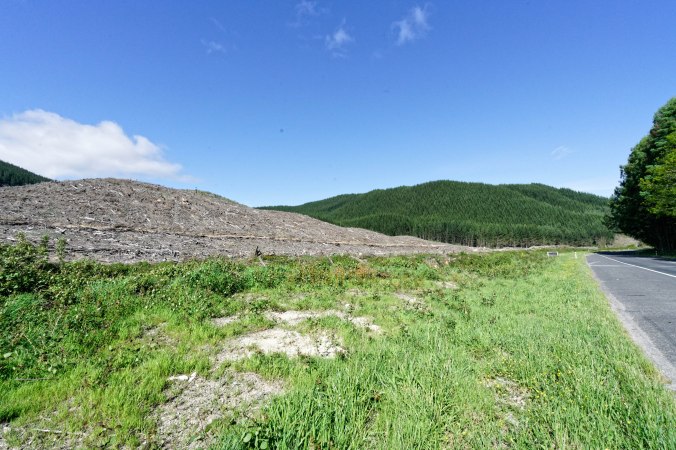
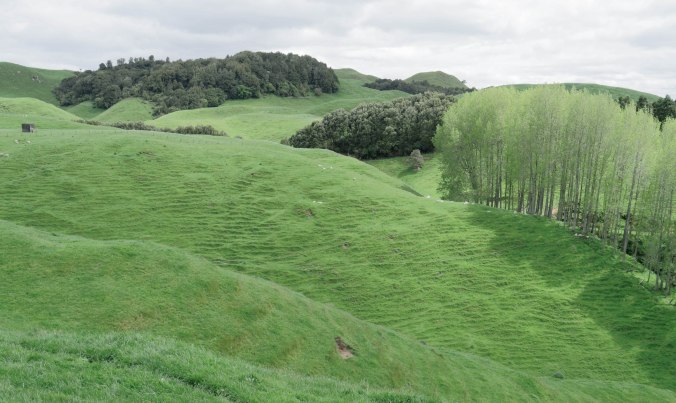 make Maya Lin’s land-sculpture in Storm King Sculpture Park,
 which we once admired, a bit self-mocking. Driving through hours of such hillocks made for the greenest mad-undulating landscape this side of our known experience.
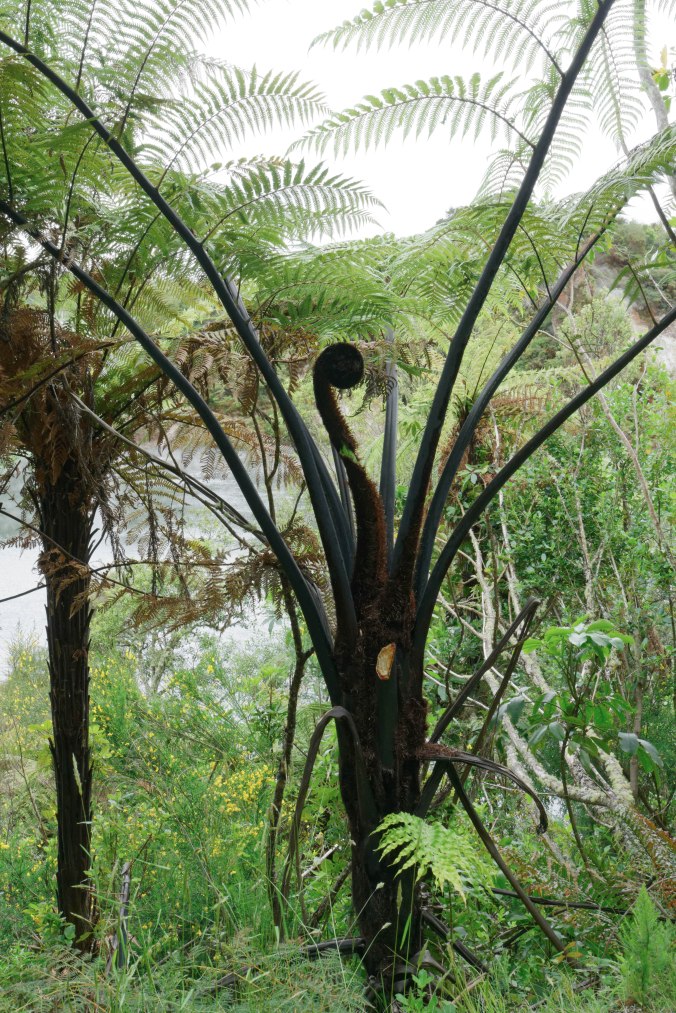 Sarah’s favorite tree — its name escapes us — was that black-barked fern, plentiful in much of New Zealand, which, in rain-forest-y
  New Zealanders, with their seemingly infinite capacity to charm, charmingly call trekking or hiking “tramping”, which constitutes something of a national pastime. Tourist brochures and government-sponsored websites alike advertise the Tongariro Alpine Crossing as the best one-day tramp in the country. Not for the faint of heart, though. It’s 19.4 kilometers (nary a water source along the way), with official estimates advising that hikers to plan on between six and eight hours, with the ominous addendum, “depending upon your condition”. You are also repeatedly reminded to pack for different kinds of weather events: you can shiver in pelting sleet and sweat in blazing rays of sun in a single day. Or you can find yourself at the peak of a dry, sandy, 10-foot-wide ridge huddling against 65 mile-per-hour winds, as happened the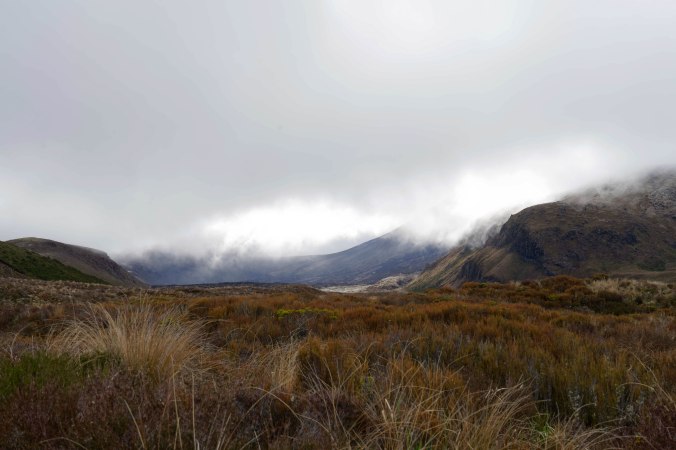

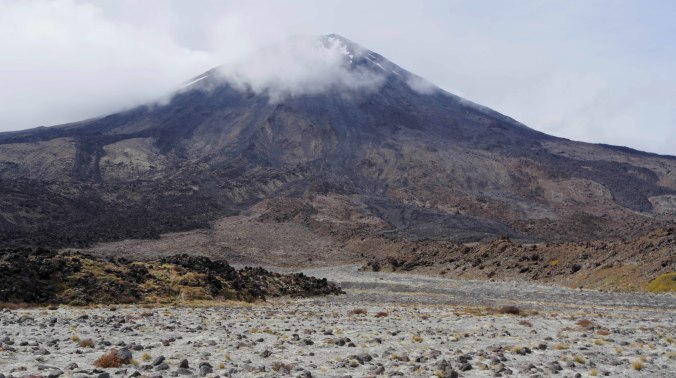
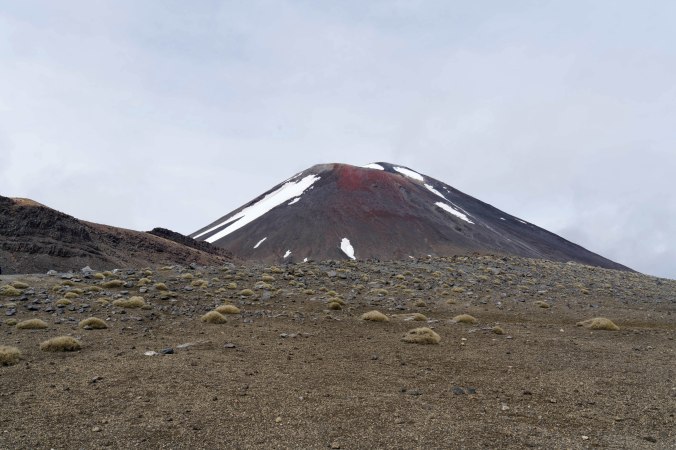
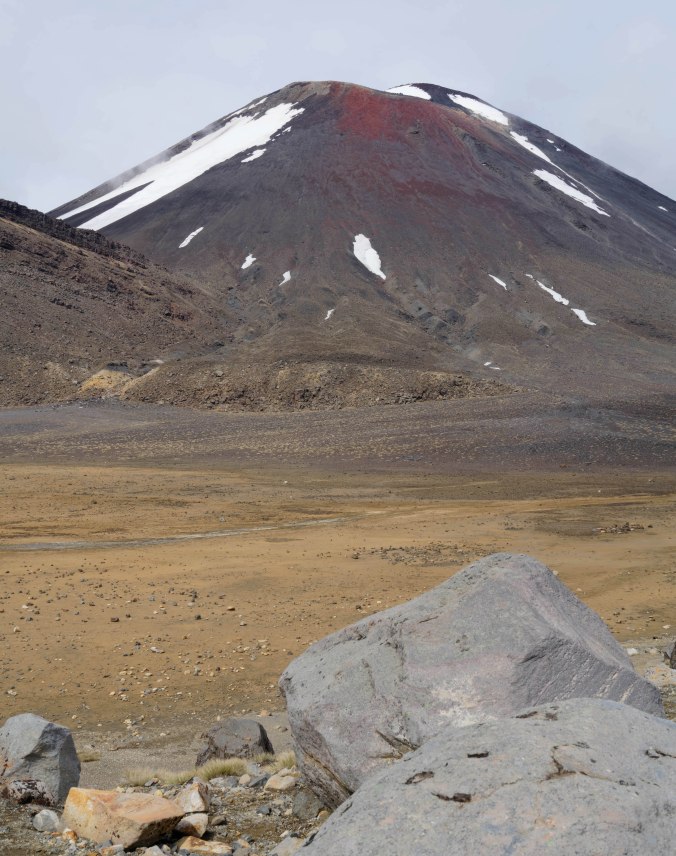

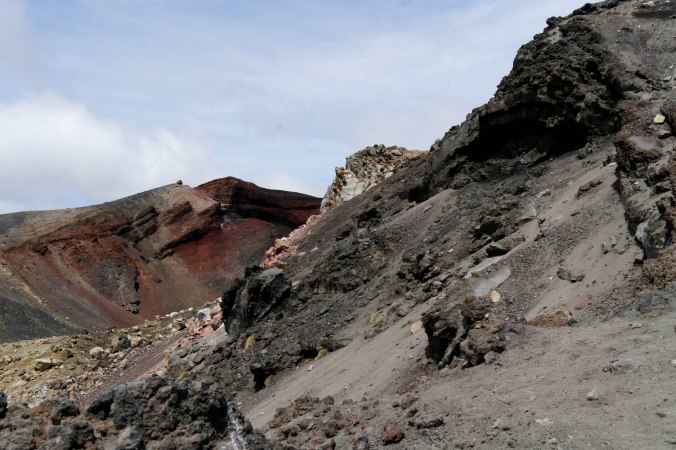
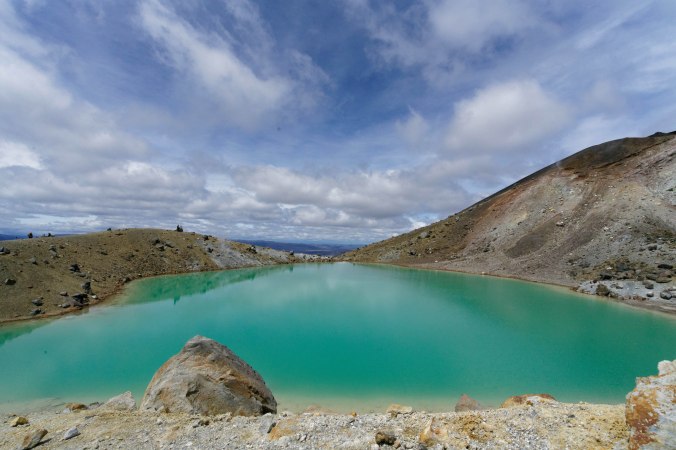
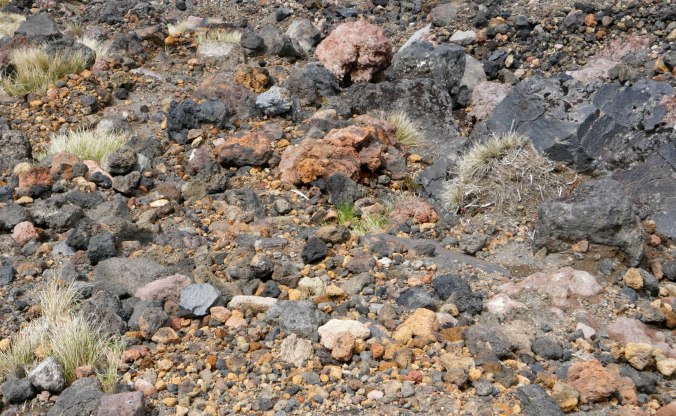
 Circumventing the Red Crater (you couldn’t actually ascend it) brought you into view of the vaginal-looking orifice from which all that lava spewed during its last eruption. From there, you began your multi-houred descent. Around one bend, you see this: the Emerald Lakes (at right). At left-center, in middle distance, you can just glimpse the Blue Lake, and behind it in the horizon, Lake Tapuo, which is a caldera of a different volcano, about 90 miles away.




 Coordinating Goldhagens