Of all the distinctive ways that street life is enlivened in Santiago, the most artistically enticing concerns the city’s myriad cast-iron-supported wooden benches. For the past decade, art dealers have been commissioning local artists — a dash of the internationally known, a smattering of the well-established, and many neither– to choose a bench and do their thing. The program spread from a single commissioning gallery on a single street to many benches spread through three neighborhoods. You may now set down your derrière and lounge on works of art in the city center, Las Condes, and Vitacura.
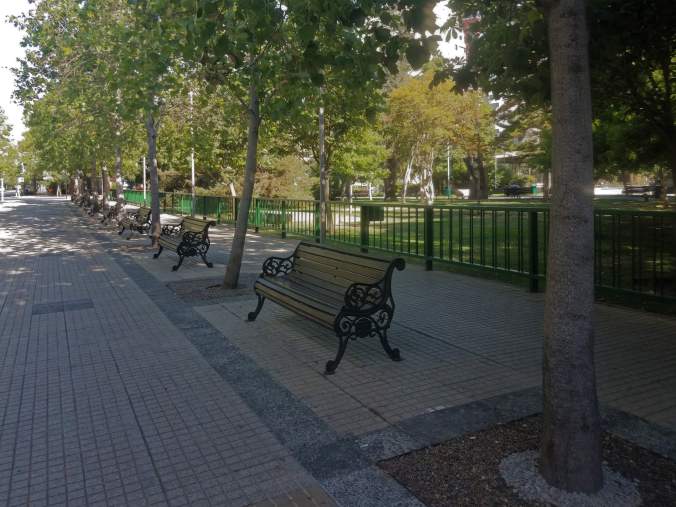
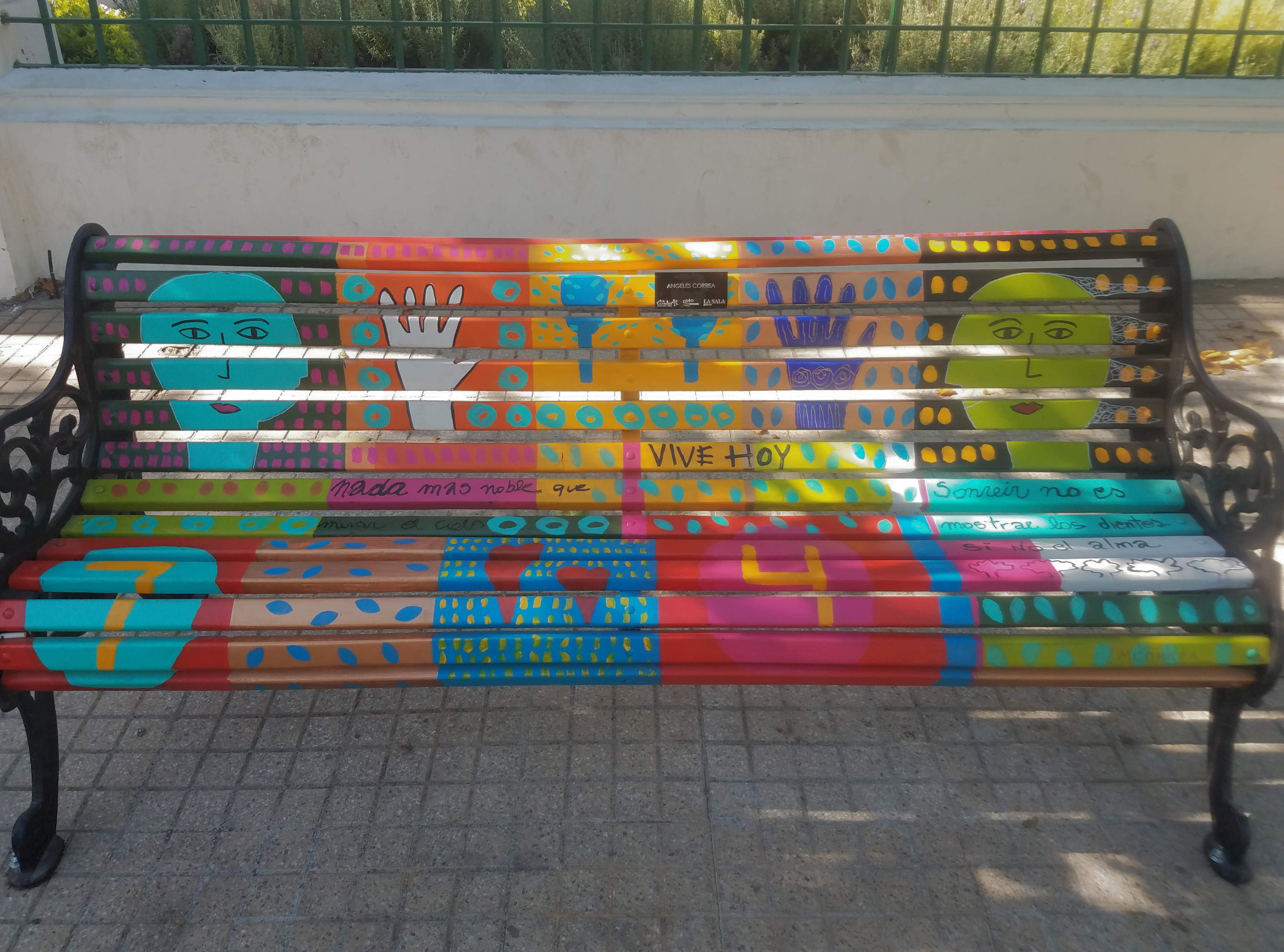
Some artists have adopted the shout-it-out, Peter Max approach, indulging themselves in the wavy shapes, lilting lines, and acid-inspired colors that also recalled Hans Eidelmann’s 1968 Yellow Submarine album cover for the Beatles. My favorite was the quintipartite-structured composition enlivened with flat, child-like images of faces and hands, and inscribed with awkward script that exhorted: nada mas noble que VIVE HOY (nothing more noble than to live today). Words which, if lived by, forfend the kind of melancholy perseveration that destroys too many people’s days.

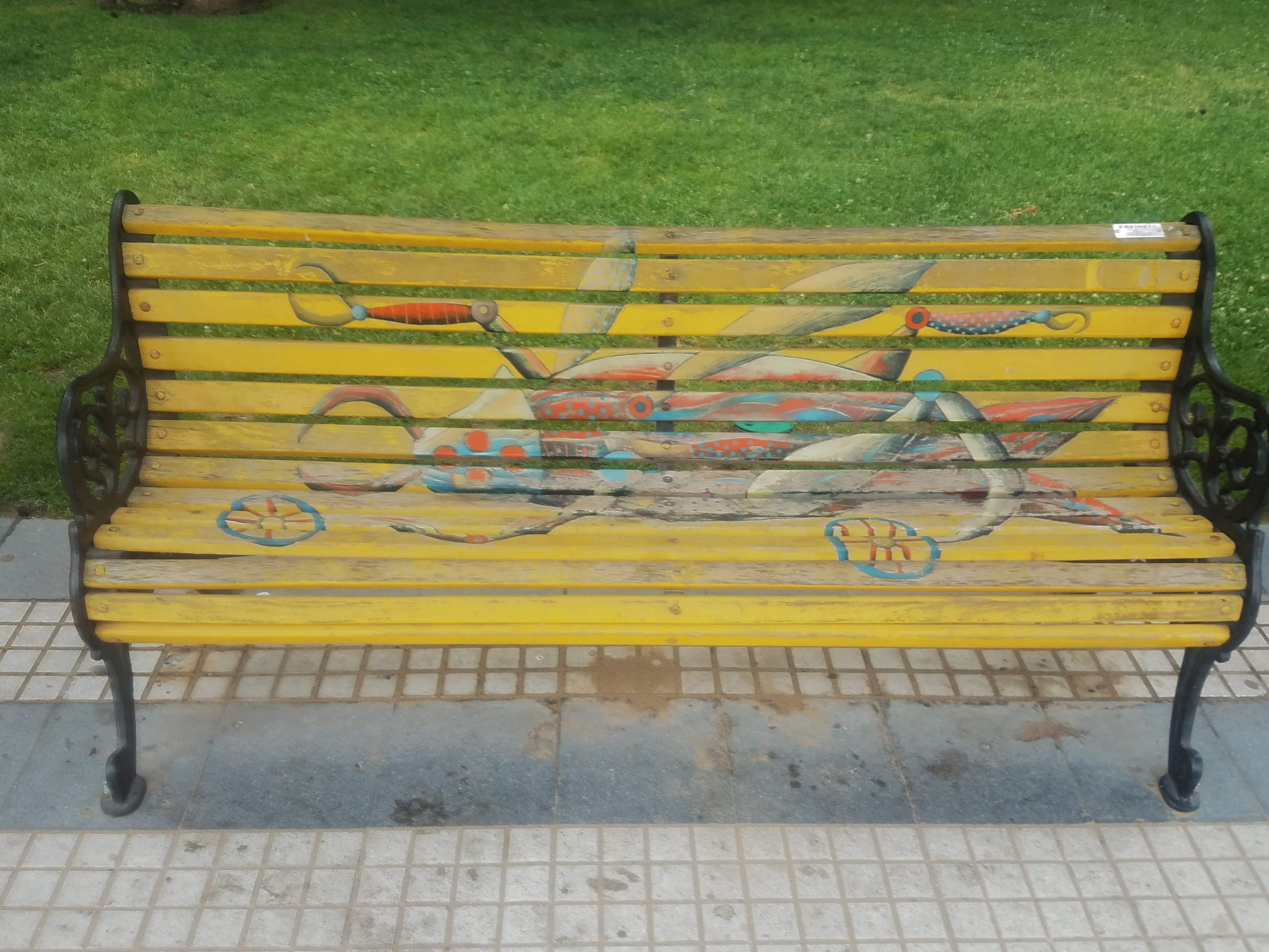
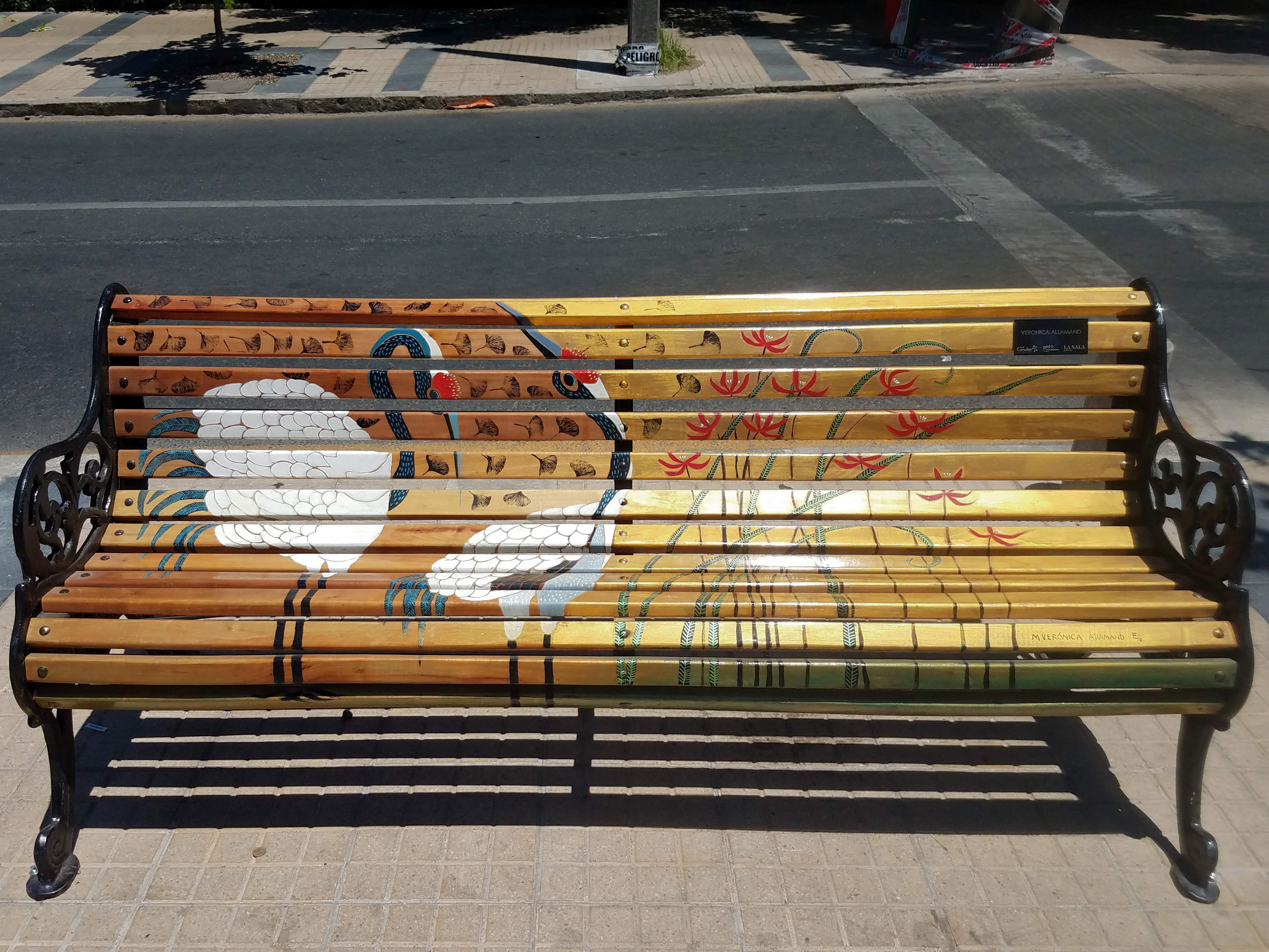
Animals and insects appeared repeatedly, sometimes diaristically (as in “Oh my gawd, don’t you think my wonderful dog is SO cute!!”), but more often than not, artistically. Whatever that Alice-in-Wonderland insect is on the left, I like it. The bench on the right elicited thoughts of a well-painted detail from a historic Japanese landscape.
In several instances, folk art provided inspiration.
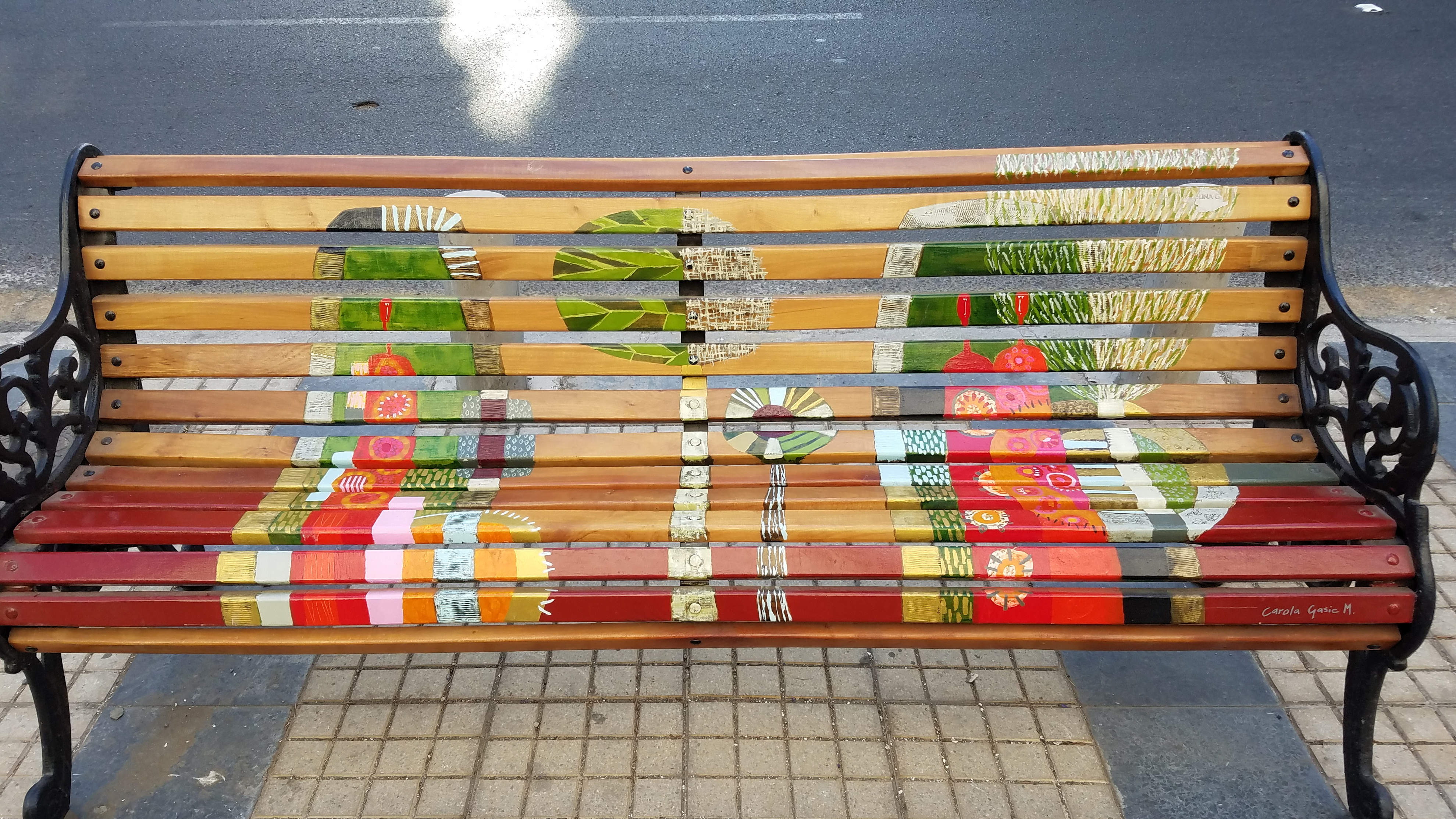
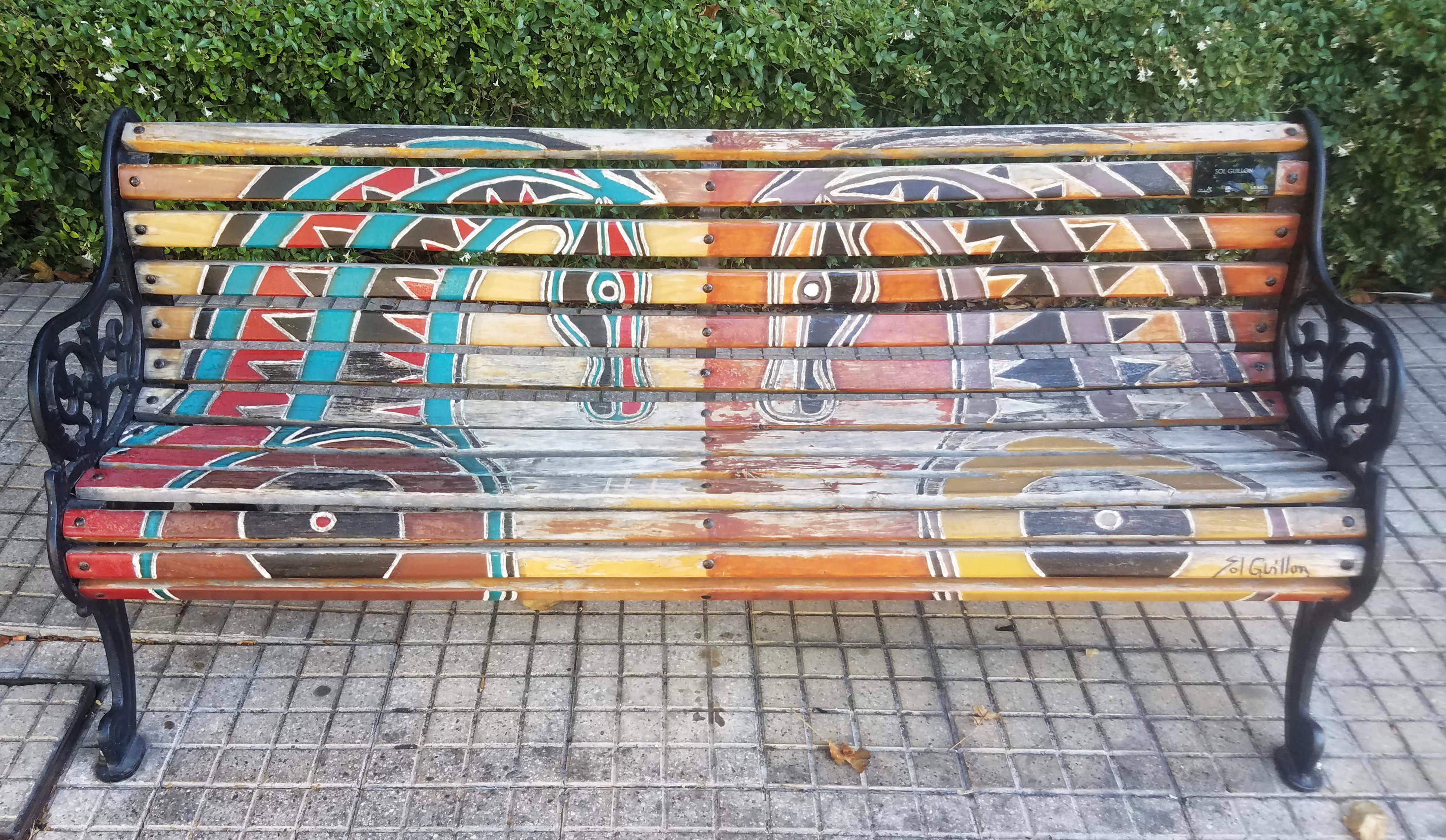
My favorites, I suspect predictably, were mainly abstract, though the bottom right bench does hearken back to the ever-popular dog motif.


And the absolute, all-time winner, with its allusions to earth, horizon, sky, and water, its hasty, indecipherable script, and its slightly skewed perspective, almost a quirky modern riff on a scene by Piero della Francesca: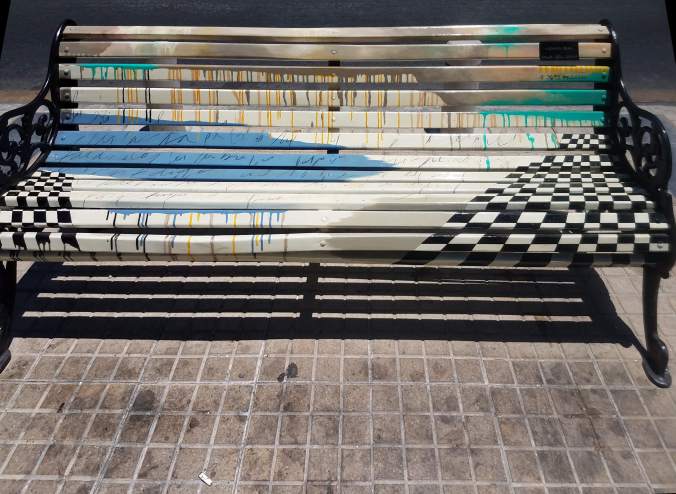
In all, these benches rarely failed to delight and give pause, prompting me to muse, yet again, on the potential for cities to offer moments of vitality by aesthetically enriching even the humblest of public places.
I could show many more, but then, that might discourage you from heading off to see and enjoy them for yourself.
— Sarah
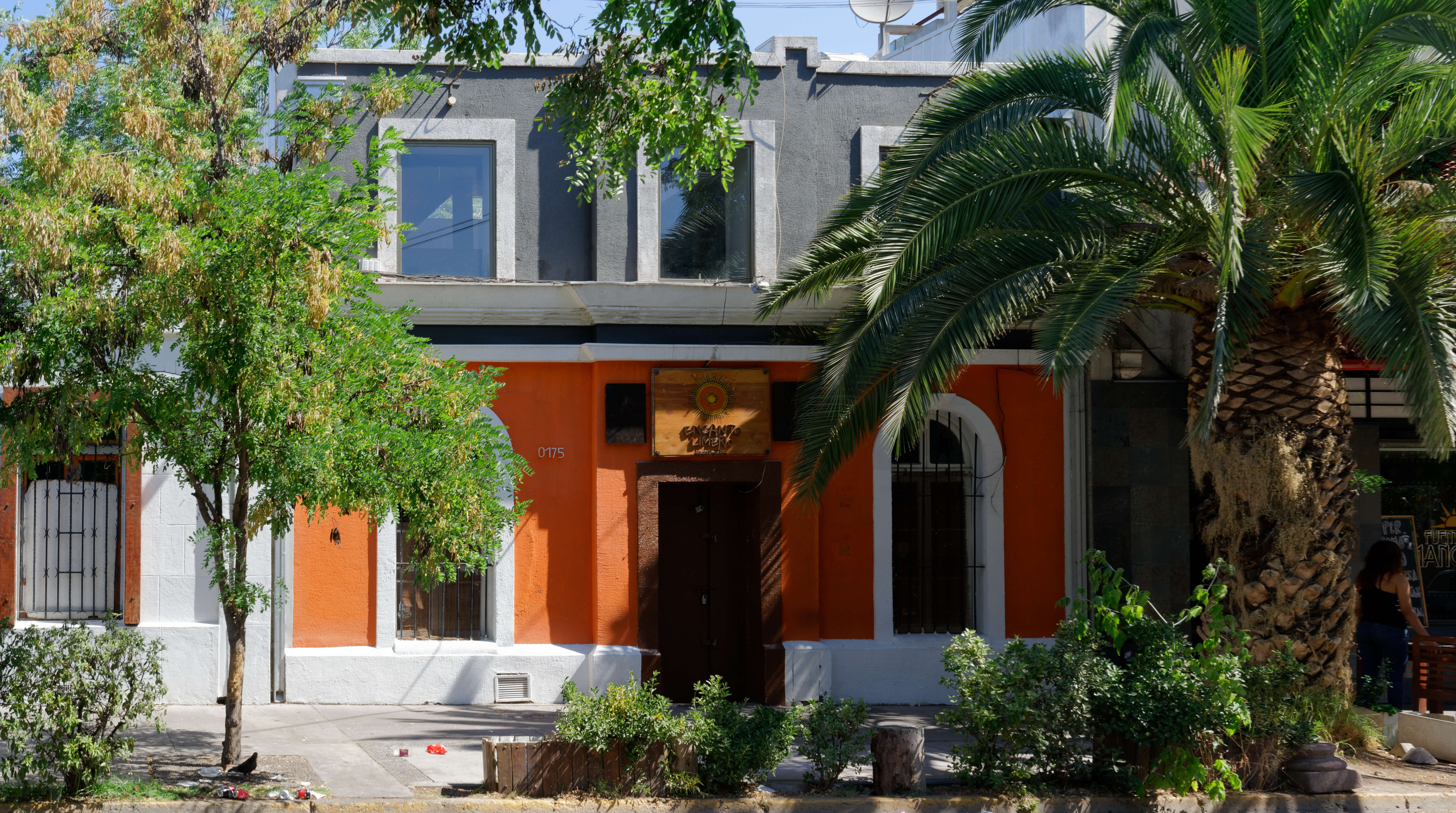

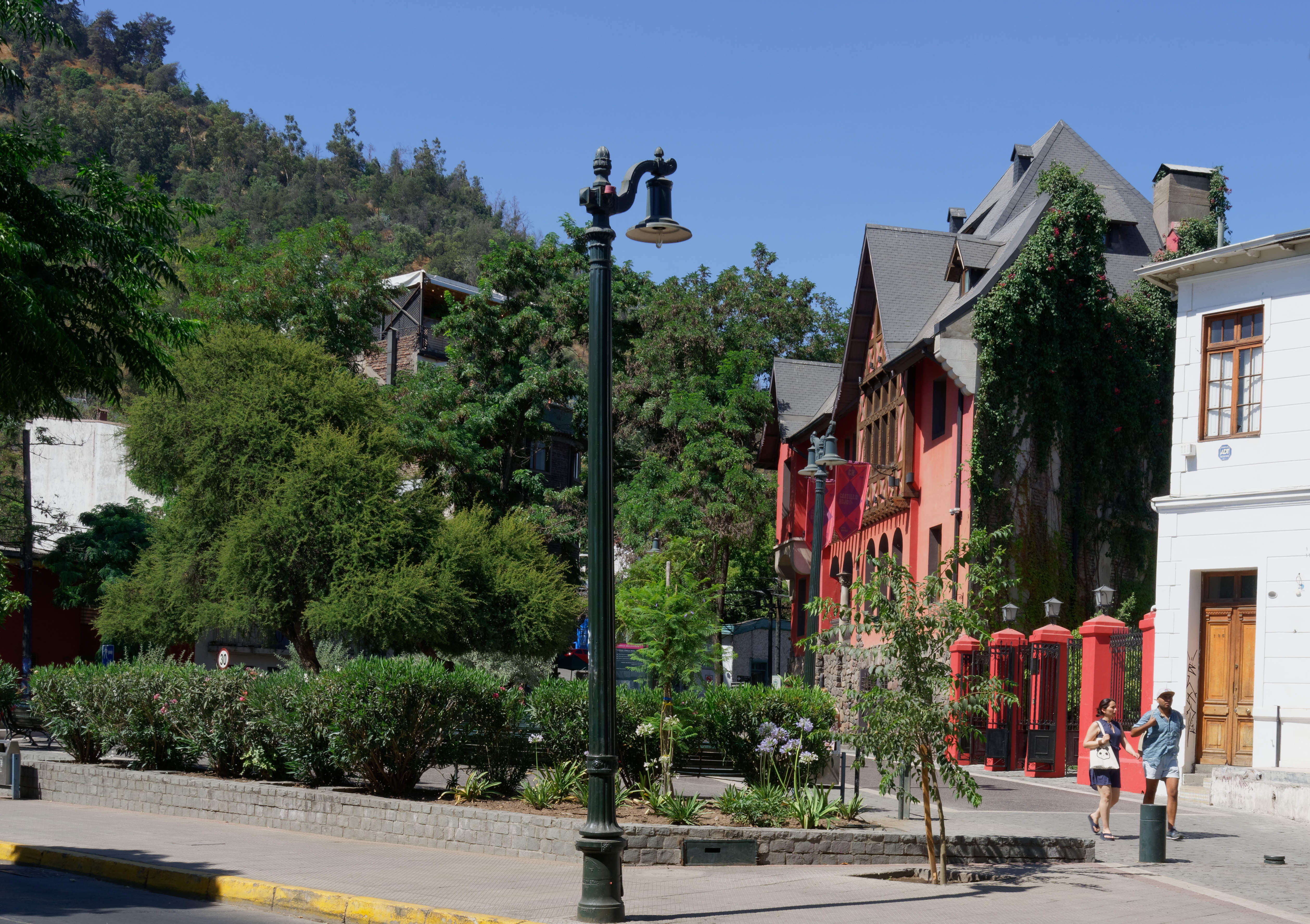



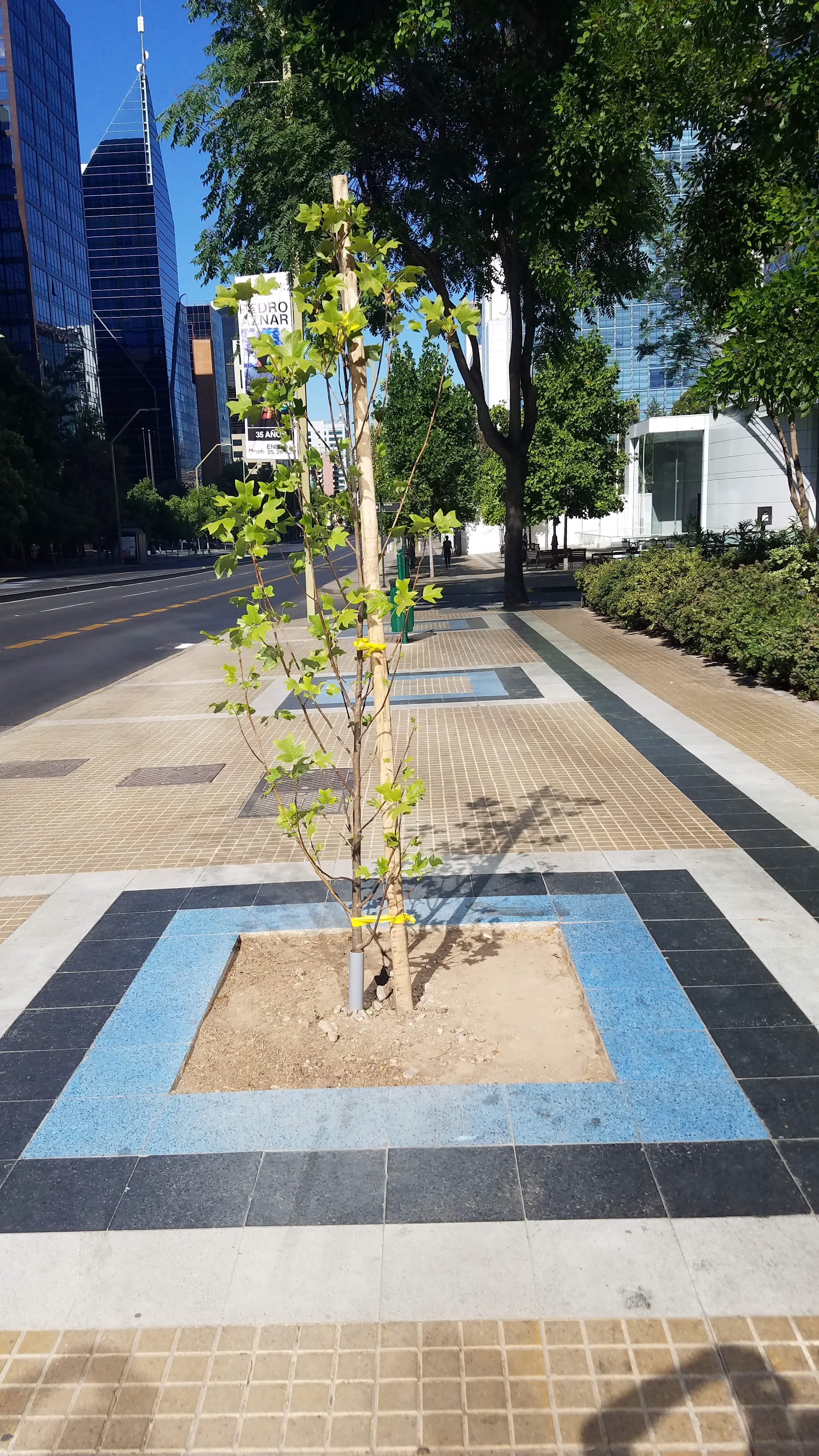


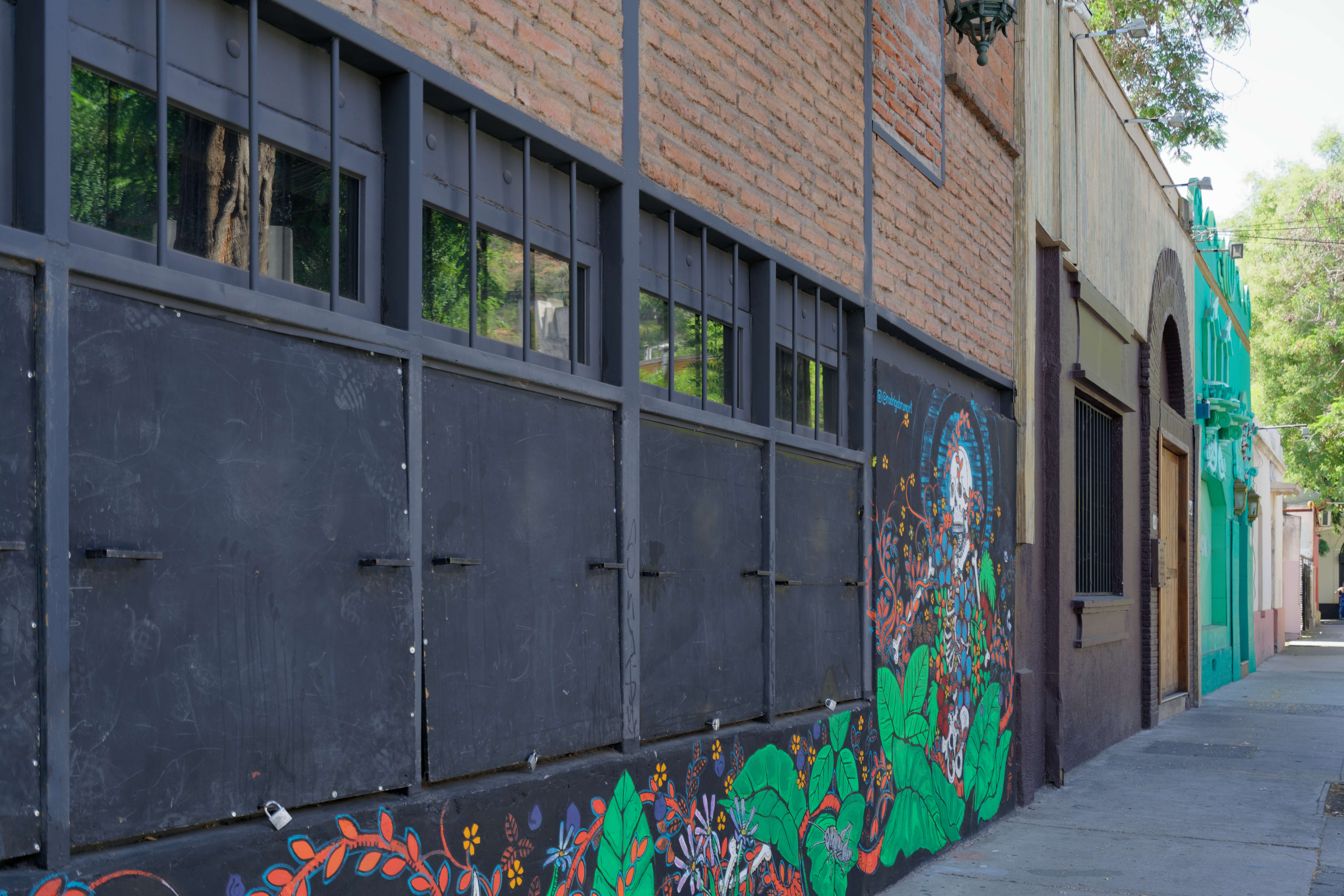

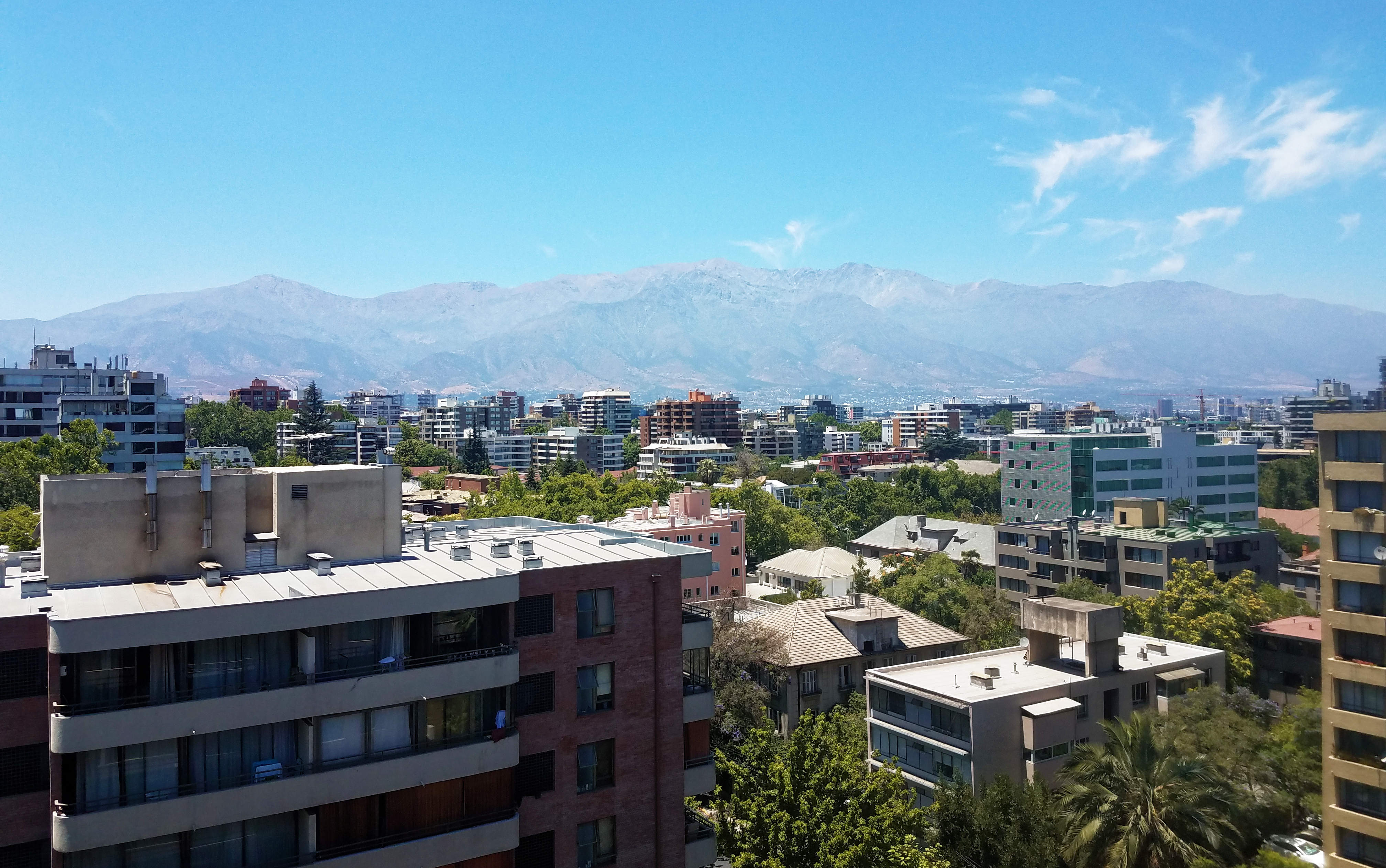


 But every part of the city that we saw – even the poorer, more downtrodden neighborhoods– bore the character of an invitation. Walk here. Look at this sculpture, this fountain.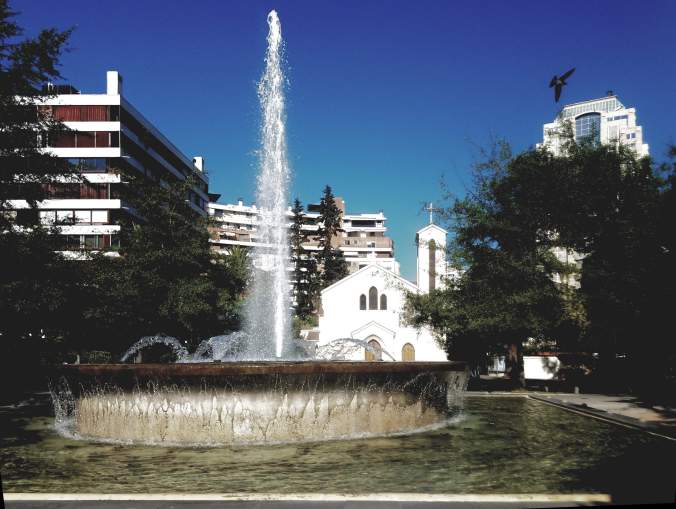
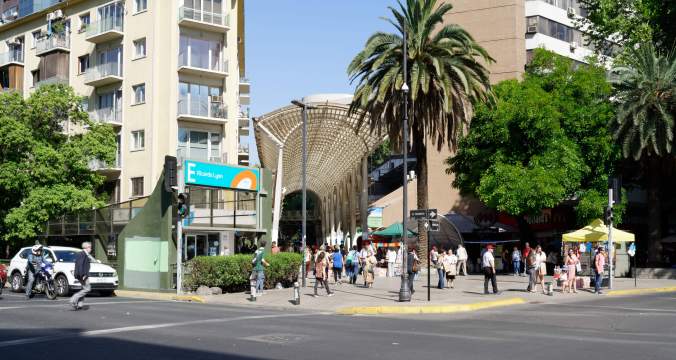
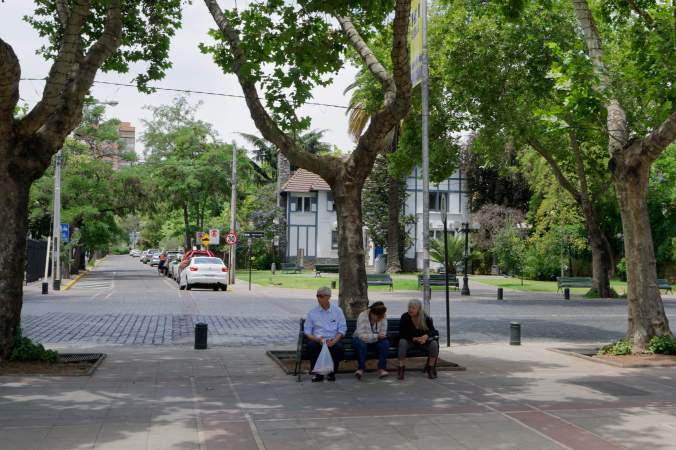 Slow down. Perhaps an espresso in an outdoor café?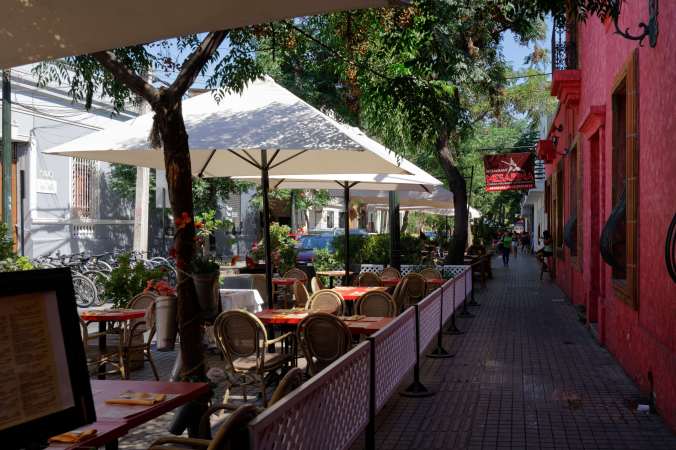
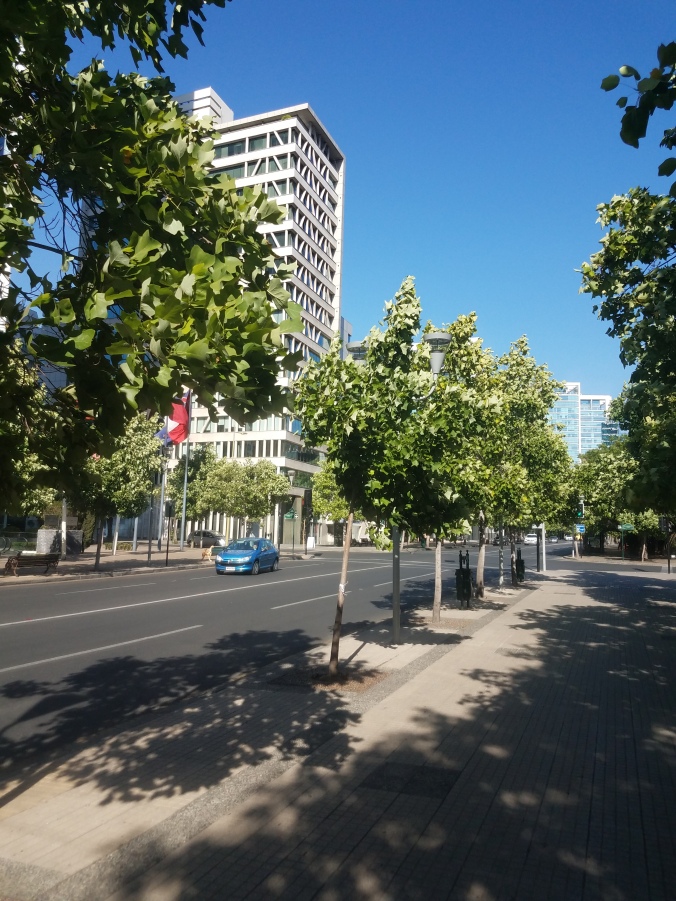
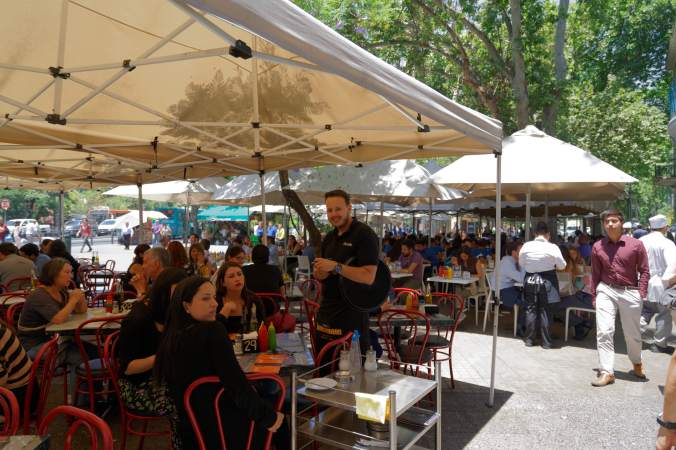 Like so many Latin cities, Santiago’s urban fabric and streetscapes were designed with strong bones, the scaffolding of a robust, unending public life.
 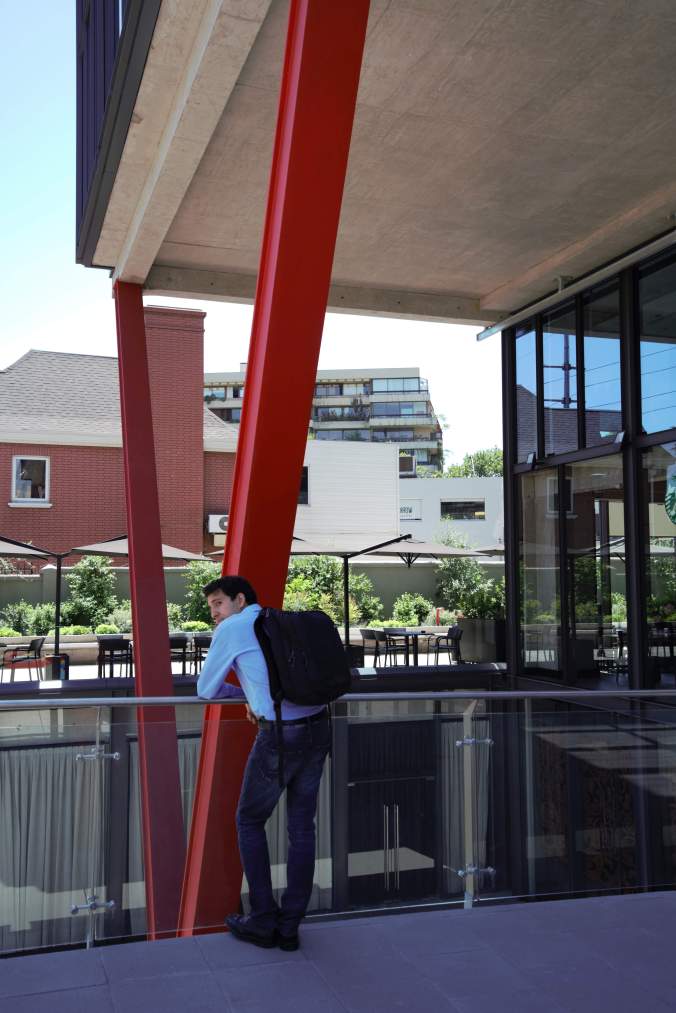 What did these streets look like during the Pinochet regime, I wondered? As we explored the city, I couldn’t but imaginatively replace what we were enjoying with scenes from the last part of Isabelle Allende’s House of the Spirits, when terrorized aristocrats hid behind lace curtains while learning of disappeared friends and acquaintances. What did Santiago feel and look like then?
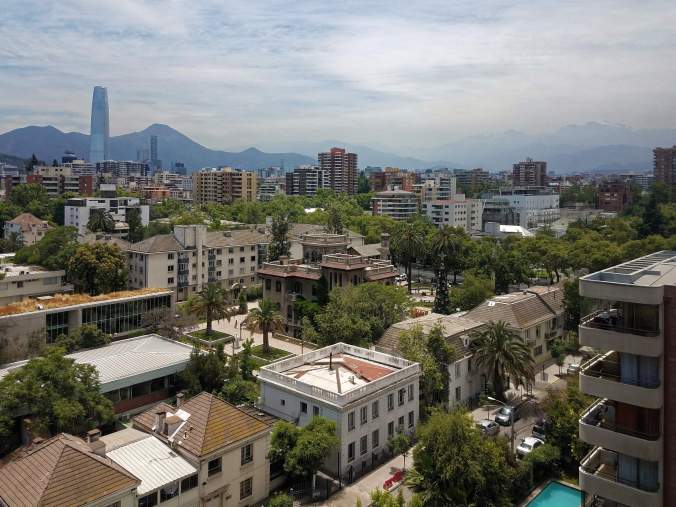
 a busy two-way street corralling cars onto a different highway, this one headed north toward the airport; and the Gran Torre Santiago, a 64-story tower designed by Cesar Pelli, the tallest building in South America.
 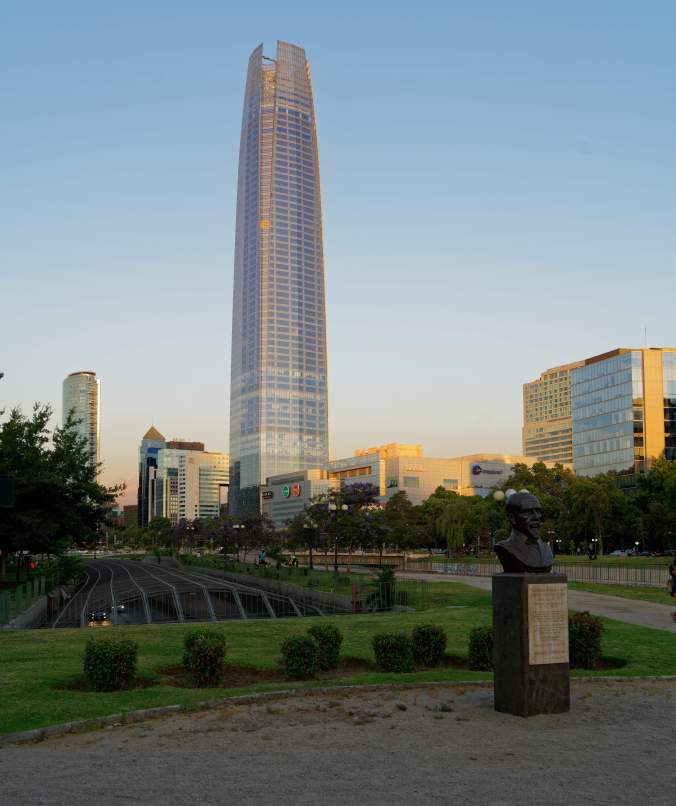 Oh, also: between us and Pelli, the heavily banked, mud-filled, brackishly yellow Mapocho river gushed and rushed, its elevated banks lined with strips of parkland.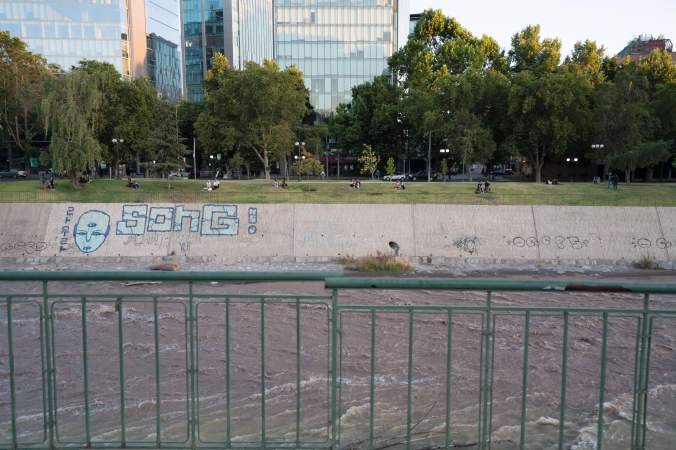
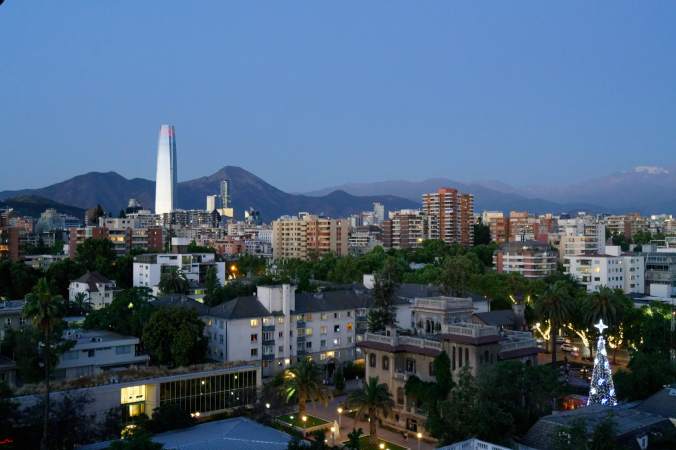 But at street level, the Gran Torre crashed into la Costanera, South America’s largest, monstrous, indoor shopping mall. Anyway the Pelli tower proved a convenient landmark, forfending all manner of navigational ruptures, and marking the transition from Providencia’s mid-rise apartment blocks to the beginning of Santiago’s newer business district, to the northeast of the city’s historic center.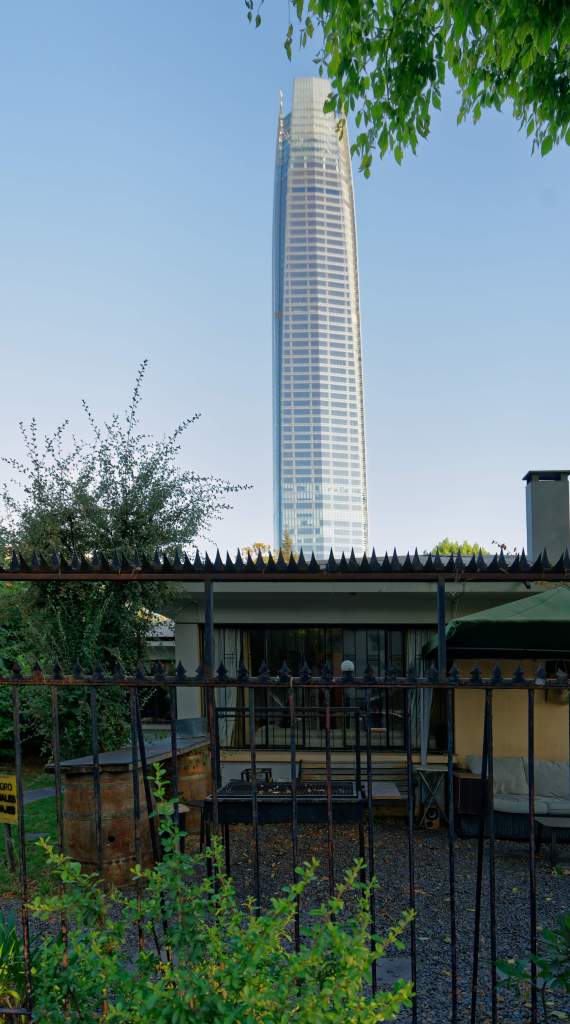
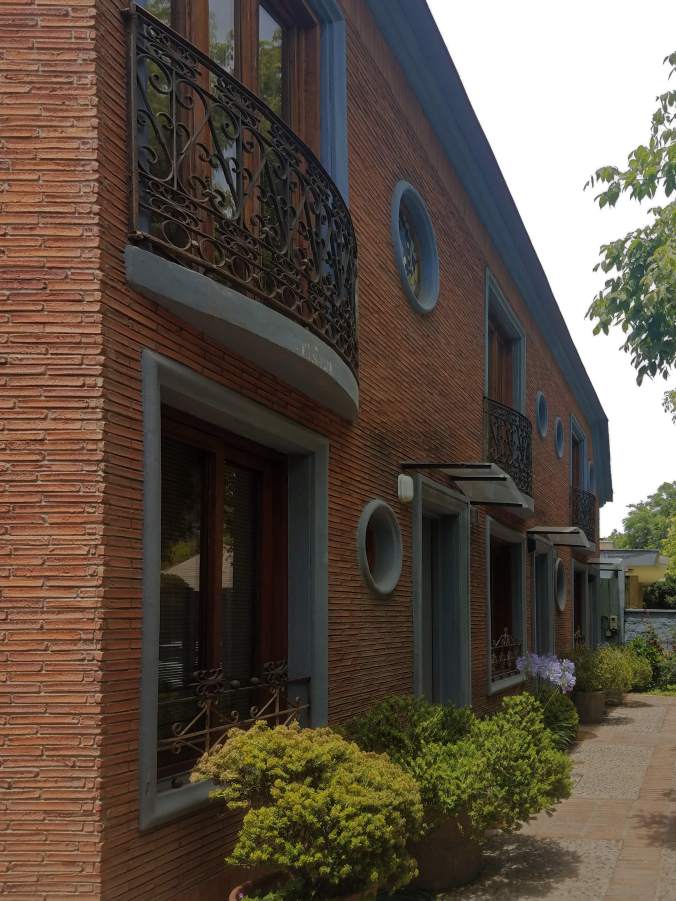 The architect-owner (coincidence? Not likely), Mabel, had meticulously restored the exterior
 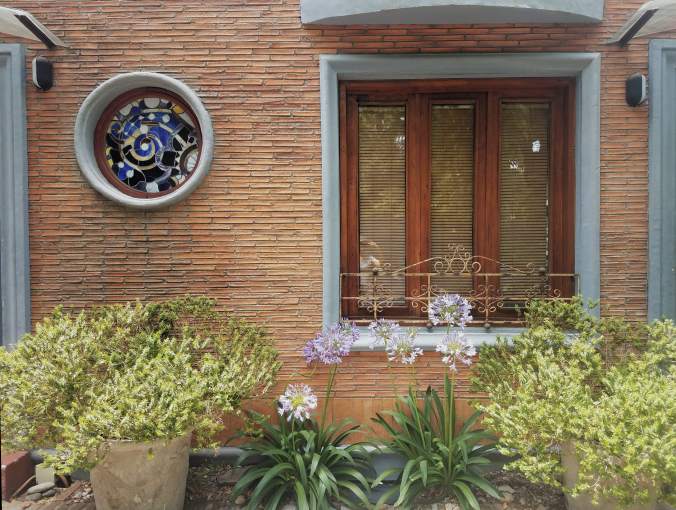 and carved the vast interior into three loft-ish apartments which she kept nearly continuously occupied through Airbnb.


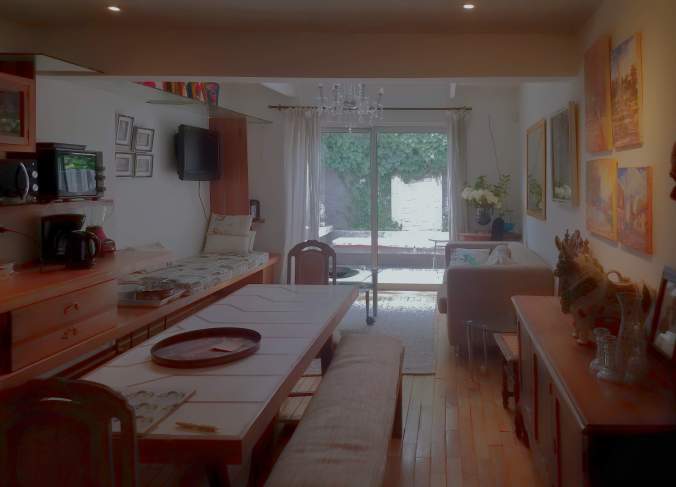 A “centrally located, luxury alternative” to Santiago’s expensive hotels.
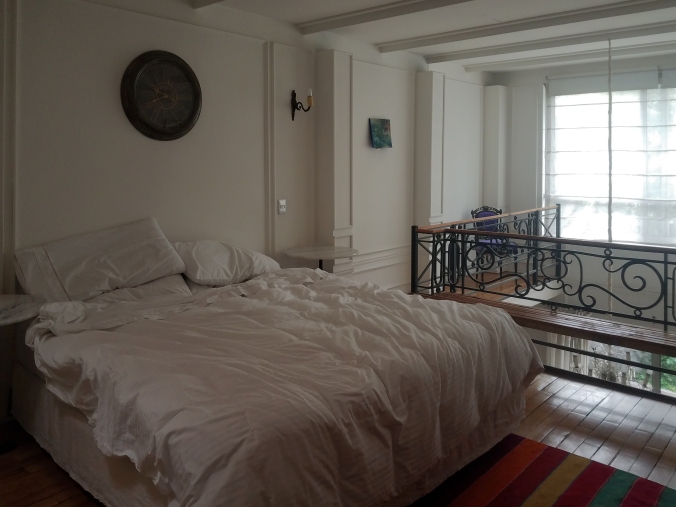 Even when her design taste veered toward over-the-top-Latina,
 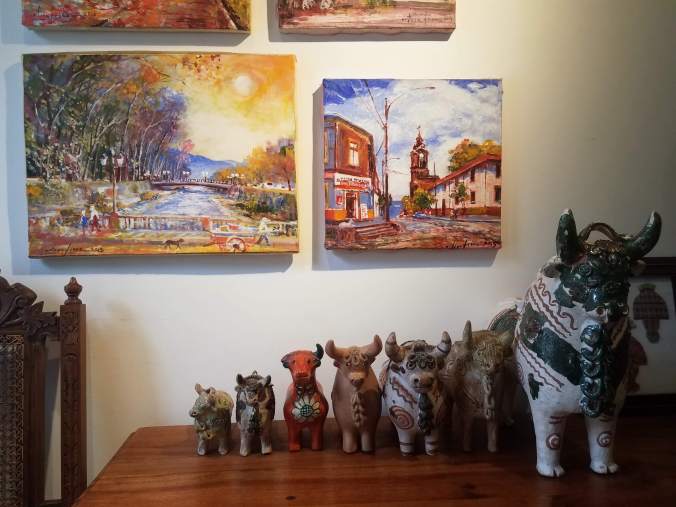 Mabel’s gesamtkunstwerk was gratifyingly distinctive in the way that three-to-four-star chain hotel rooms and hotels never, ever are. She had brightened up the dark interior by cutting in a double-height window in the back and lofting the second story bedroom area over the first. Some of the art hung inside was better than decent, too.

 Coordinating Goldhagens