 New Zealanders, with their seemingly infinite capacity to charm, charmingly call trekking or hiking “tramping”, which constitutes something of a national pastime. Tourist brochures and government-sponsored websites alike advertise the Tongariro Alpine Crossing as the best one-day tramp in the country. Not for the faint of heart, though. It’s 19.4 kilometers (nary a water source along the way), with official estimates advising that hikers to plan on between six and eight hours, with the ominous addendum, “depending upon your condition”. You are also repeatedly reminded to pack for different kinds of weather events: you can shiver in pelting sleet and sweat in blazing rays of sun in a single day. Or you can find yourself at the peak of a dry, sandy, 10-foot-wide ridge huddling against 65 mile-per-hour winds, as happened the day after we set out on this monumental — just no other word for it — journey. Some years ago, authorities, knocking their heads together about how to adequately alarm hikers (any number have died here over the years) into packing sensibly, settled upon the seductive, but probably ineffectual name change, and the generations-marinated Tongariro Crossing became the Tongariro ALPINE Crossing.
The path goes up a valley to the saddle between Mt. Tongariro and Mt. Ngauruhoe, both active volcanos. We and our fellow hikers — a simpatico, hail-fellow-well-met, mostly international crew — are repeatedly exhorted to stick to the designated route. If you do, you pass a sign below Tongariro, the largest, offering instructions in the event that it erupts in your presence. Item one: “Move away as quickly as you are able”. I laughed, and we proceeded without bothering to read the rest.
How to convey the experience of that day? Readers may thank me for discarding my first idea, which was to snap a photo every five minutes through the entire trek and to post every one here, sequentially, with the logic being that nothing else would suffice to impart the dual sense the day gifted to us: arrested time, infinite space. Instead, I offer, in sequential order, highlights of some of the awesome moments which came to us, step by step by step, at the infinitesimal pace of human locomotion.
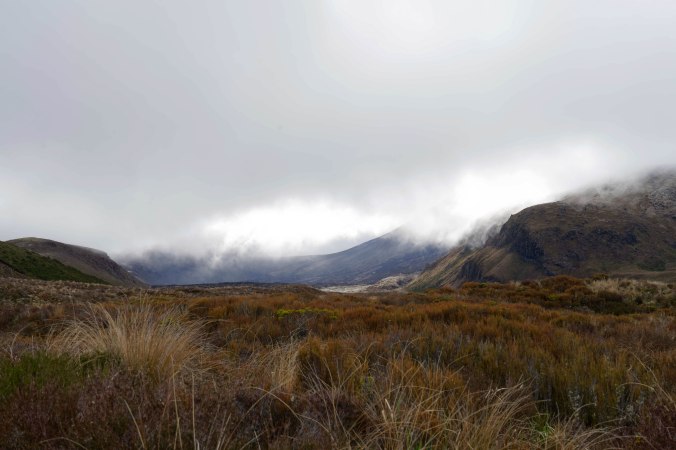
When we started, clouds draped Mount Tongariro in shades of white. Slowly, the ground cover changes: less grass, and less green, now scattered in wheat-colored clumps aside low scrub brush and lichen-covered rocks.
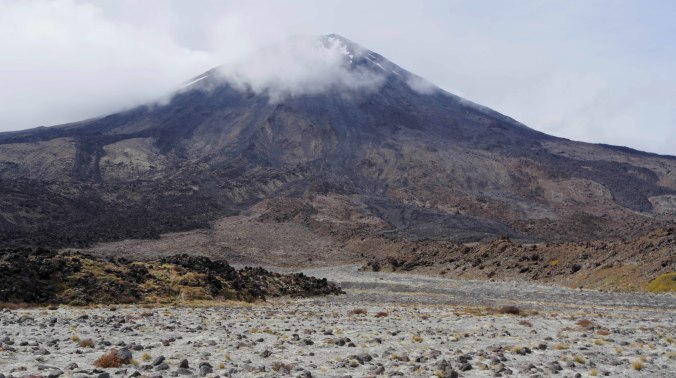
Eventually, the proportion of grass to dirt tips decisively in favor of earth, as the pure conical shape of the Tongariro crater comes into view.
Surprise number one: Red! The Red Crater rises 6200 feet above sea level. 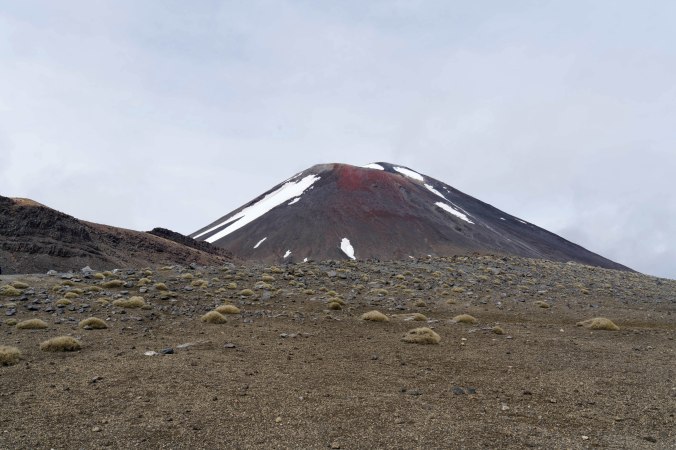
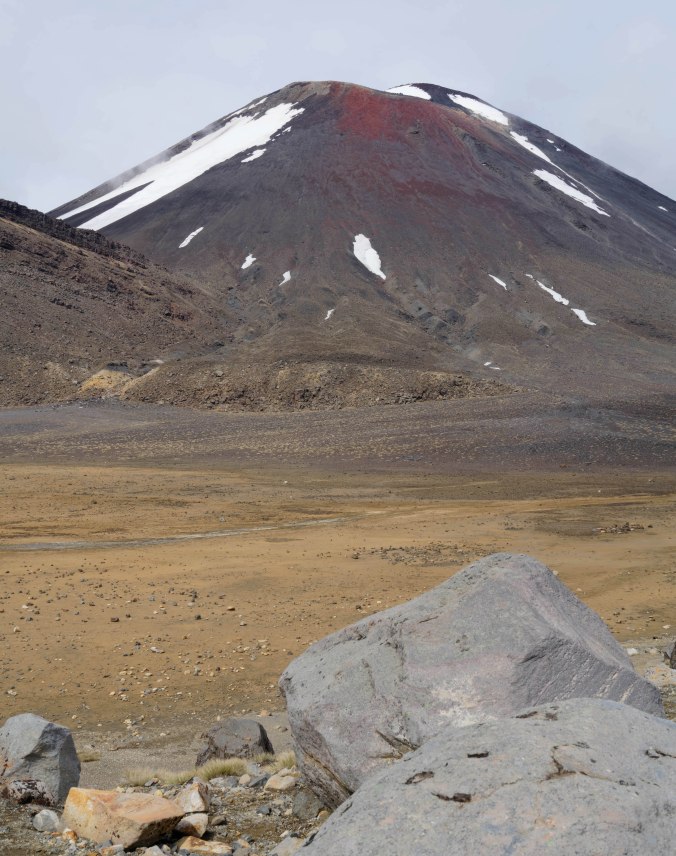
Eventually, you enter a desolate, soil and rock-strewn bowl which leads around the active, still steaming vent.

As you approach the Red Crater to circumambulate its perimeter, all flora disappear and you are left with acres liberally strewn with black, volcanic rock. The last eruption was in the late 1970s.
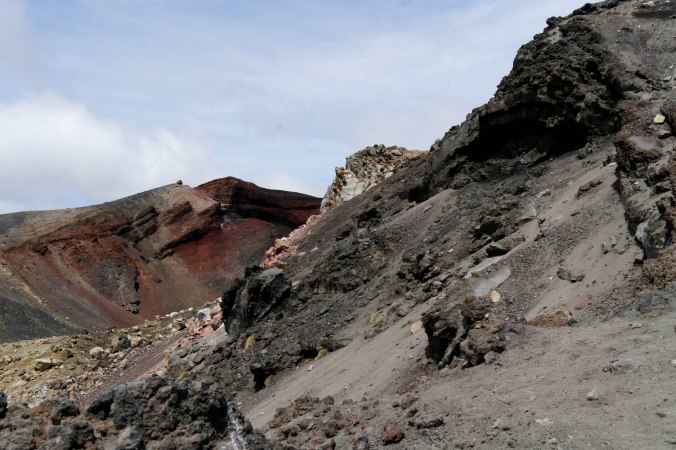
At the crest of the next peak, this culminates in a succession of extraordinary compositions. The pictures illustrating this post were culled from the 140+ photos I shot that day.
 Circumventing the Red Crater (you couldn’t actually ascend it) brought you into view of the vaginal-looking orifice from which all that lava spewed during its last eruption. From there, you began your multi-houred descent. Around one bend, you see this: the Emerald Lakes (at right). At left-center, in middle distance, you can just glimpse the Blue Lake, and behind it in the horizon, Lake Tapuo, which is a caldera of a different volcano, about 90 miles away.
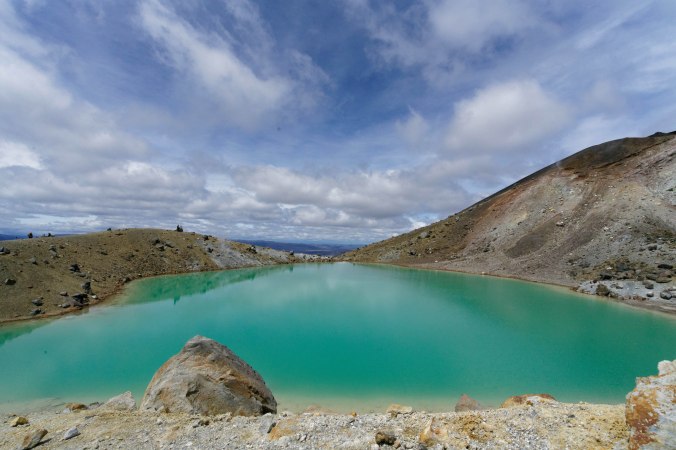
The Emerald Lakes sit at the edge of a large, grass-covered pan which resembles, a bit, the Amphitheater at the Drakensburg in South Africa. This was shot from the other end of the pan, looking back at the Red Crater.


On the way down to the exit (which entailed some climbing up, too), the landscape serves up an exuberant riot of muted color.
Near the top of the descent:
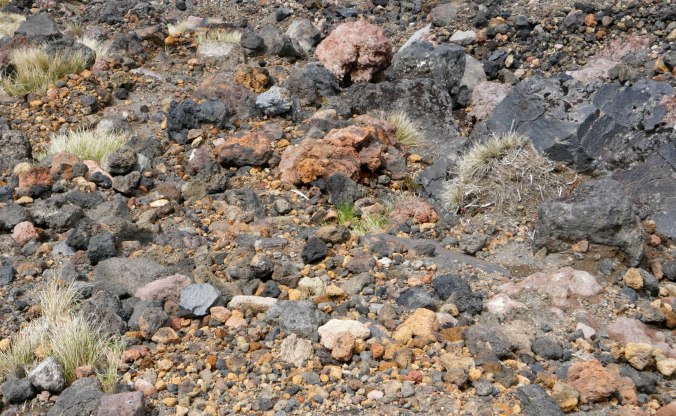
And slowly, again, the proportion of volcanic rock to ground cover and grasses shifts. 
By late afternoon, you’ve spent over an hour trekking through an absurdly dense, all-embracing rain forest. Nothing to shoot except deep shadows, ferns, moss, and spreading palm leaves.
And then — you’re done.

One last shot, taken en route to our next destination, showed where we’d been, from a distance. All three of us completed the trek in seven hours, without rushing. Reveling in my inexperience and my enthusiasm, I declared the Tongariro Alpine Crossing the best hike in the world.
— Sarah
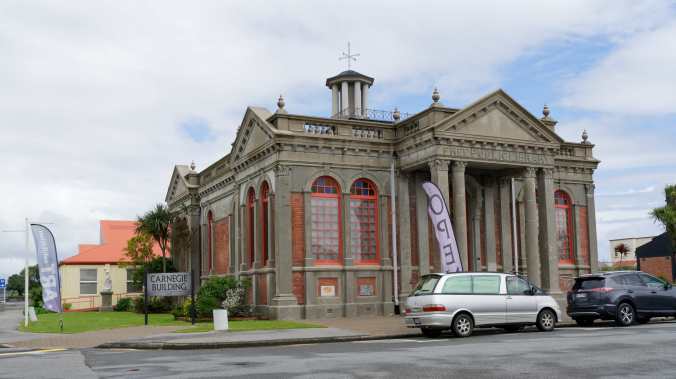
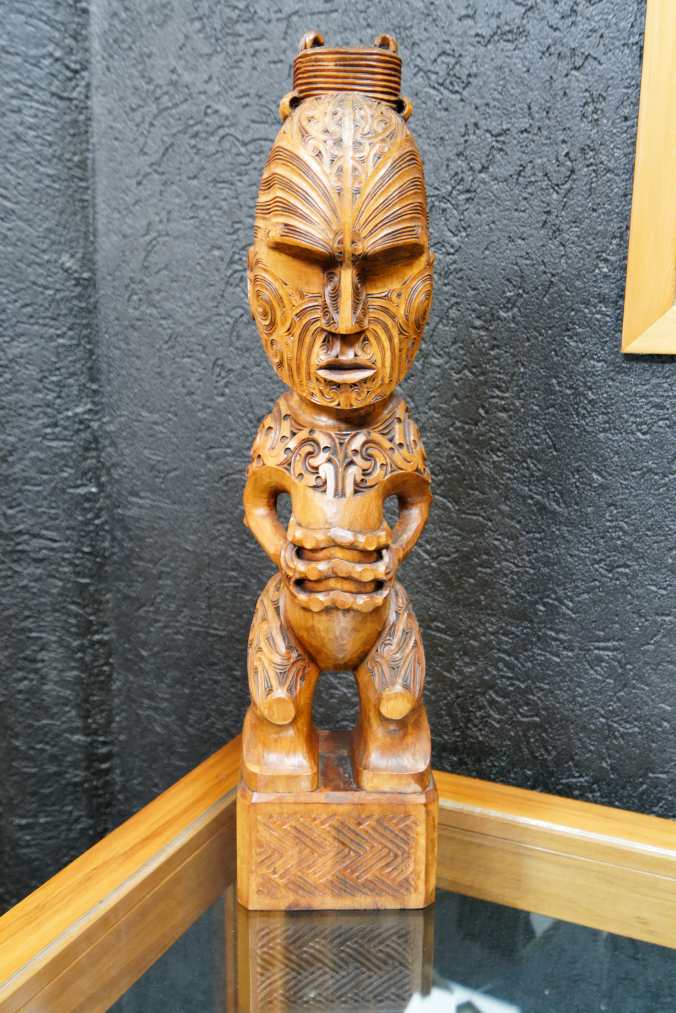 The Maori people were never very numerous on these islands; currently, they account for three per cent of the country’s population. Such gestures go part way to redress past wrongs to these indigenous people, to be sure, but I suspect it and all these other historical markers serve a larger function: that of constructing a robust narrative of NZ nationhood and identity.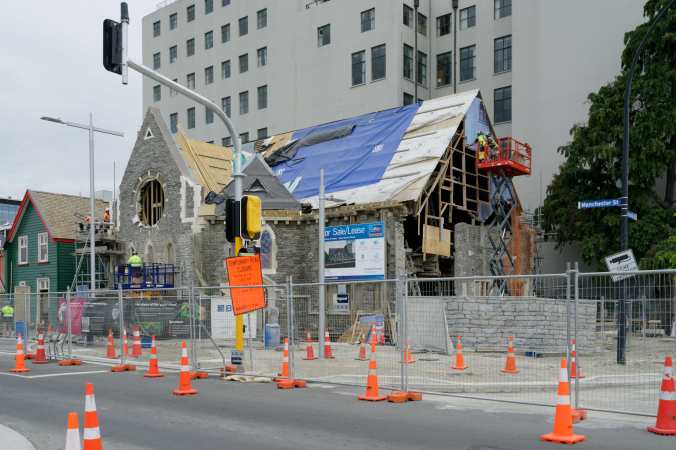
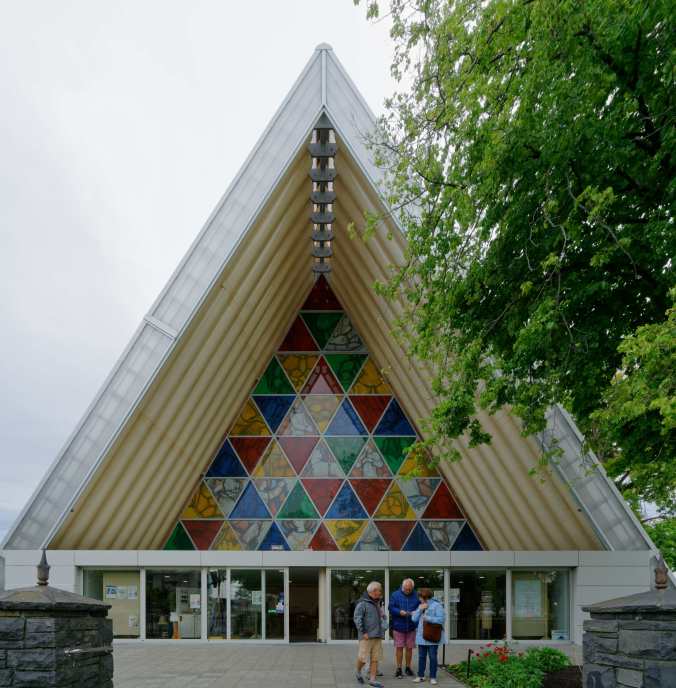


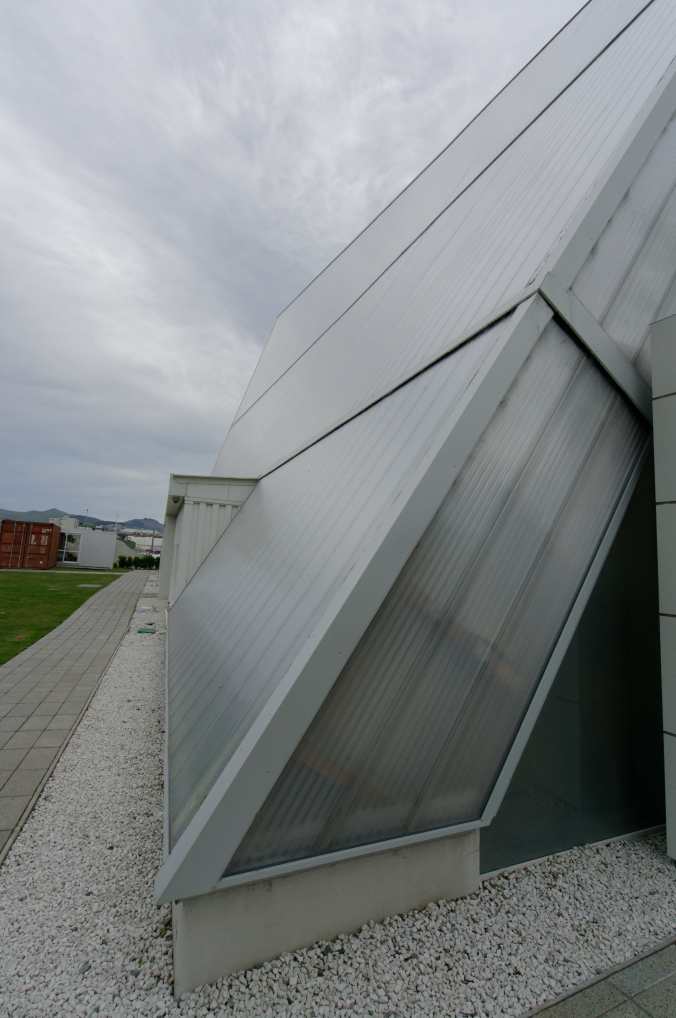 which creates a subtle, compelling dynamism in the nave,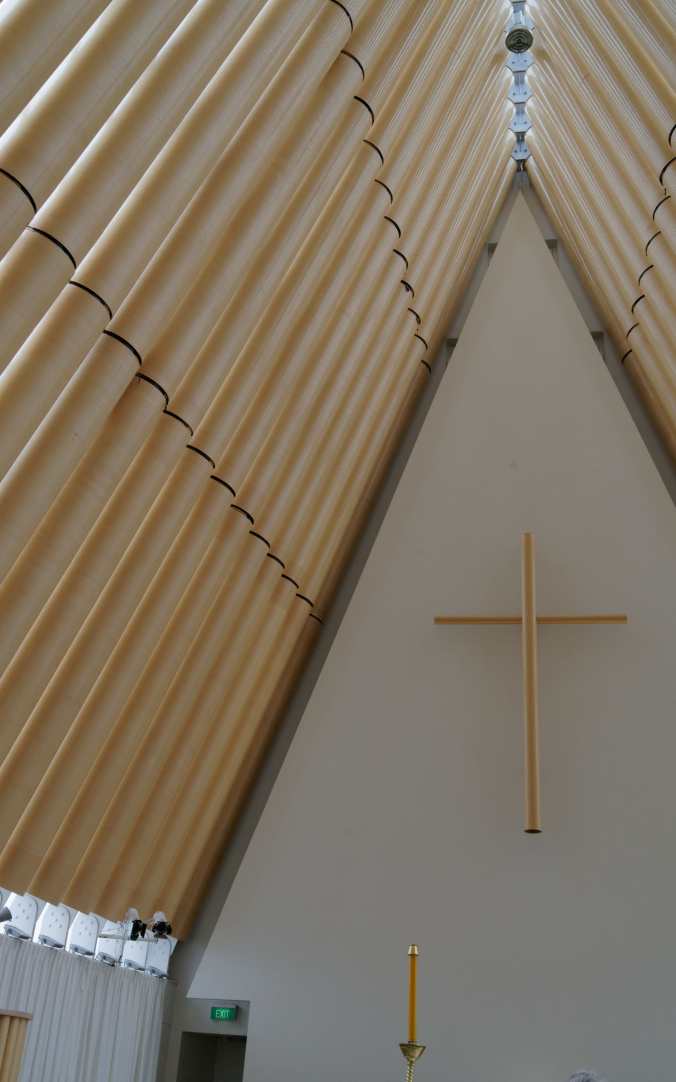
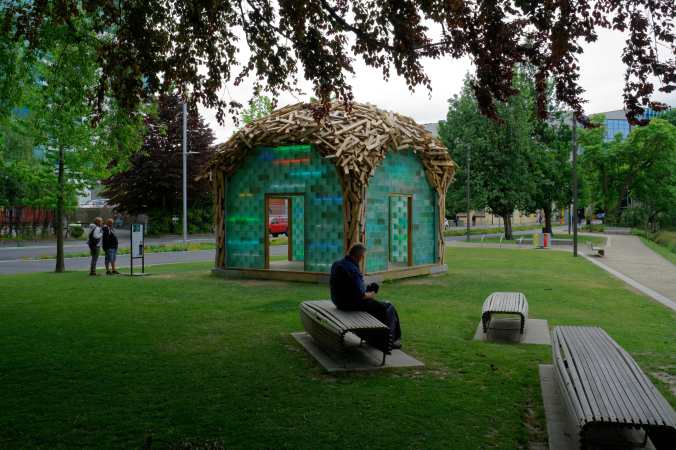

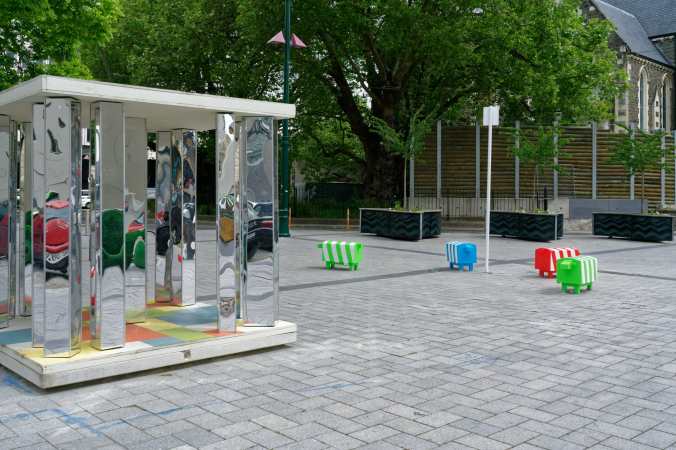

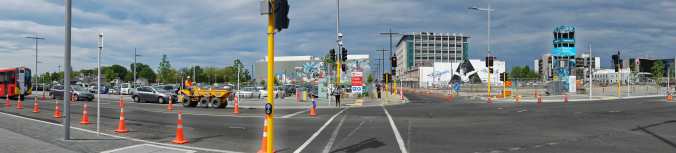
 Building has proceeded slowly in the Central Business District — Christchurchians grumble about it, then shrug, adding, it’s a great city. The CBD has been divided into precincts for retail, “innovation” (which I gather means hi-tech), health, performing and visual arts, and “justice and emergency services”. Dozens of large new buildings are under construction: a new metro sports facility, a new central library, a new convention center. A new transit and bus station opened recently.

 A couple of days of walking around the city suggested that the Little Black Hut’s design finesse was not unusual: most homes are small, but the detailing and compositional sensibility even in little cinder block, wood, or corrugated-metal-sided homes looks pretty well done.

 How little we missed the “sense of history” so prized amongst Americans! Running into the few remaining Victorian houses, grand and modest, provided enjoyment but not the sense of relief one finds when stumbling upon even modest historic structures in the United States. What we found in Christchurch substantiates the argument I advanced in WtYW that the problem in the US built environment is less old (better)-versus-new (clueless), but the poor design quality and craftsmanship of new construction. In Christchurch, high quality new homes, commercial, and retail buildings could be found everywhere. Even the mediocre buildings are good.
  Stay tuned, then, for the new iteration of New Zealand’s garden city — and dream.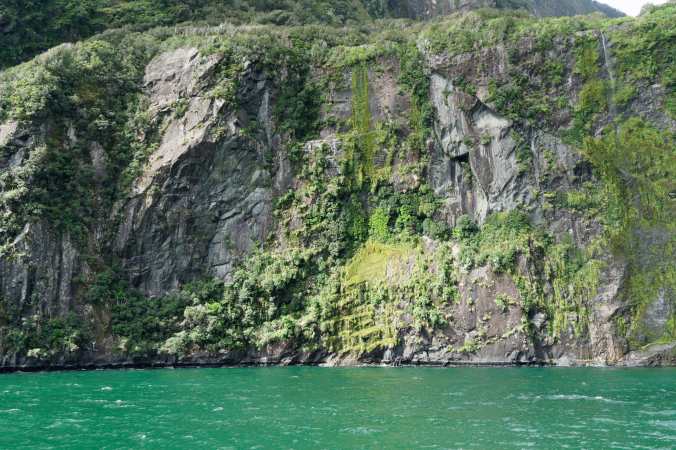


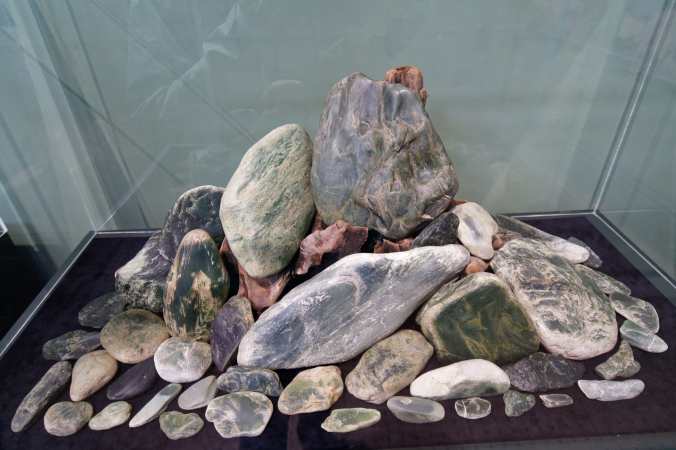


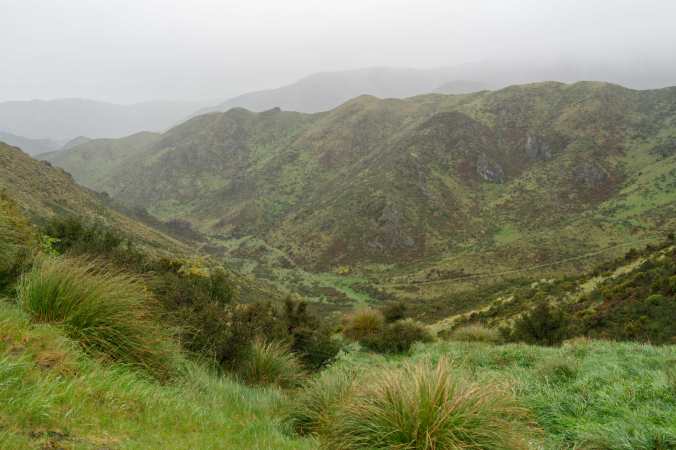

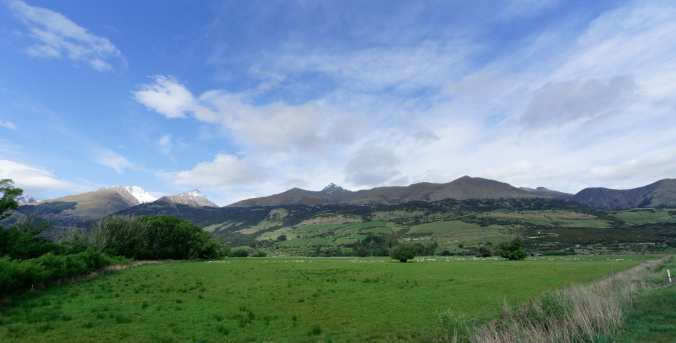


 and here’s the sunrise that greeted us in the morning.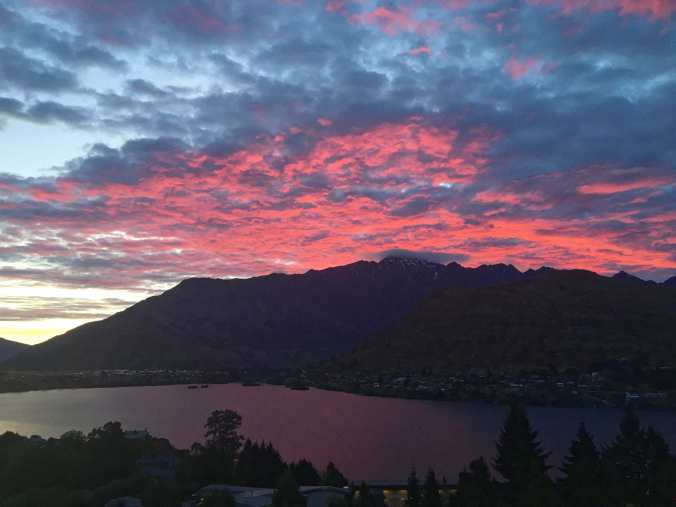
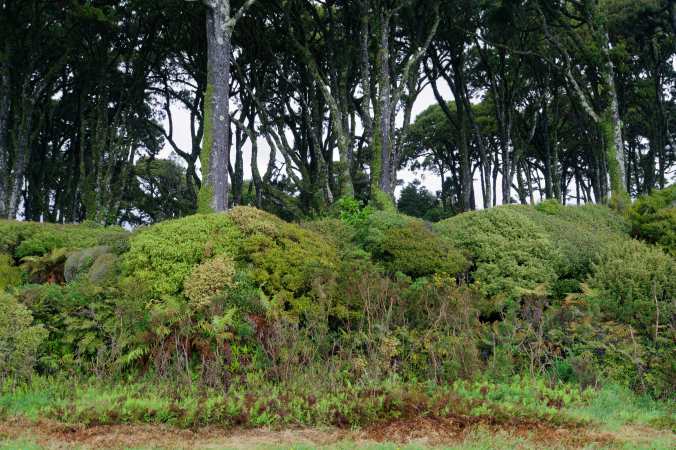


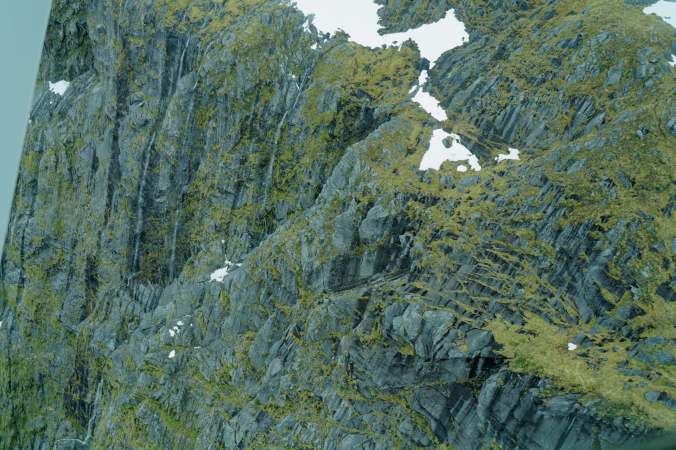
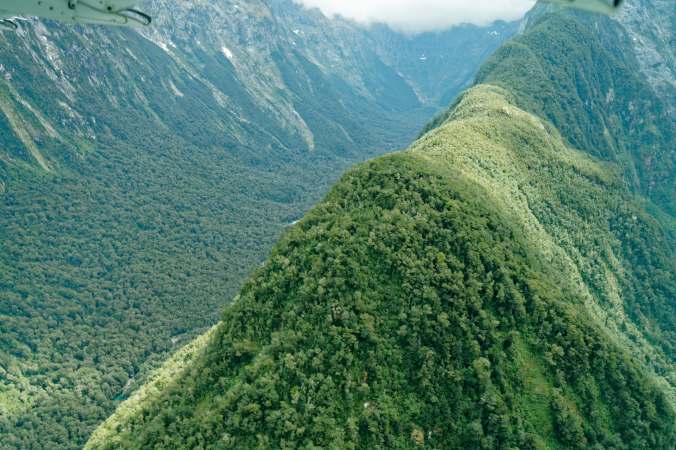
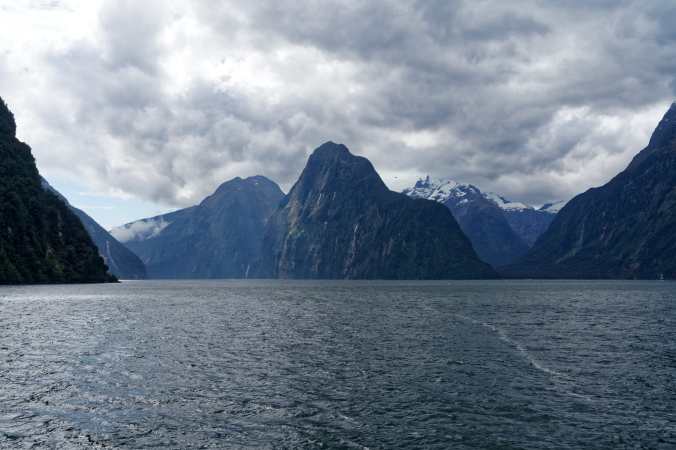 seeing those mountains shooting straight out of its deep, black waters is unforgettable.
 An army of eateries, several divisions of sleeperies,

 Before pursuing this line, I admit that I recoil a bit from being labeled a tourist, as, whatever its original sense, today it sounds so unserious and connotes at least partly negatively, and I like to buoy my spirits with the mental placebo that what we (Sarah and I, and Sarah, Gideon, and I) should not be clothed in this appellation.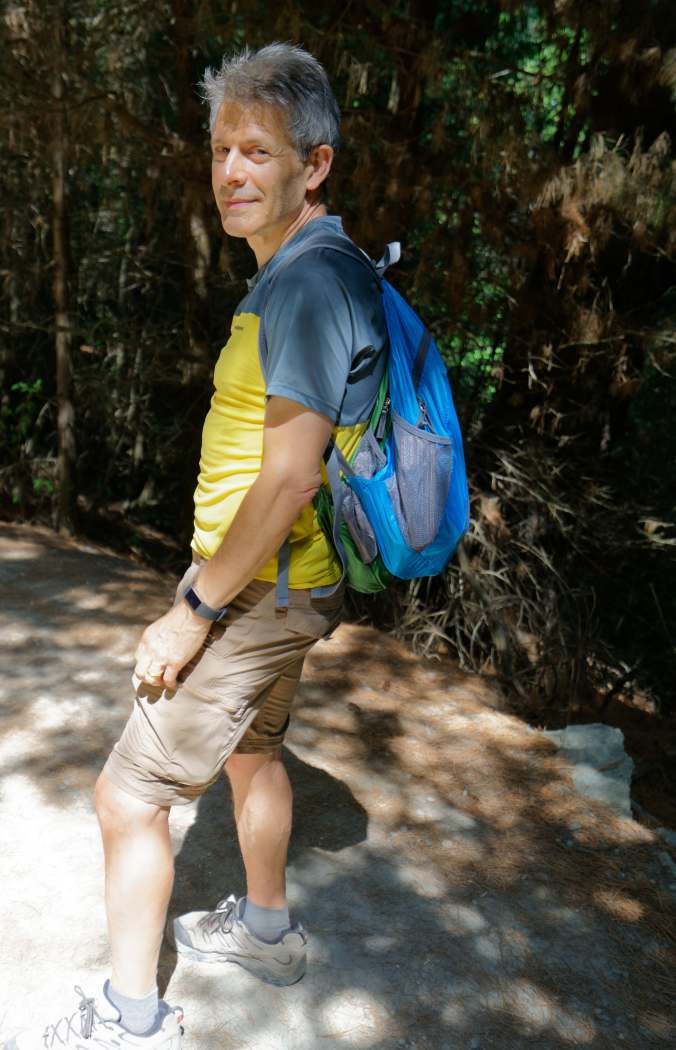
 Much of what we do when we visit places relates to our, especially Sarah’s, professional work, and this journey is intended to produce at least a couple of books, so my own perhaps at least partly self-deceptive self-conception as anything but an authenticity-sullying tourist is buttressed and legitimized by our vocational bents and activities. We are at once anthropologists of the globalized world, sociologists of the built and unbuilt environment, social psychologists of family life, and cultural critics of the arts and gluten-free food. Alas, to the untrained eye, we look and sound like tourists. The diagnostic truism “If it looks like a duck, and sounds like a duck…” is either on the money or, like many truisms, not clever enough by half.
 Thus, we call the people at Stowe or Alta “skiers”. The problem with naming the visitors to Queenstown is that we have no linguistic concept that captures what they are, and so we are stuck with choosing between the anodyne “visitors” and the iodine “tourists”.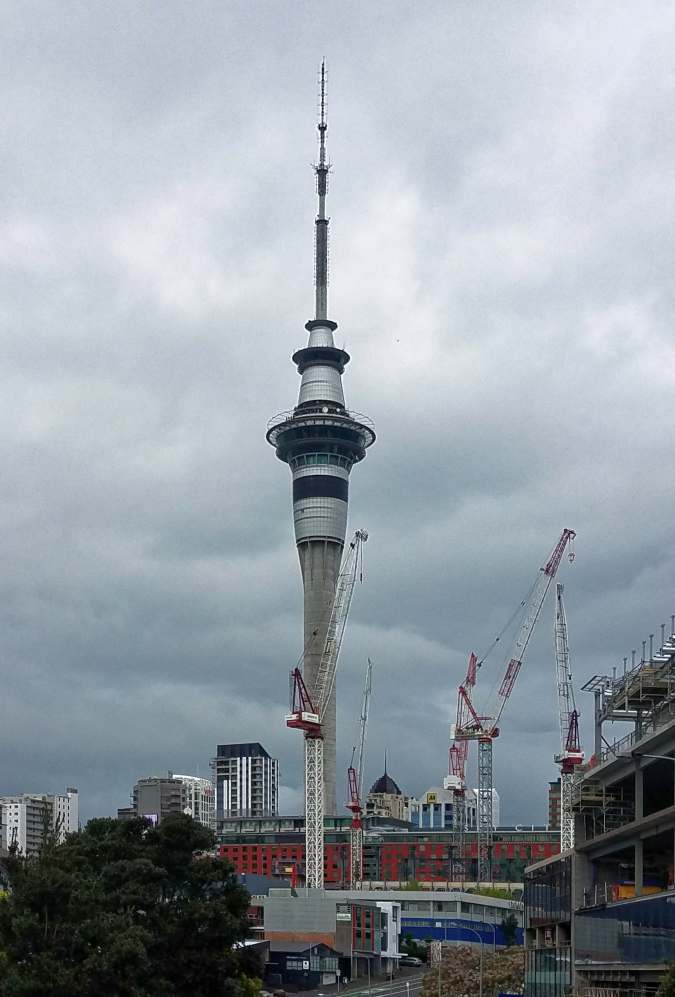

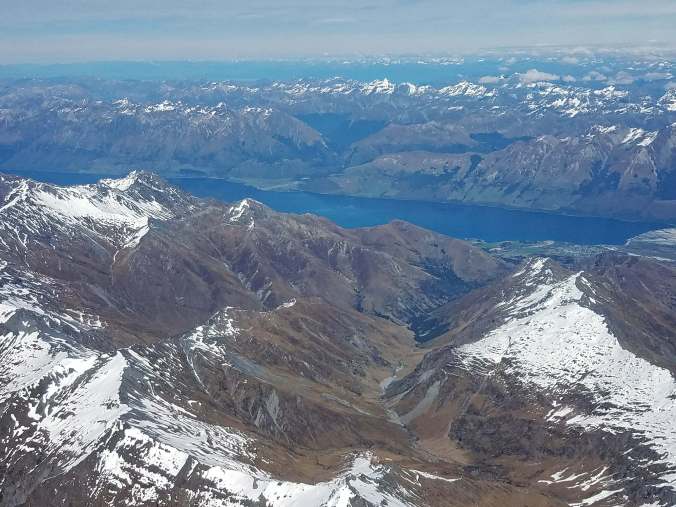

 The exception was Casablanca, but Fez, people tell me, confers this impression with even greater intensity. In its sense of arrested time, Morocco felt very different from other developing societies I’ve encountered. Take India. In India, people’s lives are saturated with tradition, but they do not, or at least did not appear to me to reject modernity. In some of Morocco’s most distant reaches, people seem only dimly aware that modern societies even exist. What are they watching on satellite TV?
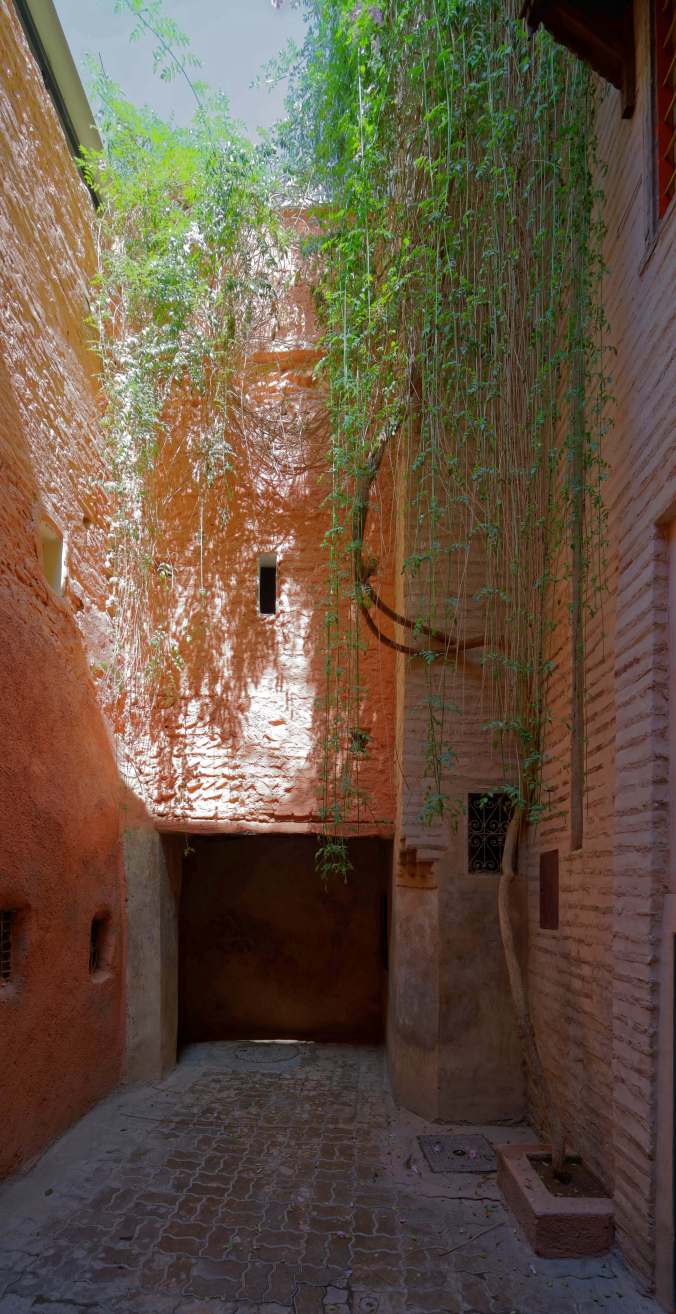
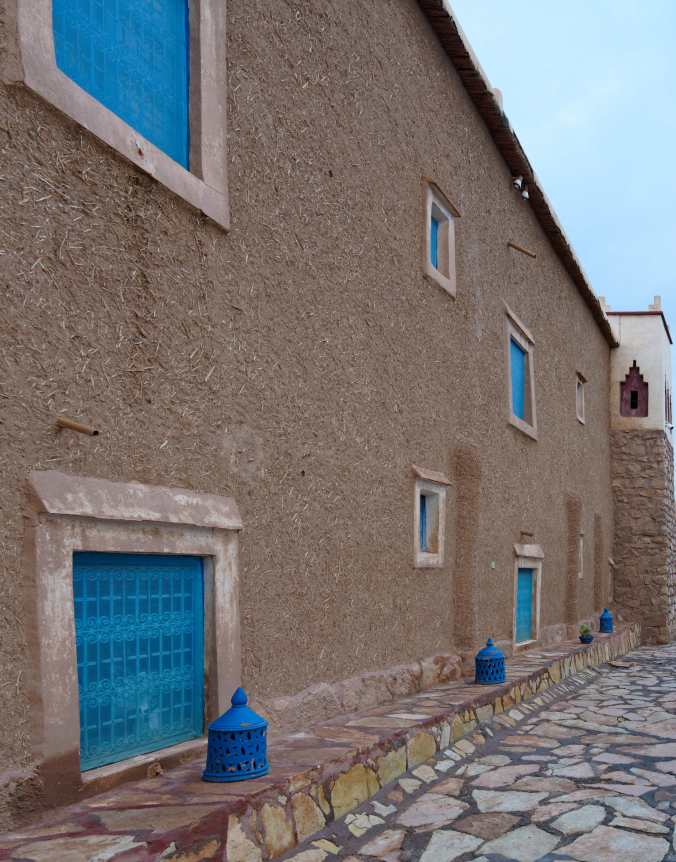


 Sometimes, in larger buildings, internal rooms with tiny windows butt up onto rooms opening onto subcourtyards with skylit roofs.
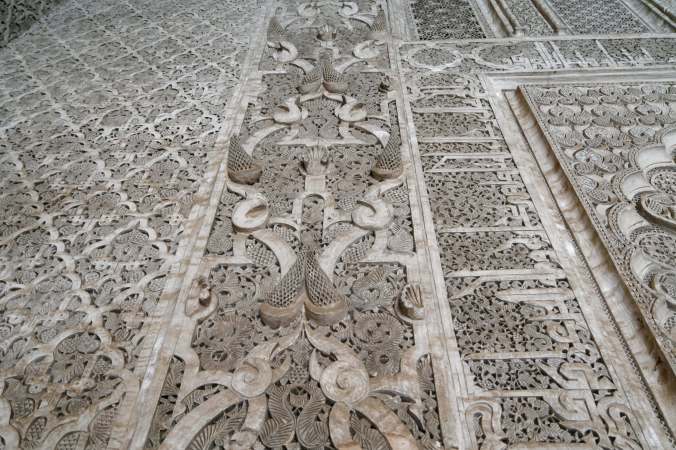
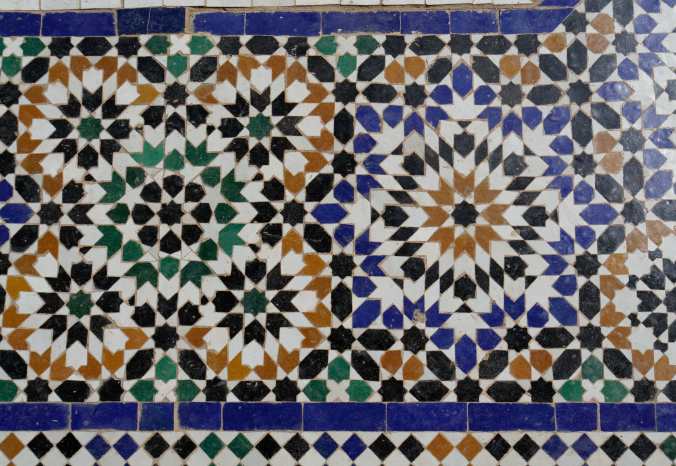
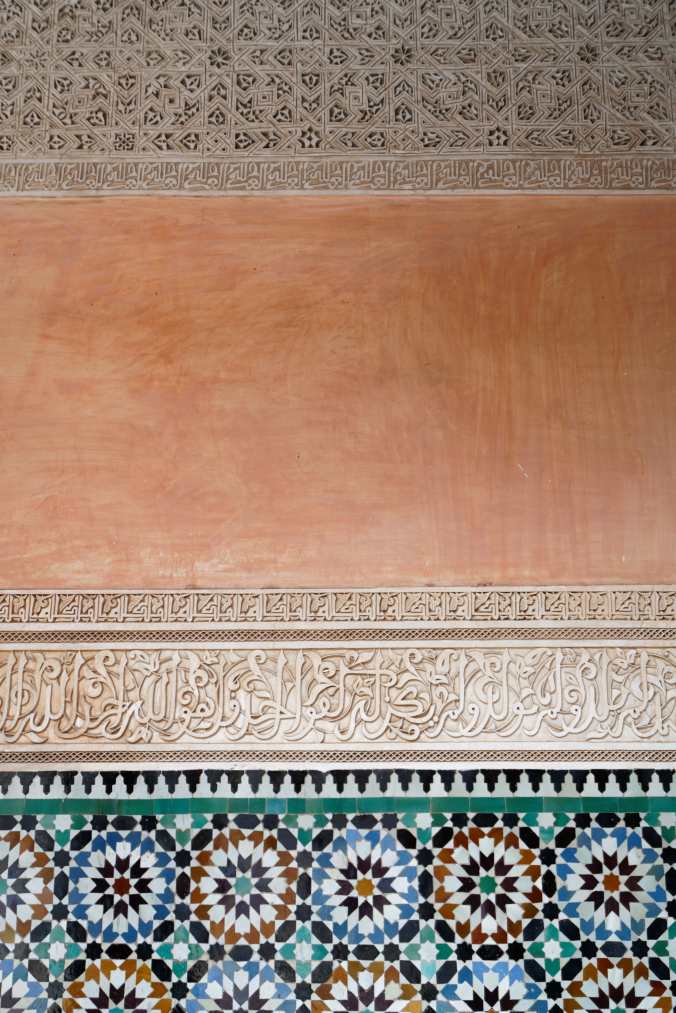
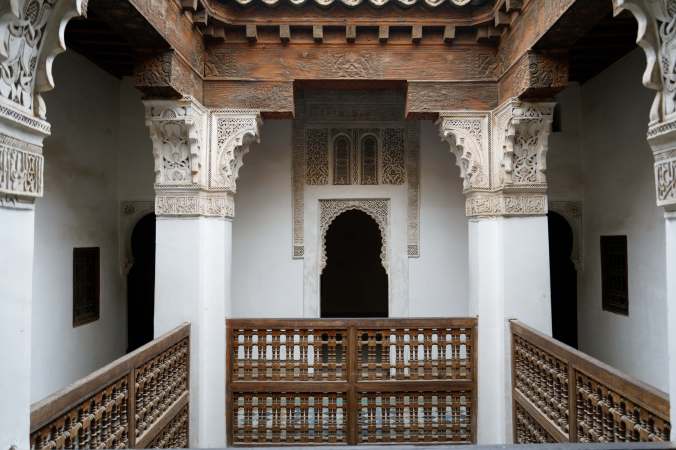 Spatial organization, spatial sequences – all are straightforward, even banal. (If the site varies topographically, sometimes there’s a little more action, as in the palace at Telouet.) So the colorful, intricate patterns constitute the only means of arresting our visual interest — or, to invert the formulation, to compensate for the lack of design complexity.
 In no place we visited did that differ.
 Coordinating Goldhagens