Wonderful People, Broken Parts

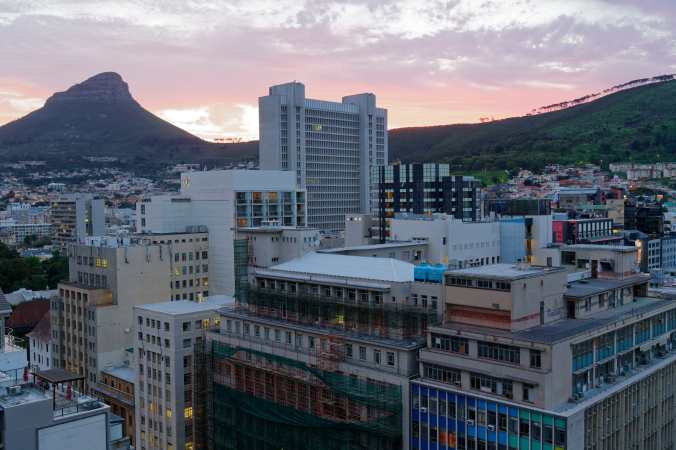
We spent close to two weeks in Cape Town, said to us ahead of time by two reliable friends, to be a European rather than an African city.
DSC03175_DxO.jpg

My regard for them notwithstanding, I had my doubts that such a baldfaced statement might withstand the test of our exacting social scientific eyes. Boy, or — not to commit a micro-aggression — girl, was I wrong.
DSC03129_DxO.jpg

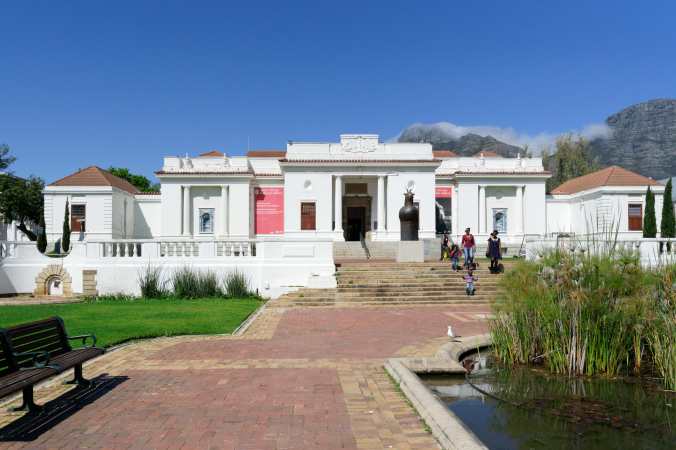
The Cape Town of our visit was overwhelmingly first-world and WHITE, and that’s because Cape Town might be fairly described as a post-apartheid city. That’s not to say that Blacks and Coloreds – these are standard apartheid legacy ways of categorizing people among all South Africans – aren’t in evidence. They are – often as waiters or clerks serving almost exclusively Whites. The continuing residential and spatial and wealth segregation of whites and non-whites, a de facto without being de jure apartheid, is manifest in a thousand different ways, which makes it impossible for a person not to be conscious (if at times only in the background of the mind) all the time. Whatever else it is, Cape Town can be conceived of as a soft-apartheid city. Massive townships, some with hundreds of thousands of residents and scant infrastructure and services, ranging from awful to dehumanizing, emanate far outwards from the city’s central, White core, or are sequestered off from the posh, gated and barbed wired, White suburbs.

DSC03142_DxO

The Cape Town townships – and therefore statistically Cape Town – constitute the most dangerous city in Africa. Gangsterism is a frequently heard term to characterize the quality and quantity of danger and violence of many of the area’s townships. Public transportation is appalling, creating effective commuting times of hours for many township residents to travel to their jobs (those who have them) in the central city. Cape Town, for all its fine features mainly for Whites, is sickening.

I can see how a (White) person with means, if willing to overlook or become inured to the larger degrading context and the human suffering it produces, could live well in Cape Town. Table Mountain (overrated as a natural and urban wonder, but nonetheless fine enough), great weather, inviting urban pockets, excellent restaurant, and perhaps enough cultural vibrancy, dirt-cheap cost of living (including wages for domestics), stunning beaches nearby and garden and wine country within an hour or two – it all adds up to a cushy and commodious existence. But the spiritual corrosiveness is unavoidable, whether one hardens one’s heart (QED: corroded) or not (it would eat away at you).

To be sure, I do not have the answers to the many questions of what to do and how to bring it about in a country of such massive economic (see Gini Coefficient), social (crime and violence rampant), health (HIV off the charts) spatial (de facto apartheid, built environmental disaster for most Blacks), racial (a country structured by race, racism, and racialism), and political pathologies (the government is massively and hopelessly corrupt). And it is easy for us to spend our three plus weeks in South Africa developing all our just criticisms while we enjoy the natural wonders, marvel with and at some of the wonderful people we meet, and viscerally experience the ordinary horrors that are the commonplaces of this country, and then to leave on our merry way, bequeathing little more than a few withering blog entries in our trail. So, we – Sarah, Gideon, and I – talk, and talk, and talk, and who knows what it will yield.

Among the wonderful people we have met, we spent several days in Port Elizabeth with Kevin Kimwelle, a personally winning and professionally admirable architect and social activist, with whom we will surely keep in touch (and about whom we, probably Sarah, will write more).

20170828_142939

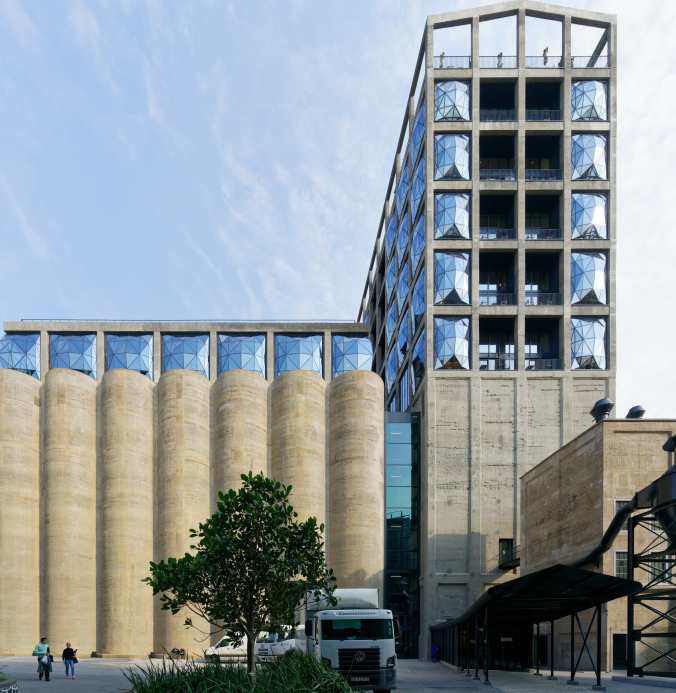
Mark Coetzee (see https://www.conceptualfinearts.com/cfa/2017/06/30/mark-coetzee-interview/), the director of the just-to-be-opened Zeitz Museum of Contemporary African Art, hugely impressive and thoughtful, spent a couple of hours with us, touring the museum and explaining to us the building process and choices – of mission, art, staff, and institution – in a society characterized and riven by all the features (and more, such as violent homophobia) I have mentioned.
DSC03222_DxO.jpg

We learned a great deal from Mark in a short time, and even received a fairly spirited critique of our, in his view, blinkered critique of South Africa – though it was unpersuasive as the defense mainly took the form of pointing to the inequalities and horrors of other countries (real or exaggerated). Lest I leave the wrong impression, Mark told us that he had been a long-time anti-apartheid activist who had to flee the country in the 1980s, that he decries the ongoing soft-apartheidism of South Africa, and that he works to privilege and give voice to African artists (mostly non-White), and to create as progressive an institution as possible. It may be more complicated than Mark’s self-representations (how would we know?), as he, a self-proclaimed Marxist, comfortably and successfully works at the highest and wealthiest echelons of the notoriously non-Marxist art world, which suggests that he may be caught in what the Marxists call a contradictory position, one of less than full self- or self-representational enlightenment. In any case, for us, Mark, memorable as he is, will just be a memory.

In the Drakensberg, we met, climbed with, and broke bread with a range of people, mainly Europeans, who gave further support to the well-established notion that people who appreciate nature enough to want to hike along or up it are generally nice people, or at least they bring their better selves on these adventures. Of particular note, aside from the always helpful and earnest South African staff of the lodge, were two Germans who were more or less permanently in Southern Africa to bring the word of their God to others. They were full of the well-meaning passion which I have encountered in Jehovah’s Witnesses, which they were. Miriam and Mike have devoted themselves to living by their humanistic (if godly inspired) principles, going door to door giving witness and spreading their enlightenment. Even though their understanding of godly issues is decidedly not mine, I like such non-self-righteous-righteousness, and admire those who espouse and practice such an orientation’s maxims. Salt of the earth was coined to describe such people. Their optimism and positive spirits are infectious. We shared a couple of lovely meals and a bunch of laughs with Miriam and Mike. Who knows if we will ever be in touch with them again. If we do, I will be happy.

There were, of course, all the many South Africans of whatever skin color (race) and station we encountered. All-in-all, nearly without exception (except for a few race-coding Whites), people were lovely and kind, with smiles all around (except from the flow of beggars). We talked to as many people as we could, mainly Blacks and Coloreds, with the passing questions and conversations that can come with such chance and fleeting encounters. Our impressions of those we encountered is that the people were well-educated and thoughtful, with much human capital and ambition, and therefore ready to take off if economic and professional opportunity were to come their way. From our end, all we had to do (we usually offered more) is mention New York, which has cache with everyone.

The densest and most significant contact we had with South Africans was orchestrated by Gideon, who in his by now typical manner, went about on his own, and met a group of Black (perhaps some designated as Colored) young men and women, who integrated him into their squad (he immediately was let into their group chat) and with whom he ran day after day and became friends, real genuine friends. They met over a rap song in McDonalds (Gideon was rapping along, the others, sitting nearby, laughed, and they all started talking), and the rest is history. They – Larnelle, Clyde, Llewyn, Judah, Henry, and Octavia – poor enough that on the last day we were there, they didn’t have enough money to come into Cape Town. Sarah and I suggested that Gideon offer to pay for their transportation and food, which he did. They accepted eagerly, saying in the seemingly ubiquitous youth vernacular we there, and had a wonderful day together. Though for Gideon, the time with the squad was mainly sweet — as he really liked them, they had great and memorable times together, and his friends showed him their Cape Town and their humanity – it was also bitter.

As Gideon was acutely aware, compared to them, he is a billionaire. While after a day with the squad, he returns to the perfectly nice apartment we rented, they have to somehow get back (or walk the streets at night—no joke) to their townships about which Octavia, upon saying goodbye to Gideon one day, said, now we go back to hell. And of course, all the fellow-feeling notwithstanding, Gideon and we resume our privileged trip-around-the-world and then our privileged life in New York, while they, his good friends, just because they were born with darker skin in this apartheid structured country, will try to overcome (with what success? and what will failure mean?) the seemingly multiple insurmountable hurdles which may auger a life of privation and suffering.

When it was time the last evening for Gideon to take his final leave, Larnelle and Clyde accompanied Gideon to our apartment building. I went down to the street to let Gideon in, and got to greet them. Big smiles, sweet faces, vigorous handshakes, words of thanks to me for letting them meet and spend time with such a great kid as Gideon. With equal enthusiasm and gratitude, I thanked and complimented them in turn for their kindness and generosity towards him, before the farewell hugs warmed and broke my heart, and more so Gideon’s. Gideon fears he may never see them again, though social media (Gideon has friends all over the word) will keep them in touch.

The whole situation, and especially the contexts of the lives of Gideon’s friends, breaks my heart. It breaks Sarah’s. Most of all it breaks Gideon’s.


— Danny
South Africa, the Ugly

One day in particular, on the drive from Drakensburg to Port Elizabeth, crystallized an early impression of South Africa that subsequent experiences have done little to shake. Clarens is a touristy town encircled by spreading luxury resorts on private game parks. Horseback riding, fine wines, that sort of thing. It’s located in Free State, which is where Dutch Afrikaaner settlers retreated after the British had muscled their way in, grabbing the reins of colonial power. The story of how Afrikaaners fled to the mostly (and still mostly) empty, arable Free State, settling there with their retinues of slaves, reminded me a bit of those contemporary, right-wing anarchists America’s Pacific Northwest who inhabit huts in the rural forest regions.

Lonely Planet, our ever-inadequate, spunk-filled guide, described Clarens as a funky, hip town: art galleries, restaurants, boutiques. It was on our way south, so why not? And initially, it sort of delivered.

DSC02584_DxO.jpg

Cappuccino plus above-average pastries on offer in a café nestled into a tastefully funky shopping complex,

DSC02582_DxO.jpg

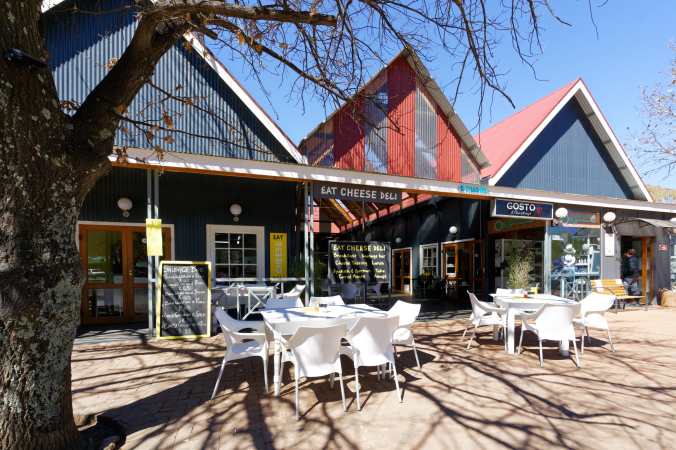
which also housed a “farm-fresh” restaurant with outdoor seating, a lifestyle boutique selling hand-mixed face creams and bamboo-framed sunglasses, a gourmet cheese shop arrayed with little custard cups offering with tastings. Nearby, historic, single (or at most double-) story brick and stone buildings were slung around a large central open area—were this New England, it would be The Green. Surrounding it all were the dramatic, burnt umber and red ochre mountainscapes of the Golden Gate National Park.

Clarens occupied a pleasant enough hour or two, though the “antique” shops and “art” galleries were, predictably, a joke. Nearly every face we saw was white, including the grim-faced settlers gazing out from the historic photographs hanging in the foyer of the 19th-century Protestant church.

DSC02592_DxO.jpg

Among themselves, the locals spoke Afrikaans. The proprietors of the boutique effortlessly switched between this guttural Dutch-sounding language and English, graciously explaining local customs and answering our queries regarding the origins of their goods.

Time to go. Piling back in the car, I nodded at the black construction workers repairing the sidewalk outside our little café.

We were barely out of town when we spotted the slum. This one, worse than many we’d seen, but better than the disgraceful shantytowns in Johannesburg.

DSC02599_DxO

The typical – horrifyingly typical — one-dark-room, dirt-floored tin shacks. Unpaved dirt pathways. (Cars are unaffordable for most South Africans, and hitchhiking is common.) Electric lines, yes, though scant evidence of running water, and plenty of indicators, including outhouses, that little was available.

Cheek by jowl: Clarens proper, which reminded me (without really resembling) my summer hometown in Woodstock, Vermont, and a destitute, garbage-strewn slum.

I thought, that’s where those construction workers, to whom I’d politely nodded, probably lived.

The racism, the grotesque inequality, is pervasive, inescapable.

— Sarah

PS: Earlier version of this post published without photos owing to connectivity challenges.


South Africa, the Ugly

One day in particular, on the drive from Drakensburg to Port Elizabeth, crystallized an early impression of South Africa that subsequent experiences have done little to shake. Clarens is a touristy town encircled by spreading luxury resorts on private game parks, with horseback riding and fine wines on offer. Hunting too, maybe. It’s located in South Africa’s Free State, which is where Dutch Afrikaaner settlers retreated after the British had muscled their way in, grabbing the reins of colonial power. The story of how Afrikaaners fled to the mostly (and still mostly) empty, arable Free State, settling there with their retinues of slaves, reminded me a bit of those contemporary, right-wing anarchists in America’s Pacific Northwest, inhabiting huts in the rural forest regions.

Lonely Planet, our ever-inadequate, spunk-filled guide, described Clarens as a funky, hip town. Art galleries, restaurants, boutiques; it was on our way south anyway, so we thought, why not? And initially, it sort of delivered.


Cappuccino plus above-average pastries nestled into a tastefully funky shopping complex, which also housed a “farm-fresh” restaurant with outdoor seating, a lifestyle boutique selling hand-mixed face creams and funky bamboo sunglasses, a gourmet cheese shop, counters arrayed with little custard cups offering with tastings. Nearby, historic, single (or at most double) story brick and stone buildings slung around a large central open area—in New England, this would be The Green. Surrounding it all were the dramatic, burnt umber and red ochre mountainscapes of the Golden Gate National Park.

Clarens occupied a pleasant enough hour or two. The “antique” shops and “art” galleries were, predictably, a joke. Nearly every face we saw was white, including the settlers gazing out from the historic photographs hanging in the foyer of the simple, ochre-brick 19th-century Protestant church. The locals spoke Afrikaans among themselves. In the boutique, two women effortlessly switched between it to English, graciously explaining local customs and answering questions regarding the origins of their goods.

Time to go. Piling back in the car, I nodded at the black construction workers repairing the sidewalk outside our café.

We were barely out of town when we spotted the slum. This one, worse than many we’d seen, but better than the disgraceful shantytowns in Johannesburg. The typical – horrifyingly typical — one-dark-room, dirt-floored tin shacks. Unpaved dirt pathways. (Cars are mainly unaffordable for underprivileged South Africans. Hitchhiking is common.) Electric lines, yes, though scant evidence of running water, and plenty outhouses indicating its scarcity.

Cheek by jowl. Clarens proper, which reminded me (without really resembling) my summer hometown in Woodstock, Vermont, and this destitute, garbage-strewn slum.

That’s where those construction workers, to whom I’d politely nodded, probably lived.

The racism, the grotesque inequality. Inescapable.

South Africa’s Beauty

A few months ago I was lunching with Robin Middleton, one of my doctoral advisors, who was born and trained in South Africa — Cape Town, I think– before immigrating first to the UK, then, eventually, to New York City. Discussing the around-the-world trip, I ventured the possibility of South Africa as a destination, as dear friends of ours treasure the year that they lived with their then-small, now-grown children in Grahamstown,

DSC02648_DxO.jpg

home of august institutions of higher learning and host of the annual, renowned Grahamstown Arts Festival, which attracts performing artists and musicians from all over the continent.

South Africa? Robin remarked. It’s quite beautiful. But there’s nothing for you there.

He meant buildings. I fell in love with architecture at around age 17. Since then, I’ve traveled to dozens of countries; not a single year has passed without my boarding at least one plane to some far-flung (though this trip has made abundantly clear that that’s a relative term, always) location. As Danny, Gideon, and I planned our round the world adventures, I realized that I undertook practically every one of those prior trips with the explicit purpose of seeking out buildings by specific architects, or analyzing urban configurations, or studying architecture, urban, and landscape history. Singapore: Safdie, WOHA, the impressively progressive city planning. India: Kahn’s Ahmedabad, Le Corbusier’s city of Chandigarh, Old Delhi and New Delhi, Moghul monuments, Rajput forts. Even Iceland, where I went to seek out the work of Granta, an impressive Reijkavik-based firm. Colonial, missionary outposts and mining towns in northern Mexico.

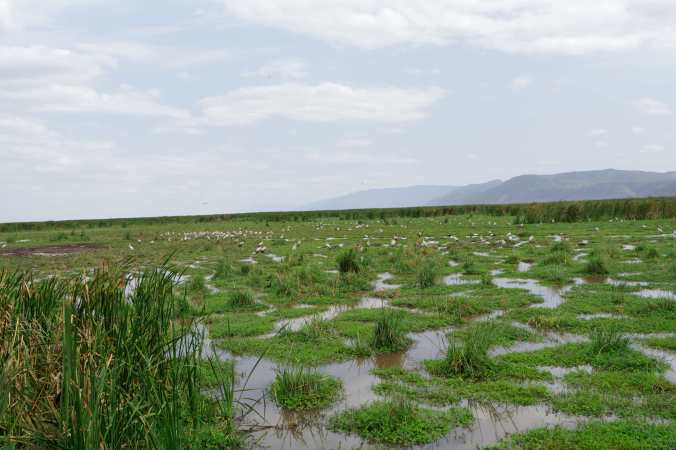
In this RTW trip, cities and buildings share equal billing with animals (safari), birds (Lake Manyara, Birds of Eden in South Africa),

DSC02927_DxO.jpg


savannahs (Serengeti in Tanzania), deserts (Sossussvlei in Namibia), bodies of water (black-green fjords in Norway, the Indian Ocean), beaches (Port Elizabeth and the Garden Route).

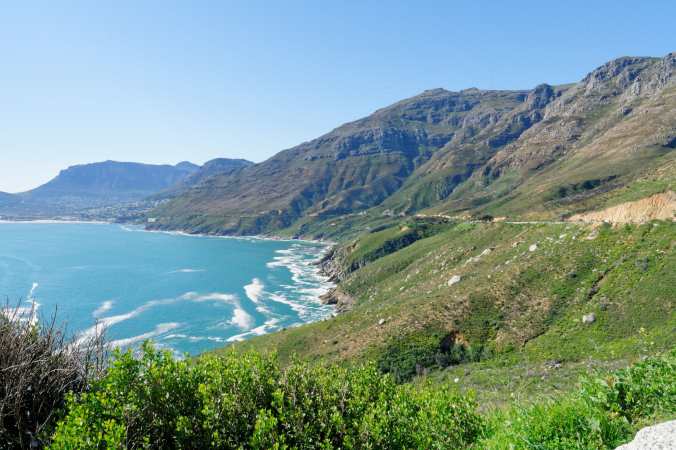
DSC03168_DxO.jpg

And with a cosmopolis of mountains: mountains in schist and gray granite, mountains in red sandstone, mountains of sand, aka dunes. Mountains covered in scrub brush and green.

This wider-angled approach to traveling, analogous to swapping out my well-worn 55-200 mm. zoom for the 16-35 mm one I’m currently using, has proved a liberation of sorts, about which I was needlessly anticipatorily anxious.

South Africa. Family, educational, and social obligations, along with many long days of driving from place to place, have simultaneously occupied our minds and kept us away from our computers. So to begin, I shall summarize our itinerary. We landed in Johannesburg and loaded everything directly into our sturdy Rav 4 Toyota SUV rental for the long drive south east, through Gautung and parts of Kwazulu-Natal and the Eastern Cape to the northern tip of the Royal Natal National Park in the Drakensberg, where we planned to hike the hair-raising (couldn’t be nail-biting, because you need both hands to ascend) Sentinel, which appears on many lists as one of the greatest hikes on the planet. After a few days in the Witsieshoek Mountain Lodge, we loaded everything into the car, driving south to the city of Port Elizabeth via the Golden Gate National Park, the desiccated and lovely landscape of the Free State, and through the Eastern Cape.

It’s winter here. A first thing we discovered about South Africa is that central heating does not exist. The Drakensburg was particularly uncomfortable: now I know why so many Africans walk around with ski-hats on their heads. It’s cold! The area where the Wietsihoek lodge is located rises around 6,000 feet above sea level. One day 120-km-per-hour winds forced one group of hikers that we met (after they survived) to crawl, literally crawl, across a mountain ridge to avoid being blown away.

Danny has goaded me into writing more about the hike up the Drakensburg escarpment to the Sentinel and the bowl-like Amphitheater, which at its highest point rises about 10,000 feet above sea level. And I’m happy to comply.

DSC02523_DxO

At first, the hike takes you up a path nicely outfitted with pavers; shoes get a good grip as you survey the expanse of Phuthaditjhaba’s surrounding valley. But within 45 minutes you find yourself leaning into sheer, sloping rock planes, searching for toe-holds, and the real tenor of the expedition reveals itself. One unlucky slip could be fatal, tumbling your helpless body hundreds of feet into that ravishing ravine.

DSC02532_DxO

Danny prudently retreated, leaving me on my own to ascend to the Amphitheater, which included scaling two storied iron ladders, affixed every ten feet or so to 30-50 foot-high cliffs introduced by a narrow landing, really nothing more than a pause in the cliff.

IMG_6544[15644](Every guidebook will advise you to be prepared for these, and my experience on them was, I discovered, shared by all my fellow hikers. We all thought we were prepared. No one was prepared.)

The ladder ascent stopped time, opening up one of those – I kid you not – “you can do this, you can do this” moments. I swayed back and forth on that clanking ladder, praying that my hands would stop sweating, or at least stop sweating quite so much. And then! The summit. IMG_6539[15643]

Of which I have only this photo, having wisely surrendered the camera to Danny hours earlier. Gideon had reached the legendary amphitheater long before, accompanied by a young Dutch couple.

Together we descended with our new German friends, Jürgen and Kersten, chatting about traveling, and about life with and without children, while their 17-year-old daughter Celina chatted happily with Gideon about American rap music and life aspirations.

IMG_6552[15646]

By the end of the day, legs were sore, stories were told and recounted, and all of us felt as though we’d honored the majesty of this place.

— Sarah


Wrestling with the Stench

Writing about South Africa could consume a whole book. In light of what else South Africa has consumed, that’s no surprise, and that book would hardly constitute a footnote. In a sense, that’s true about whatever we write of everywhere we’ve been or will go, making South Africa no different. But South Africa stands out nonetheless, not in the trivial sense that all countries are singular along any number of dimensions, but because it is fundamentally different – and its marks of heart-wrenching distinction are palpable with nearly every step and in virtually every waking moment.

I do not intend to write the treatise South Africa warrants, merely to note elements, just kernels of them, which arise in the course of where my writing takes me and you. Yet one eloquent fact can help justify my opening, and set the stage for more. Of the 149 countries listed by Gini Coefficient in the CIA Factbook, South Africa has the second highest – meaning second greatest degree of economic inequality – exceeded only by the poor country it entirely surrounds and dominates, Lesotho. The most recent census (2011) revealed that the household income of whites is SIX TIMES that of blacks. (In the US, we rightly decry a white-black income gap where white households on average earn 60% more than black ones. In South Africa the figure is 500%.)

DSC02568_DxO.jpg

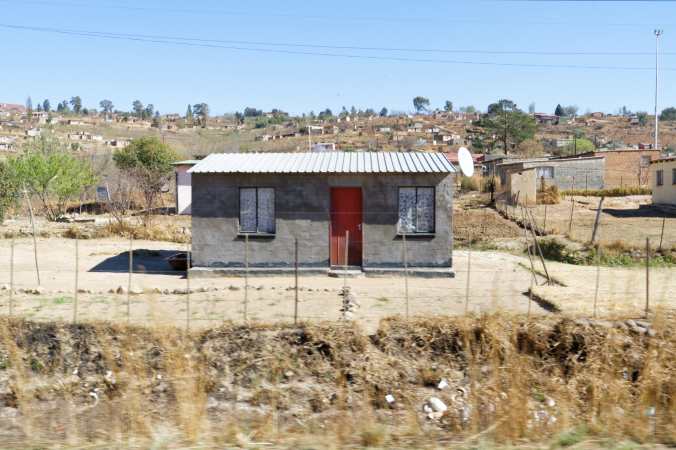
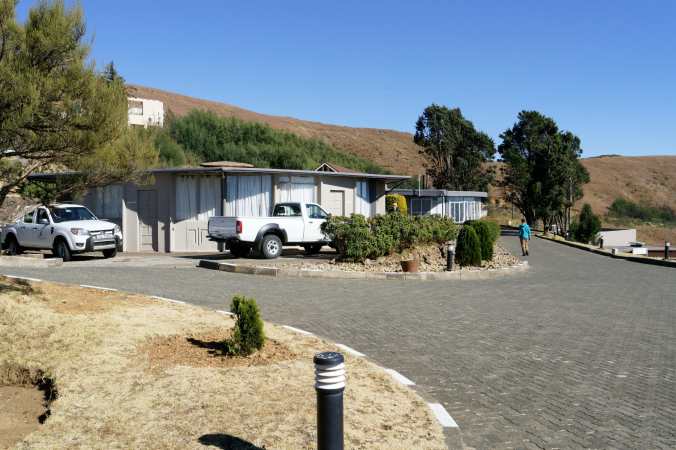
The gaping inequality is literally impossible not to see because it is manifest everywhere. Sumptuous villas sit a stone’s throw away from shacks.

DSC02668_DxO.jpg

Gleaming shopping centers share roadsides with garbage strewn shantytowns. Just sitting and writing about these human and inhuman contrasts – as it further focuses my attention on them — increases my already considerable disgust that has been our constant companion in this country of uncommon natural beauty.

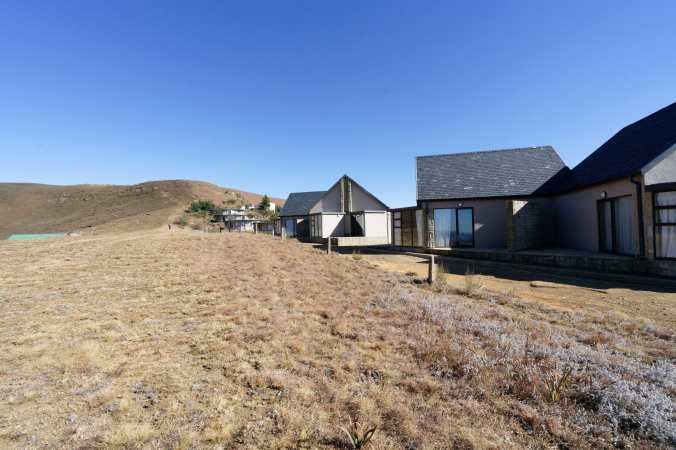
We sailed through the entry sequence at the Johannesburg airport, got our Toyota Rav 4 for the expected rugged driving in the rugged areas, and headed, only several hours behind our initial well-laid schedule, straight for the Drakensberg Escarpment. It didn’t take but a few blinks of the prepared but still disbelieving eyes for us to be introduced to the physical squalor of the “settlements” and the individual structures which shamefully qualify as homes, to which so many black South Africans, though no longer legally so, are effectively still confined.

DSC02570_DxO.jpg

Of course, in Tanzania, a much poorer country, with per capita GDP not even one-fourth as high as South Africa, we saw much poverty and “homes” which, in their inadequacy to their name, would break your heart should it not be of the hard-hearted variety, which we have good reason to believe characterizes many of the more materially fortunate hearts here in South Africa. But to see the contrast, to put it starkly in coloristic terms, between black and white in South Africa, and to know that the abject physical, social, and security conditions in which so many blacks live here is systematically structured by race, by once-racist law, politics, and state-violence, and by the ongoing thoroughgoing legacies of this racism, makes the impoverished physical lives of black South Africans so much more disturbing.

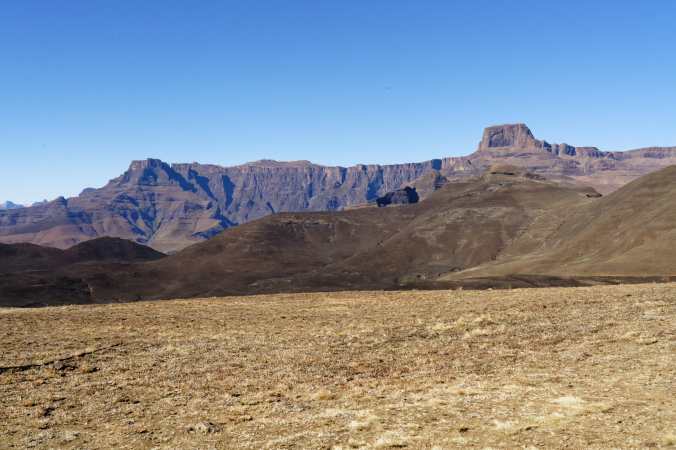
The beauty of the Drakensberg is overwhelming.

DSC02560_DxO.jpg

As much as anything could clear the moral and human mental-stench from our minds, Drakensberg is it. When below the escarpment, and when above, it offers breathtaking views on the order of the Grand Canyon, as different as the formations, stone, and coloration are. I hope Sarah writes about it, for two reasons. Her hand is niftier for using words to convey what we saw, which she also sees better, as she has the better eye. Second, she saw more, because she climbed to the glorious top, which I did not because my vertigo finally got the better of me when we came upon a six-inch ledge above a straight drop down. I turned back, while Sarah went on alone, as spry Gideon much earlier had steamed ahead with a couple from the Netherlands. As we couldn’t count on cell-service to communicate with Gideon, Sarah had to venture on solo because we couldn’t leave Gideon, uninformed, on the mountain alone. When I started to descend from the high-point of my vertigo, we, a solid-threesome starting out, were, as far as Sarah and I knew, three isolated individuals — not ideal on a climb which is dangerous, even if it is not the north face of the Eiger.

DSC02543_DxO.jpg

Sarah and Gideon finally met up on top, shared memorable views and times, and touched-down safely and fulfilled about four hours after Sarah and I had parted. Sitting and writing in our lodge’s restaurant/common area, I was relieved when Gideon texted me that they were driving back from the base of the climb, as his words washed away my many worries about their safety. No surprise, I was even more overjoyed than usual to see them, and to hear their tales of climbing courage and visual wonders.

–Danny


It’s Legit!

Our safari over, we land at a more standard western hotel in Arusha than the safari lodges (some are beautiful) and tented camp (worth experiencing for one night, not the two that we did) which were our homes for our time in the game parks and areas. I focus on Serengeti here for the obvious reasons.

DSC01803_DxO

I could have also written glowingly about Lake Manyara (especially the flocks of spectacular yellow beaked and billed pelicans) and Tarangire (with its elephant herds), though Ngorongoro Crater surprised us, given the hype, offering us nothing new or particularly interesting, save the crater itself.

After checking in, we sit down with Zadock on the warm veranda for some fine fellow-feeling and farewells of well-wishing and hugs. We hope to keep in touch, and tell him that should there be a high-school exchange program for his boys (but 7 and 4) to come to the US, we would try to help out.

Off the next morning to the tiny airport of Kilimanjaro, which, incongruously, serves big jets, the exit procedures unfold smoothly enough, except that our plane departs late. This causes us consternation, as we, somewhat foolish by necessity, need to make a forty-minute connection in Nairobi on the way to Johannesburg. We gave ourselves so little time because otherwise we would have had a six-hour layover and therefore arrive in Johannesburg in the middle of the night. Not recommended. The lateness of our tauntingly named Precision Air flight makes us, after running baggage-laden through the airport, arrive at the gate just after the flight closes. A few expletives later, we regroup, jump through many hoops, and after a night in Nairobi, and various unexpected bureaucratic adventures, we semi-miraculously take off at 8:45 AM on a commodious South African Airways flight, with a relaxed and accommodating crew, straight to Johannesburg, and its gleaming first-world airport.

Entry into South Africa is easy, as is procuring our rental SUV, and, GPS working splendidly, we head off for our four-hour drive to the Drakensberg Escarpment, where we are to spend several days exploring some of the reputably greatest hiking in the world. On the way, driving on excellent roads, we pass, successively, depressing shantytowns, which in their density cast the ones in Arusha in a less desperate light, industrial zones with grim supporting towns nearby set strangely in an American midwestern-looking landscape, and open farming plains lush with crops. We approach the escarpment after the beautiful sunset — especially ooed-and-awed-at by Gideon – disappeared, leaving its residue, the darkness. Passing through poor areas on the outskirts of the major city of the region, I am a bit on guard, horror-stories abound about crime here, but nothing feels the slightest out of the ordinary.

DSC02559_DxO

Soon, we arrive, after a hilly, windy climb, at our hotel in the Drakensberg, the Witsieshoek Mountain Lodge, which immediately charms us — only about six hours behind our original schedule, and none the worse off for our unexpected Nairobi (mis)adventure.

DSC02553_DxO

In fact, better off. We were afforded a glimpse of Nairobi, which is manifestly so much better developed than it was ten years earlier when I went there to shoot material for Worse Than War, the PBS documentary based on my book on genocide. New road system, massive commercial development, modern apartment blocks. Despite the enormous slums (including the world’s largest), Nairobi seems to have turned a developmental corner. The sense of despair about Nairobi and Kenya I had taken home with me a decade ago was quickly and, I hope, justifiably updated into a more positive, albeit certainly incomplete, picture. This experience was yet another reminder of how dated knowledge about, and views of, things quickly become, and often how happenstance is our access to new information. We were also better off for our Nairobi visit, because not only did Sarah and Gideon gain an impression of this major city, but also, to Gideon’s delight, he (and Sarah) added, unexpectedly, another country to his (and she to hers) roster of countries visited. Our rule is that you must leave the environs of the airport for a country-touchdown to count. We were in Nairobi overnight!

As Gideon would say, that’s legit.

— Danny

Maasai, Civilization

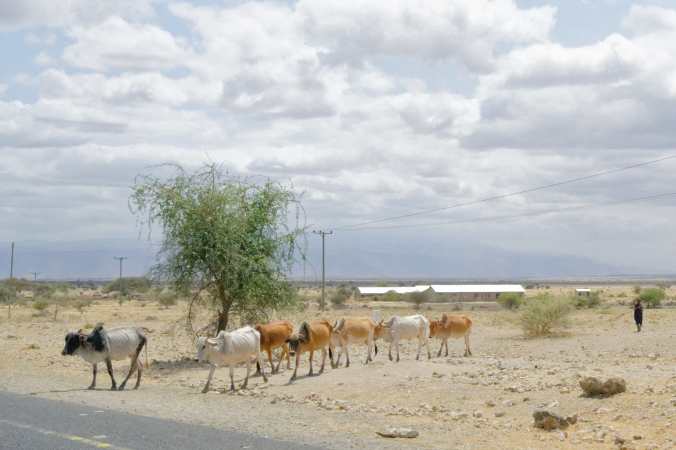
Somewhere around 1.6 million Maasai, a semi-nomadic people, a good portion of them clinging to their premodern way of life with staggering tenacity, inhabit the fertile and arid lands of the Great Rift Valley from southern Kenya to Northern Tanzania. Our initial introduction to them comes as we skim and occasionally bump along the French- and Chinese-built highways between Arusha, Lake Manyara, Serengeti and Ngorogoro, repeatedly noticing children – small children! six, seven, nine years old – dressed in brilliantly colored robes, carrying long sticks, kicking up red dust as they skip and prance and stagger alongside bedraggled parades of emaciated, slow-moving cows.

DSC01709_DxO_DxO

Didn’t you say that attending primary school is compulsory in Tanzania? I ask Zadock. Yes. So why aren’t they in school?

Then, later: Where are they going? To find enough grass to graze, Zadock answers. It’s dry season. They have to cover a lot of territory – sometimes many kilometers a day — for the animals to find enough to eat

Later, again: Where are their parents? Isn’t anyone watching them?

Slowly, over many days, the story of the Maasai emerges.

Maasai are the only people in the world, we are told repeatedly during our time in Tanzania, who continue to live alongside their animals, as nomadic and semi-nomadic peoples have for centuries. They constitute only one of the hundreds of peoples residing in Tanzania, which gained independence from the British in 1961. At the insistence of the country’s first president, Julius Kambarage Nyerere, Swahili became the country’s official language. Most of these peoples embraced the project of nationhood, willingly adopting the idiom and the project it simultaneously symbolized and advanced, that of forging a shared identity among vastly disparate cultures and traditions.

Not many Maasai, though. They do learn Swahili, but stubbornly continue to live as their ancestors have for thousands of years. A rigidly hierarchical, patriarchal society, they reject private ownership of land or property, practice polygamy, adhere strictly to ancient eating rituals (more on this later), and use only traditional healers. Those children we kept sighting roadside bore the responsibility of caring for Maasai’s cattle, sacred animals; it’s a service to which they are entrusted at age five and which they perform until they reach the age of twelve.

In the west, I say to Zadock, that’s called child labor. He assures me emphatically that the kids do get schooled.

Near Lake Manyara, I ask Zadock once again, “what’s that?” as we pass a group of teenaged boys clad head to toe in black robes, with fearsomely blackened faces, scarified with white linear patterns that make them appear adolescent pranksters and gruesome skeletons all at once.

DSC01906_DxO_DxO_DxO

Such costumes appear, in my world, only on Halloween night or during the Day of the Dead festival in Mexico City.

Circumcision, Zadock replied casually.

Later that evening, I look it up: at age 16, boys are separated from their mothers. (Only mothers raise the children, as the fathers issue too many spawn to “father” in our performative sense of the word.) A village elder executes the circumcision without anesthesia. Coruscating shame befalls any boy who cries out, winces, or in any way expresses discomfort or pain.

DSC01924_DxO

It takes four months for the wound to heal, and during that period, the boys all live together in a band while they undergo training for the demanding job of Maasai manhood. Once the ritual is completed, boys become “warriors”, each one ceremoniously receiving a spear, which he proudly carries everywhere from then on. Like Christian saints with their attributes, the Maasai spear exhibits the essence of its carrier’s character.

Warrior, Danny scoffs, turning to Gideon. Do these guys look like warriors to you? They’re tiny.

Danny and I both had mixed feelings about the whole “visit a Maasai village” option. The travel industry calls this cultural tourism. You can’t escape the voyeurism involved in such an expedition, the feeling of standing the still-visible footprints of our colonizing ancestors, and with them, gaping at the primitives.

DSC01902_DxO_DxO

I was mollified, slightly, when Zadock told us that tourists typically paid a not-insignificant fee for such a visit – at least, I thought, the Maasai are getting something out of it too. This donation, we subsequently learned, would be put to facilitating the transport of water to the village, paying for school uniforms and fees, and some bare other essentials from the non-Maasai economy. Without the money, the only way these settlements obtain sufficient water during the dry season is this: one of the men takes off every two weeks, a donkey caravan and several children in tow. Through these arid lands they walk, walk as much as two full days just in order to reach the nearest clean water source. There, the man and children fill enough buckets of water to meet the village’s needs and load them onto the donkeys. Then, for two more days, they walk home.

Lather, rinse, repeat.

DSC02001_DxO_DxO

When greeted by L., our local Maasai guide, and his fellow villagers, our (or at least my) discomfort grew rather than diminished. Two distinct groups, men on the left and women on the right, stood outside the village, separate from one another, forming a semicircle. Their tiny, thin bodies were wrapped in full traditional regalia, colorful cloths, beaded jewelry dripping from withered, distended earlobes, necks, wrists. Even the children looked as though their faces had been washed for the occasion. Once we’d paid up, our guide signaled a cue, and the men and women began to sing one of the traditional call-and-response chants you hear when watching those BBC documentaries on Africa. At some point, a grim-faced woman who looked to be about my age (but could have been twenty years younger) walked up to me, fastened a beaded necklace around my neck, and wordlessly grabbed my hand. She brought me into the women’s semi-circle, and with a nod informed me that it was time for us to jump.

DSC01984_DxO

“The men can jump much higher than the women,” L. explained later, “so they’re more fun to watch.” My silent companion began to jump softly in the dirt, catapulting her body up with such relaxation that her gentle lands emitted no sound.

For a while, we jumped, then we stopped. My guide signaled that our brief African dance had come to its end. Not a single woman smiled at me during the entire episode. (The men, who coopted Gideon for a dancing portion of the performance, exhibited something between bemusement and glee at Gideon’s heartfelt and evidently enjoyable attempts to follow their lead.)

Do they dress up like this and dance every day? I asked, believing, correctly, that I already knew the answer.

Only when tourists come, L. replied.

And how often is that?

About once a week.

So, I pressed, on what occasions would you normally dance and sing, if not for the appearance of the tourists?

Oh, not very often, was L’s answer. Only at weddings and other really special celebrations.

Now came the time to see the village proper.

DSC01926_DxO

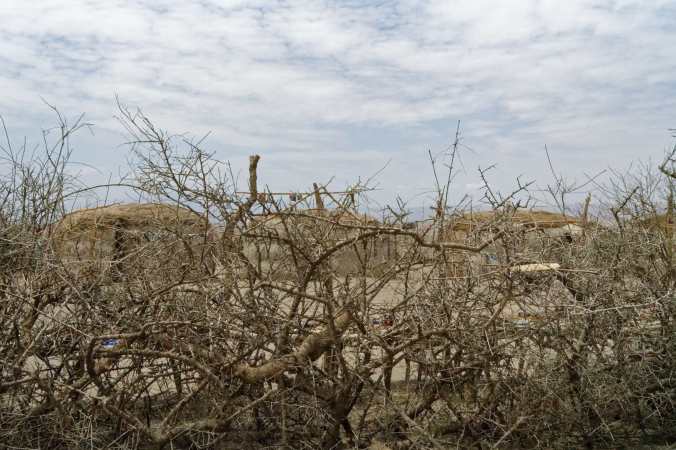
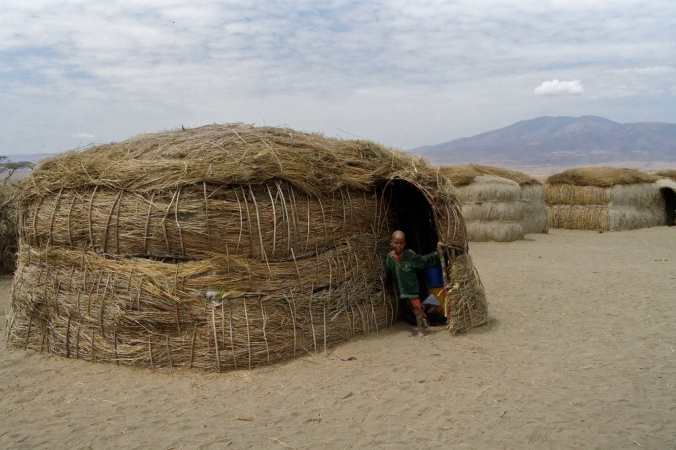
Called a Kraal, Maasai live in a huddle of mud and thatch huts – perhaps fifteen, perhaps twenty — arranged in a small circle and protected by two concentric circular fences which are cobbled together from thorny acacia branches.

DSC02010_DxO

The perimeter fence deters predators, while the interior enclosure prevents the cows and other animals from escaping at night.

DSC01993_DxO_DxO

It is the women’s responsibility to build the homes, called inkajijik. (Some years ago, when I first read about this, I imagined some impressively matriarchal society – the women are the architects!, I thought with great excitement.) The globular huts are cobbled together from mud, sticks, grass, cow dung and cow’s urine (the latter two create a much harder binder than do mud and water alone). A newly constructed inkajijik lasts around three years; inside each lives one woman, with all the children that Mr. Polygamist has bequeathed upon her. It is not unusual for one man to enjoy multiple wives and produce a dozen, sometimes dozens, of children.

What happens to all the other men? I wondered darkly. Are they like baby male elephants, kicked out of the family group when they mature enough to become competition with their fathers? I did not venture to inquire, though, and even despite all this information, was a little stunned when I learned that every person in this particular Kraal – perhaps sixty in all — belonged to the same family. Whoa. And that’s typical.

DSC01995_DxO

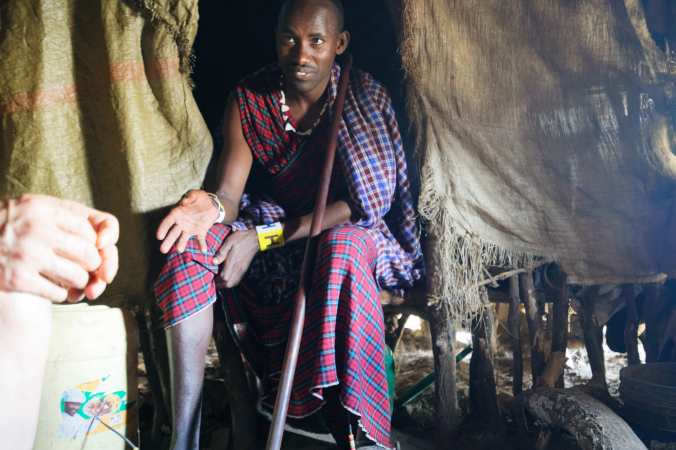
By previous agreement, one of the women made her inkajijik available to us, and our guide shepherded us into its stifling, smoke-filled interior. The smoke repels the mosquitos, L. explains; since Maasai don’t use matches and it takes effort to start a new fire, once one is ignited, you never extinguish it, even on days as sweltering as this one. I sit down on an inverted plastic bucket. Danny and Gideon settle themselves on one of the abode’s three beds, wooden platforms built directly into the hut’s walls. Here, L. spending twenty or thirty more minutes, telling us a little more about his culture.

DSC02029_DxO

Maasai believe that some long-ago deity determined by fiat that every cow in the world belongs only to them; they used to think nothing of stealing other people’s cattle, and occasionally still do. If the traditional Maasai diet is strictly adhered to, cows supply every ounce of food consumed: they drink milk, slaughter the animals (sheep and goats too) for the meat, and drink cow’s blood. L. methodically detailed the blood-letting procedure by which the Maasai collect a cow’s blood for drinking, reassuring us that they suture up the neck vein after draining out a few cups. “So the animals don’t suffer,” he smiled.

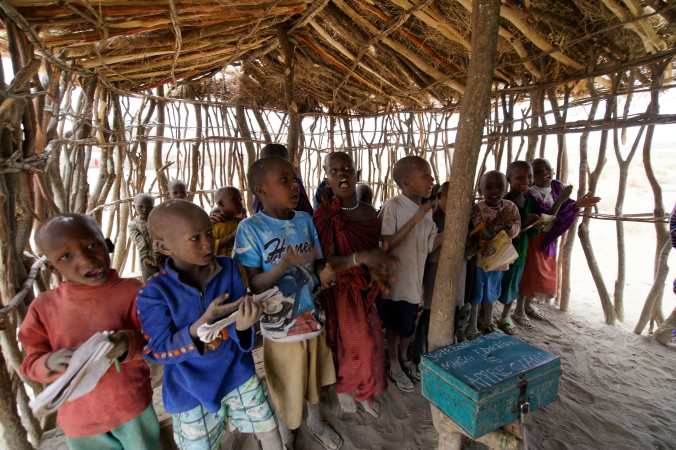
Children are educated, our guide reassured us in his more than passable English. (Later, we saw the one-hut school.)

DSC02033_DxO_DxO

Maasai “don’t go to the hospital”, he continued. At first I thought: well, of course not! They don’t have cars, and if someone falls really ill, it would take too long to get to a hospital on a donkey. But that’s not why. Maasai reject science and modern medicine. They rely on faith healers and traditional medicine, meaning, an admixture of the verifiably helpful (quinine, a tree sap, does indeed deter malarial mosquitos) to the verifiably ridiculous, or even harmful.

In my internet perusings, I subsequently read that the value Maasai place on human life also differs from that we accord life in western society. Because infant mortality rates are so high, Maasai refrain from naming their children at birth, choosing instead to wait until some months have passed. Similarly, they practice no death rituals at all. When a mother or father or aunt or sister or child passes from loved one to corpse, the fleshy, bodily pile is simply plunked out on the plain for scavengers. It is considered bad luck for the family if scavengers fail to consume a deceased body with dispatch, so Maasai often spread cow’s blood and other delectables around the body before tossing it into the dirt.

What was my reaction to all this? The abodes were fetid, sweltering hovels. Many of the children at the “school” we visited exhibited visible disabilities. The teeth of most of the adults were blackened, gums bloody – if the teeth were in their mouths at all.

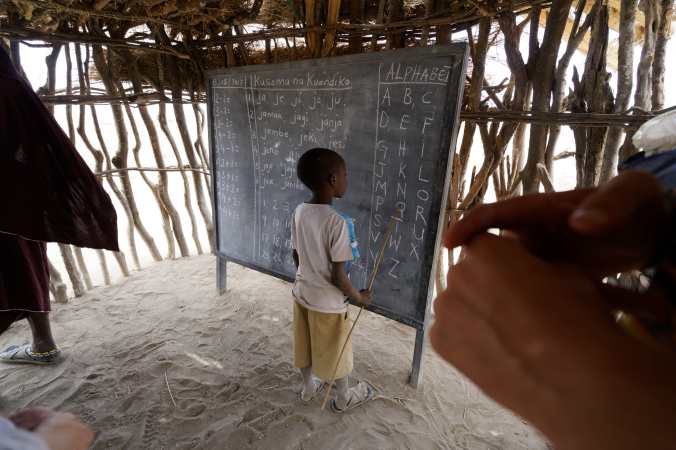
What was my reaction to all this? I wondered: what do these people do all day? What do the women do after sweeping their huts, mending their walls, nursing their babies, and making beaded jewelry to sell to visitors like us? The children, when not learning how to shout out the English alphabet for gaping visitors with white faces, journey with the village animals to find shrubbery enough to sustain them for another day.

DSC02043_DxO

DSC02049_DxO_DxO

The village elders stand, crouch, and sit around in the shade. Day after day.

DSC01716_DxO_DxO

What was my reaction to all this? All my white-guilt-liberal cultural relativism trickled away from the interstices of my ideologized mind. This is no way to live. Demanding that women follow polygamist, patriarchal practices amounts . . . not to enslavement, but I want to use the word anyway. Demanding that young people be raised according to these retrograde traditions is tantamount to child abuse: malnourished, unvaccinated, inadequately educated, these children can expect to live lives that Hobbes would surely describe as poor, nasty, brutish, and short.

Should the Tanzanian government force the Maasai to abandon their ancient traditions? To be sure, it is not for me to say, and the Maasai people, or at least enough of them, tenaciously perpetuate these practices in both Kenya and in Tanzania. But when Danny, Gideon, and I, sitting in that small, dark, smoky hut, pressed L. about his desire to continue living according to Maasai practices, he confessed a deep ambivalence.

Attrition through assimilation, Zadock later intimated, is what the Tanzanian government hopes for. Because some of the children are sent away to board for secondary school, they are exposed to other people, to television, to the internet; hopefully, they will decide for themselves to leave the Maasai traditions and practices behind and join the modern world.

But toward the end of our tour, I noticed that L’s earlobes were intact; they’d not been stretched out, as per Maasai custom. This guy, I thought, could just as easily slip into a business suit; with his English, intelligence, and winning demeanor, no one would know from where he came. “But it’s hard,” L. admitted to us privately. Once, he said, he’d visited Kenya. Even among the Maasai people there, who were more educated and acculturated, he found that he’d struggled, feeling desperately, hopelessly out of place.

— Sarah

Second: The Animals of Serengeti

DSC01835_DxOMy thoughts and feelings about seeing the animals, the raison d’etre for safari, is different in character and more mixed – not nearly as plural yet more valent than my reactions to the landscape. As I have already indicated with my semi-joking characterization of some of the major players — zebras and gazelles grazing, hippos lazing, giraffes raising, water buffaloes gazing, elephants amazing – the animals are spectacular to see and to see in their world, as opposed to the artificial worlds we create for them in the US and elsewhere. Being up close to them in nature speaks for itself as a singular way to experience them.
DSC01817_DxO

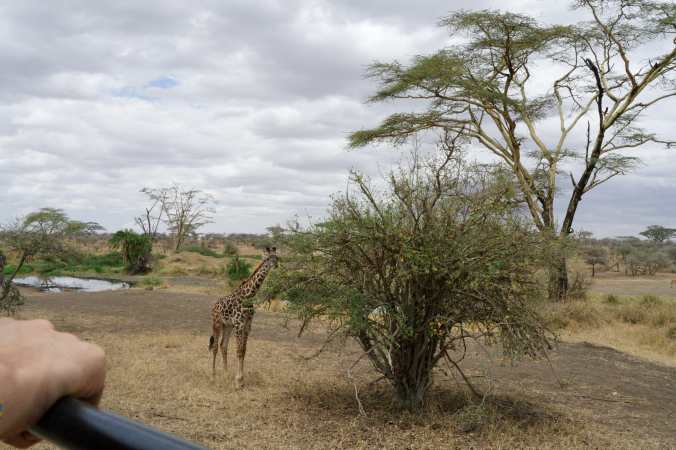
The thrill of something as mundane as hearing the sounds of a giraffe, five yards away, ripping the leaves off an acacia tree was both unexpected and perhaps hard to convey.

DSC02255_DxO

Seeing pretty much all the animals moving around the unbounded landscape, as opposed to pacing in a zoo enclosure, even more mundane than a giraffe eating, is perhaps an even harder to convey thrill. This applies no less, well almost no less, to the visually unappealing wildebeests as it does to the more handsome and graceful animals of which there are many. When beholding the animal world, it’s instructive to think about how hard-wired we are to beauty and what facets and features of creatures constitute it. This holds for grace as well. To my eye, and those of Sarah and Gideon, wildebeests and warthogs are equally less-than-beautiful animals, yet the former moves unpleasingly while the latter’s slow trot is rhythmic and cute.

DSC02261_DxO

One could come up with an off-the-cuff and analytically plural set of categories to assess and rate the animals – beautiful, graceful, powerful, noble, cuddly, scary-looking – and then make unordered or ordered lists. I didn’t do it and it’s probably not worth doing, though it is worth mentioning because the world of animal-watching in Serengeti is a time of continuous comparative assessment along many dimensions.

We love giraffes and elephants. Giraffes are remarkable in their combination of delicate beauty and power.

DSC02285_DxO

Elephants, ponderous though they are, offer a funny-looking beauty, and even grace, and appear self-possessed in their calmness and purposefulness. They, of all the animals seem most aptly characterized as having personality and as having individual personalities. Zebras, in their carnivalesque stripes, which suggests that they most closely resemble costumed humans, and therefore humans, are easy-on-the-eyes, so they are always worth a glance or two, even though they plentifully populate the landscape, often mingling with their less appealing friends, the wildebeests.

DSC02114_DxO_DxO

Zebras’ highly social nature – they snuggle, they frolic, they interact in small and large ways – contributes to their attractiveness.

DSC02294_DxO

Baboons, even more social in nature, are unexpectedly beautiful, especially the adult males, and in the persons of the fragile, small children irresistibly cute.

The big cats – lions, leopards, cheetahs – for many the stars of the safari-show, hold little fascination for me. Adult male lions meet expectations of majesty and power. The rest, including the eight lion cups we saw playing like a bunch of puppies, which Gideon adored, leave me pretty cold. Their lethal natures certainly do not fail to dampen my vegetarian and fine-feeling-self’s enthusiasm, but the cats also do little when they are not on the hunt or the prowl, except laze around and sleep.

DSC02168_DxO_DxO

For that, we did not have to travel to Serengeti. We did not see any hunt or even more than perhaps a moment or two of a half-hearted lion-prowl. Turning to unsung stars of Serengeti, the captivating features, and shapes, and colors of birds, while still on a branch, walking slowly on the ground, or speeding along wings visibly and often extra-colorfully flapping, are enough to render becoming a birder self-recommending.

As compellingly natural as Serengeti’s animals are, at times I dwell on the voyeuristic nature of our safari, thoughts of which should be unavoidable to any more-than-minimally-sentient safari-goer.

DSC02274_DxOWe, in rolling fortresses, encountering again and again others in their rolling fortresses, with two or five or ten or more of them repeatedly convening, cameras pointing and clicking, at the site of a notable animal sighting. (This occurs because the guides, who know each other and work collaboratively, are in constant touch with one another about the animals.)
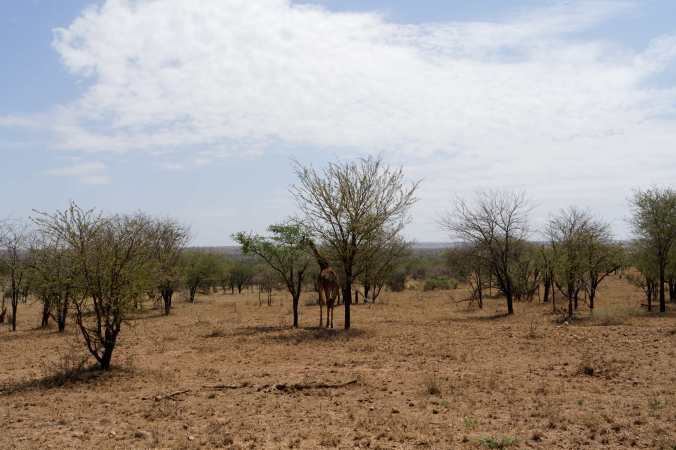
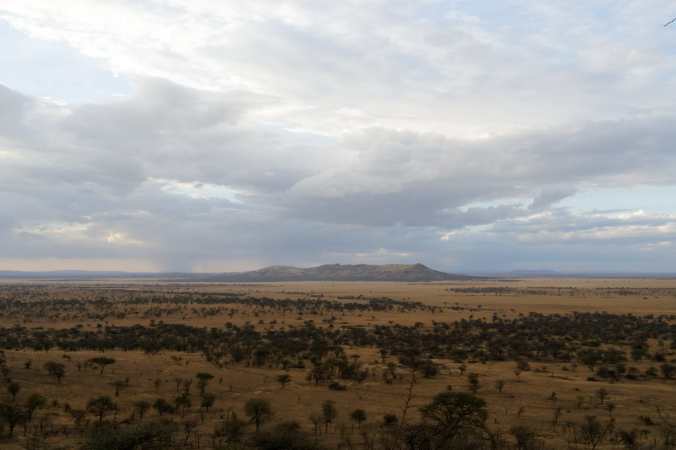
At times this doesn’t bother me, at times I find it a little off-putting, at times I want to flee. It also accomplished the near-impossible of transforming Serengeti in all its bounteous and splendid nature into a place that feels like and functions like a zoo of people safely gawking at the show-animals. Yet a zoo’s animals are prisoners, and Serengeti’s are anything but, so such thoughts, though they wafted in, they also wafted out which is where they mostly stayed. There is no sense in which the presence of others, or our own temporary imprisonment in a rolling fortress of our choosing, ruins our time in Serengeti. After all, we are under no illusions that we are so special as to deserve privileged access, or that there is anything wrong with visiting a national park which, in part because of our fees, renders life for these animals so natural and free.

DSC02150_DxO

Nevertheless, there is a part of Serengeti, of my favorite Tanguyan character and with fine animals, where we, driving along and stopping at will safely ensconced in our Landcruiser, encounter no other human interlopers. We bask in our solitude and the feelings and thoughts it affords us.

–Danny

Serengeti, I

DSC02305_DxO

First, the landscape of Serengeti: I’ve been thinking about the different moods the landscape offers, the different spells it casts, the different reveried orientations it induces or, perhaps I conjure up. Its beauty I take for granted throughout, though as an experience of this place, beauty must remain first among equals.

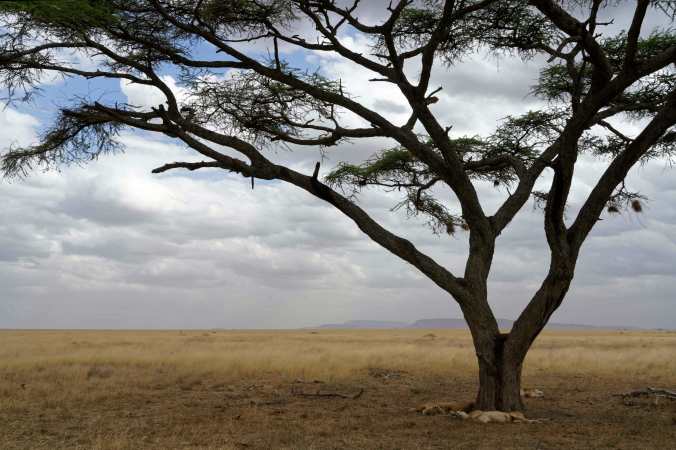
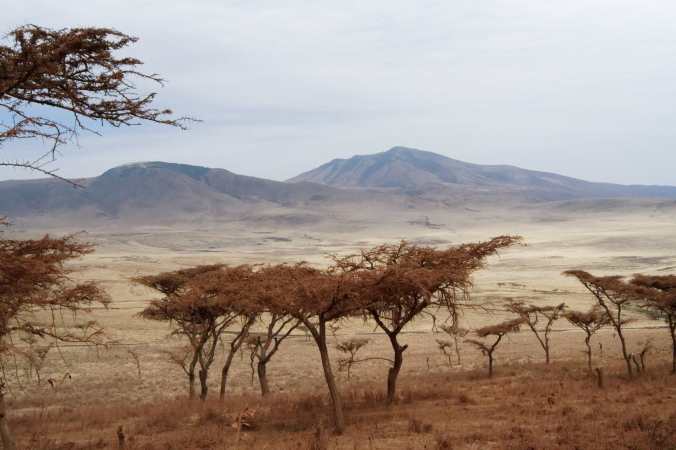
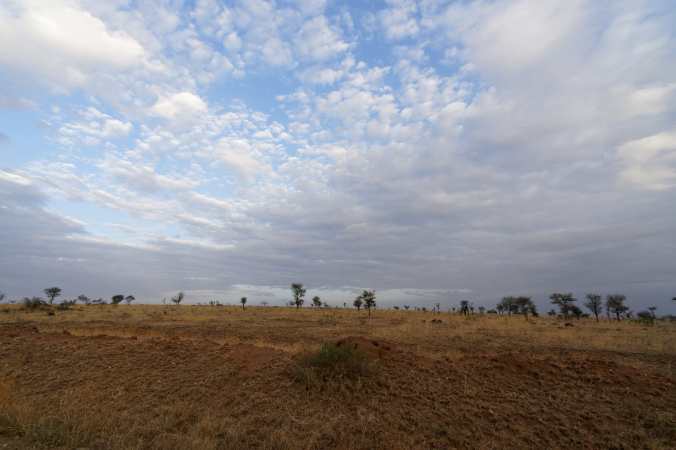
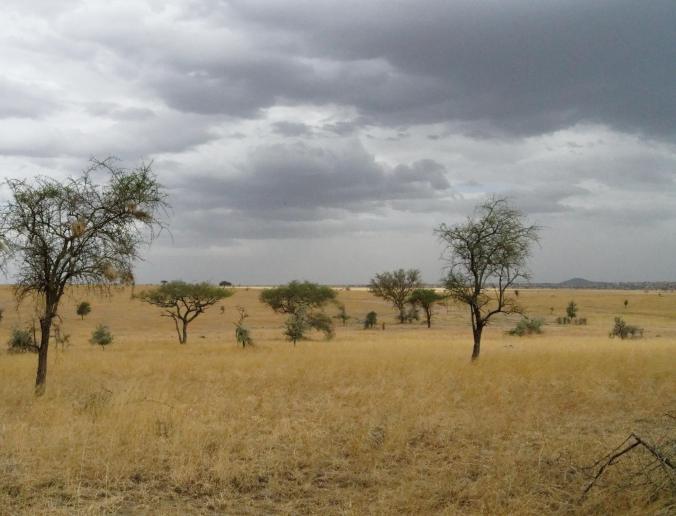
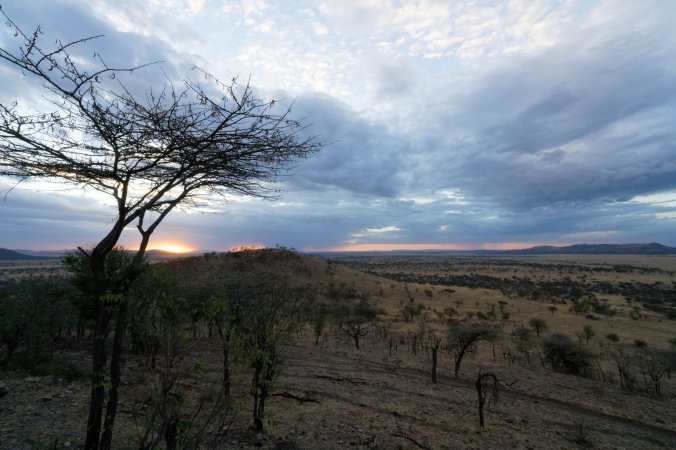
We are here during the dry season when the lush of greens (about which, near water sources, we catch suggestive glimpses) has withered and turned to the windswept browns and mainly tans, yellows, and shimmering golds of late summer. I imagine that some people find such relatively parched flora to be wanting because after all who can stand amidst the desiccated and not yearn for the fullness of life and its affirming colors which so please human sensibilities. But not to recognize the beauty also of the fallow season is a failure of that same sensibility and of its handmaiden imagination. The fields, the plane, the plains of grasses in all their shades of colors ceaselessly blowing or at least undulating in the persistent wind or breeze — whether barren of trees, punctuated by a few isolated ones, or polka-dotted by these anything but polka-dot-like acacias — present an ever-constant and ever-changing tableau of beauty.

DSC02308_DxO

Much else falls under the rubric of, and contributes to, the beauty of this protected and nurtured region of east Africa the size of Connecticut. But even if there were no such much else, the grasses are themselves sufficient to produce aesthetic majesty.

Imagination, a concept I have invoked, comes into play in a variety of its facets. I won’t enter here into a linguistic or conceptual disquisition on them, any more than to suggest that doing so would be a worthy undertaking, and the kind of thing I enjoy. I mention it here because at least for me Serengeti invites and excites to an exceeding degree the active and vivid exercise of imagining. And so, at different times during our days criss-coursing through Serengeti I have considered Serengeti’s attitudes, and have been aware that in doing so I have been tapping into a nexus between the landscape itself and my imaginative faculty.

Glance in almost any direction in Central Serengeti, hold your gaze, and let it sink in, enter you, inhabit you. Whatever your eyes tell you, you are doing much more than seeing. You are experiencing Serengeti eyes, mind, body, and soul, and if your soul is in the moment pitched accordingly, you feel calm and pleasingly slightly elevated, like the sense of being in a reverie but without the intrusion of constitutive thought. You experience the feeling, and the less programmatic associated thoughts, of serenity.

But of course, such a feeling (even for the most beatific) cannot endure forever or even for long, and certainly not in Serengeti, as predators lurk unseen, threaten to appear at any moment, and sometimes actually do. Even when you are not heightened in your awareness of them, such as when a lion saunters by within inches of your jeep, confidently and seemingly sovereignly, predators remain contextually and tacitly on your mind. How could they not? Animals all around, mostly vegetarians, are built with ostentatious visible reminders, most notably the prominent displays of their defensive armature, their ready horns on their heads. Serengeti’s landscape is a world of danger.

For some, the game of cat and mouse between big-cat predators and bigger and smaller prey might in itself excites the heart in a manner that enlivens feelings of raw creation and its consequences, bordering for some on the divine. That is not my reaction, or Sarah’s or Gideon’s. But the grandeur of the vast untamed land and its inhabitants, the existential daily struggle for survival, does wash over you, bathing you in a sense of awe. Awe at the place. Awe at what it preserves. Awe at its historical significance for humanity’s evolutionary endurance. Awe at what, perhaps as nowhere else on this scale, takes place in it every day.

It is, however, possible, and for me it is often easy, to look with a different attitude and effect at these same armed-creatures and the many unarmed ones going about their daily practice of heads bent to the ground, in their own manner feasting on the dried grassy offerings seemingly without a care to their names, which convey their vulnerability. Serengeti, for almost all the time we moved around it, covering hundreds of kilometers, if judged by just what you see, offers the perfect picture of peacefulness.


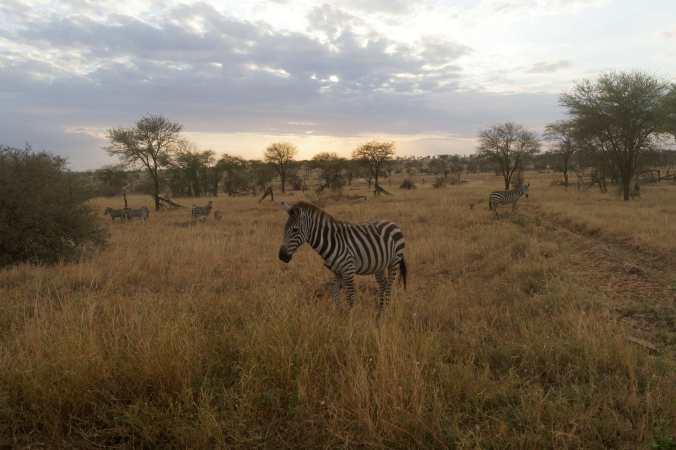
Zebras and gazelles grazing, hippos lazing, giraffes raising, water buffaloes gazing, elephants amazing. Slow and calming, among the live-and-let-live vegetarians, not a care to be seen. By the evidence of the eyes, the principal source of evidence to the quieted mind, for most of the time Serengeti appears a paradise of peace.

But dry it is, in the season we are there.

DSC01907_DxO

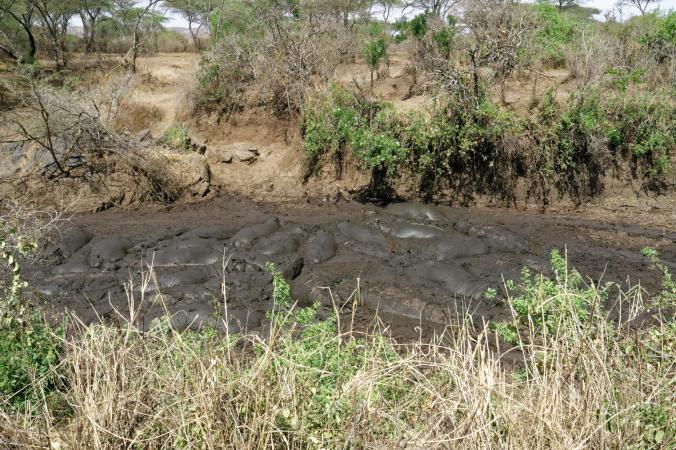
Green, the fertile color above all others, is seen only in often distant patches. You wonder, their seeming fine feeding notwithstanding, how Serengeti’s denizens survive, and if they will. We saw a small water buffalo stagger and fall over from seeming exhaustion (though we couldn’t be sure it wasn’t injured), laying there, legs bent under its bulk, twitching enervated on its way to the end. We looked, with pathos and alarm, at a band of twenty-five hippos piled partly on top of one another, geographically stuck in an all but dry water bed with barely enough thick mud to cover their sun-vulnerable bodies, surely on their way to their ends should the ever-drier dry season last much longer.

DSC02238_DxO_DxO

Those same grasses, of tans, yellows, and golds, which I so love, bespeak a seasonal story, which has led most of Central Serengeti’s inhabitants to flee northward in the cycle of the so-called Great Migration where rains and greens await them. What remains for those animals who chose not to leave, such as zebras, wildebeests, and gazelles of many varieties, and for those who can’t, hippos and elephants among others, is a world to endure because for weeks stretching into months it is desiccated.

There are many kinds of eyes and sensibilities to frame and inform your viewing of Serengeti, including artistic ones. I could write an extensive essay on art movements and individual artists and this landscape. Color, form, rhythm, subject matter, figures, grounds, figure and ground, horizon-line, light, above all light, they all invite many a riff from various artistic perspectives.

DSC02352_DxO

One, which I doubt is obvious, struck me pleasingly full force. I mentioned it to Gideon as we were standing, roof raised, in our Toyota Landcruiser, the Tanzanian custom-constructed safari vehicle of choice, as we looked out on the scenographic passing landscape. He, sharing a love for this blue-chip though curiously under-acknowledged and certainly under-feted painter, responded that he had been thinking the same. With the figures of the isolated and sparsely clumped acacia trees, many of them poetically or tragically broken by elephants, partly severed limbs twistedly hanging down, populating the continuous fields of merging ground and horizons, the landscape evokes the paintings of Yves Tanguy. That Tanguy was singular and masterful in his vocabulary, compositions, and craft only reinforces this association with the singular and tragically poetic quality of Serengeti. Central Serengeti, in places, especially in its western part, is surrealistic, which in itself could be a good or bad thing. In that it is Tanguyan renders it, in this framing, only good.

The Tanguyan quality of Serengeti might in itself suggest another of its experiential dimensions. As superficially repetitive as it can be in places, it nonetheless, or perhaps precisely because of its iterative and slightly changing rhythms, is seductive. It draws you in. You want to lose yourself in it. For hours on end you want more. You become fixated on its majesty and that majesty’s slight alterations. In this sense, to turn to another art, its visual and experiential world is akin to the sound world the best Philip Glass compositions create, of alluring repetition and change. I have been seduced so many times by Glass’ music and now I have been seduced one time, or is it several times (days), or is it many times (hours and minutes) by Serengeti. The landscape is seductive.

Recognizing the plurality of so much of existence, I often propose many most of alls as I adopt different perspectives and values. Each of these experiences of Serengeti justly evokes the most of all rubric. Still, asking for forgiveness for not discussing Serengeti’s yet other unmentioned moods, which I could equally have entered into, I save the most most of all experience of Serengeti – at least for me — for last. Most of all, Serengeti provokes thought. Contemplative thought, associative thought, analytical thought, fanciful thought, fecund thought. Lots and lots and lots of thought – of which this entry is but a brief suggestion. And conversation too. About the qualities I have mentioned here and more. Just ask Sarah and Gideon and Zadock. And ask them about their own landscapes and thoughts. There’s plenty there.

Serengeti, a landscape of majesty and plenty.

Danny, TanzaniaDSC02118_DxO

Cages and Freedom

Wildlife safari, day four. Last Friday morning we arrived in the Arusha parking lot of the multistoried, white concrete Arusha International Conference Center, where the offices of Gosheni Safaris, Ltd are located in a single, top-florescent-lit office room. Before setting foot in that parking lot and catching sight of the high-slung, ready-for-combat, light brown vehicles arrayed along a shady spot, I’m not sure that it had yet occurred to me wonder: What, exactly, is a safari? Or perhaps better, what constitutes a safari today, in this world of international exchange rates (five days into Africa, and we’ve yet to pay for anything in Tanzanian shillings), free WiFi connections, Facebook Likes and Ranger radios and heavily-government-regulated conservation areas and national parks?

DSC02196_DxO

Safari images waft around: baggy, khaki-colored clothes; exotic animals; unending skies reaching heavenward over grass-covered savannahs;

DSC02184_DxO

hours of silence and solitude punctuated by seconds of motion– leopard pouncing! Lions chasing! Giraffes trotting along the horizon line!
The reality of a safari, or at least the one we are on touring the central portion of the vast, world-renowned Serengeti National Park in northern Tanzania, is, well, both similar and different. Yes to savannahs so infinite that if anything can inspire faith in the divine, they will.

DSC02319_DxO.jpg

Yes to baggy clothes in various khaki hues: because tze-tze flies swarm to dark fabrics, the New Yorker’s black uniform poorly serves intrepid cosmopolites on these roads. Yes to elephants flapping their ears to swat flies and other bothersome intruders– though I was in no way prepared for how cute an elephant is, despite its girth, weight, and monumentality.

Fact number one of today’s safari: be prepared to develop an intimate relationship with the vehicle that transports you.

DSC02274_DxO.jpgIt serves multiple functions. A 2017 Toyota Land Cruiser is our viewing platform and our means of locomotion, complete with the deafening soundtrack of sturdy tires on the washboarded, pitted, occasionally nearly invisible dirt road. It supports the throne from which our estimable guide, Zadok (about whom Danny has written much more) surveys the lands, makes plans and advises his more-or-less ignorant charges – us — all the while offering reams of well-considered information about Tanzanian history, politics, culture, wildlife, geography.

These safari vehicles also can be an iron cage of sorts, as regulations at the Serengeti National Park mandate that people enter only when they’ve paid the not-inconsiderable entrance fees — fees so high that many Tanzanians never get to go. Not only that: visitors must be accompanied by a registered, trained, professional guide and, and may not disembark—except in one of the infrequently-encountered picnic areas– from these vehicles, no matter what sort of alluring, exotic, or exciting a spectacle they happen into. So, no to walking long miles on red dirt through wheat-colored grasses, but yes to lazy hours driving around watching zebra and Thompson’s gazelles graze, hippos huddle in the mud, and to occasionally happening onto a pride of lions, just awakening from their mid-afternoon nap.

DSC02114_DxO.jpg

There are several reasons for this, all good but not all readily intuited. Most obvious: safety. Everywhere in this immense bowl of nature (lips turned up at the edges, creating the impression of a complete, defined, articulate world), danger lurks. It isn’t just the lions or the water buffalo, with those ominous-looking horns, made especially for goring. Get too close to something as innocent-looking as a termite mound, Zadok warns, and risk the fangs of a venomous snake, which hang there because it’s termites that they are looking to eat. We safari-ites couldn’t possibly anticipate the dangers this seemingly all-beneficent, nearly silent, hyper-low-stimulation landscape harbors.

Less obvious: the collective action problem. What benefits the individual acting in her own interest will harm the collective good. Clamoring down from our 4WD to kick up the iron-oxide-laden dirt beneath my soles of my sneakers and watch it float back down to the earth, or to get my body a bit closer to that small herd of small zebras, so peacefully being with one another, so tiny in this vast world, could on the one hand frighten the animals or on the other habituate them to humans. Neither good. Someone would try to feed one; someone else might toss a stick; and eventually, or much much sooner than eventually, the ecology of this tens-of-thousands-of-years old habitat would be disrupted. Or just changed.


So this land, perhaps as nearly nowhere else on earth, belongs to the animals, and the safari truck belongs to us. To the antelope, the dicky-dickys, the hyenas and the baboons, the warthogs, ostriches, and giraffes, we are irrelevant passers-by, bothersome only owing to the noise we produce and the dust our tires kick up. We, interlopers in the dwelling that is their world, invite little curiosity.

DSC02257_DxO.jpg

Is there anywhere else on earth where the power structure of the human-animal kingdom has been so effectively subverted?

— Sarah, Serengeti National Park, Tanzania