A few months ago I was lunching with Robin Middleton, one of my doctoral advisors, who was born and trained in South Africa — Cape Town, I think– before immigrating first to the UK, then, eventually, to New York City. Discussing the around-the-world trip, I ventured the possibility of South Africa as a destination, as dear friends of ours treasure the year that they lived with their then-small, now-grown children in Grahamstown,

home of august institutions of higher learning and host of the annual, renowned Grahamstown Arts Festival, which attracts performing artists and musicians from all over the continent.
South Africa? Robin remarked. It’s quite beautiful. But there’s nothing for you there.
He meant buildings. I fell in love with architecture at around age 17. Since then, I’ve traveled to dozens of countries; not a single year has passed without my boarding at least one plane to some far-flung (though this trip has made abundantly clear that that’s a relative term, always) location. As Danny, Gideon, and I planned our round the world adventures, I realized that I undertook practically every one of those prior trips with the explicit purpose of seeking out buildings by specific architects, or analyzing urban configurations, or studying architecture, urban, and landscape history. Singapore: Safdie, WOHA, the impressively progressive city planning. India: Kahn’s Ahmedabad, Le Corbusier’s city of Chandigarh, Old Delhi and New Delhi, Moghul monuments, Rajput forts. Even Iceland, where I went to seek out the work of Granta, an impressive Reijkavik-based firm. Colonial, missionary outposts and mining towns in northern Mexico.
In this RTW trip, cities and buildings share equal billing with animals (safari), birds (Lake Manyara, Birds of Eden in South Africa),

savannahs (Serengeti in Tanzania), deserts (Sossussvlei in Namibia), bodies of water (black-green fjords in Norway, the Indian Ocean), beaches (Port Elizabeth and the Garden Route).
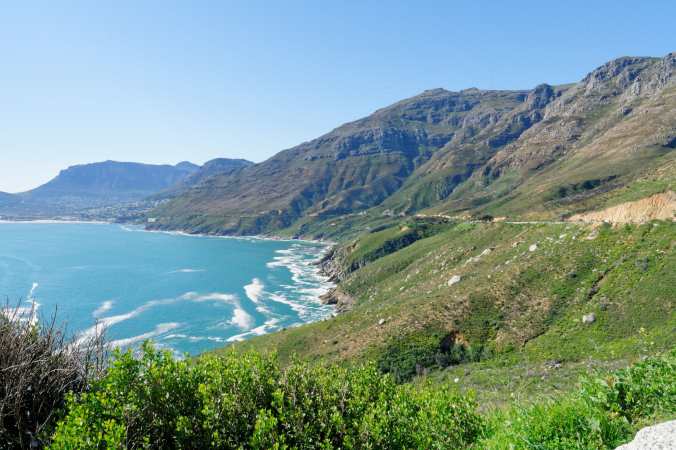
And with a cosmopolis of mountains: mountains in schist and gray granite, mountains in red sandstone, mountains of sand, aka dunes. Mountains covered in scrub brush and green.
This wider-angled approach to traveling, analogous to swapping out my well-worn 55-200 mm. zoom for the 16-35 mm one I’m currently using, has proved a liberation of sorts, about which I was needlessly anticipatorily anxious.
South Africa. Family, educational, and social obligations, along with many long days of driving from place to place, have simultaneously occupied our minds and kept us away from our computers. So to begin, I shall summarize our itinerary. We landed in Johannesburg and loaded everything directly into our sturdy Rav 4 Toyota SUV rental for the long drive south east, through Gautung and parts of Kwazulu-Natal and the Eastern Cape to the northern tip of the Royal Natal National Park in the Drakensberg, where we planned to hike the hair-raising (couldn’t be nail-biting, because you need both hands to ascend) Sentinel, which appears on many lists as one of the greatest hikes on the planet. After a few days in the Witsieshoek Mountain Lodge, we loaded everything into the car, driving south to the city of Port Elizabeth via the Golden Gate National Park, the desiccated and lovely landscape of the Free State, and through the Eastern Cape.
It’s winter here. A first thing we discovered about South Africa is that central heating does not exist. The Drakensburg was particularly uncomfortable: now I know why so many Africans walk around with ski-hats on their heads. It’s cold! The area where the Wietsihoek lodge is located rises around 6,000 feet above sea level. One day 120-km-per-hour winds forced one group of hikers that we met (after they survived) to crawl, literally crawl, across a mountain ridge to avoid being blown away.
Danny has goaded me into writing more about the hike up the Drakensburg escarpment to the Sentinel and the bowl-like Amphitheater, which at its highest point rises about 10,000 feet above sea level. And I’m happy to comply.

At first, the hike takes you up a path nicely outfitted with pavers; shoes get a good grip as you survey the expanse of Phuthaditjhaba’s surrounding valley. But within 45 minutes you find yourself leaning into sheer, sloping rock planes, searching for toe-holds, and the real tenor of the expedition reveals itself. One unlucky slip could be fatal, tumbling your helpless body hundreds of feet into that ravishing ravine.

Danny prudently retreated, leaving me on my own to ascend to the Amphitheater, which included scaling two storied iron ladders, affixed every ten feet or so to 30-50 foot-high cliffs introduced by a narrow landing, really nothing more than a pause in the cliff.
![IMG_6544[15644]](https://coordinatinggoldhagens.com/wp-content/uploads/2017/09/img_654415644.jpg?w=676) (Every guidebook will advise you to be prepared for these, and my experience on them was, I discovered, shared by all my fellow hikers. We all thought we were prepared. No one was prepared.)
(Every guidebook will advise you to be prepared for these, and my experience on them was, I discovered, shared by all my fellow hikers. We all thought we were prepared. No one was prepared.)
The ladder ascent stopped time, opening up one of those – I kid you not – “you can do this, you can do this” moments. I swayed back and forth on that clanking ladder, praying that my hands would stop sweating, or at least stop sweating quite so much. And then! The summit. ![IMG_6539[15643]](https://coordinatinggoldhagens.com/wp-content/uploads/2017/09/img_653915643.jpg?w=676)
Of which I have only this photo, having wisely surrendered the camera to Danny hours earlier. Gideon had reached the legendary amphitheater long before, accompanied by a young Dutch couple.
Together we descended with our new German friends, Jürgen and Kersten, chatting about traveling, and about life with and without children, while their 17-year-old daughter Celina chatted happily with Gideon about American rap music and life aspirations.
![IMG_6552[15646]](https://coordinatinggoldhagens.com/wp-content/uploads/2017/09/img_655215646.jpg?w=676)
By the end of the day, legs were sore, stories were told and recounted, and all of us felt as though we’d honored the majesty of this place.
— Sarah
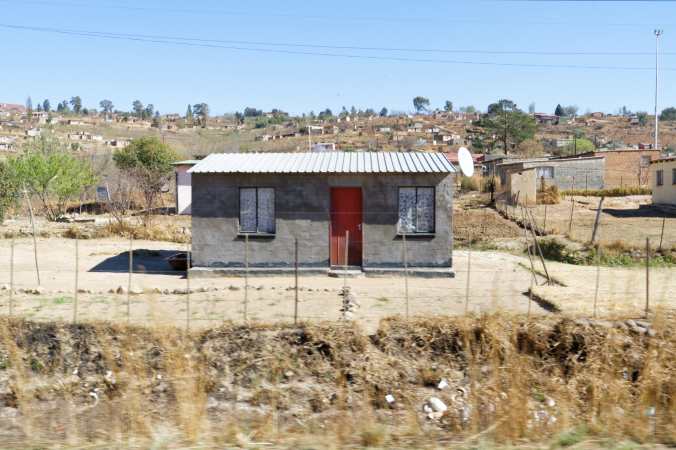


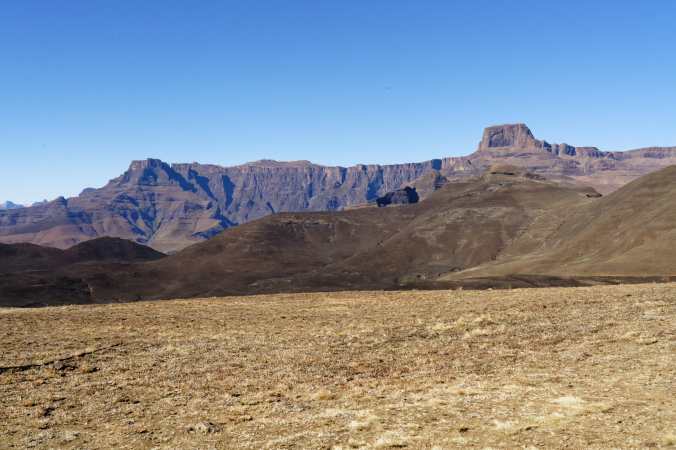


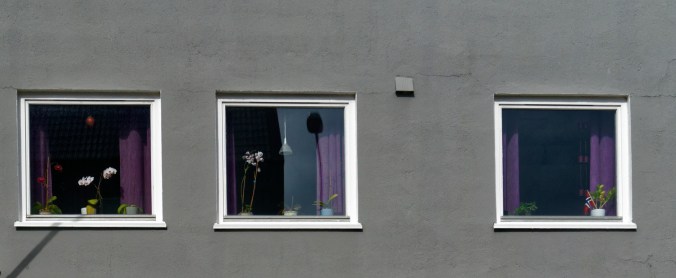
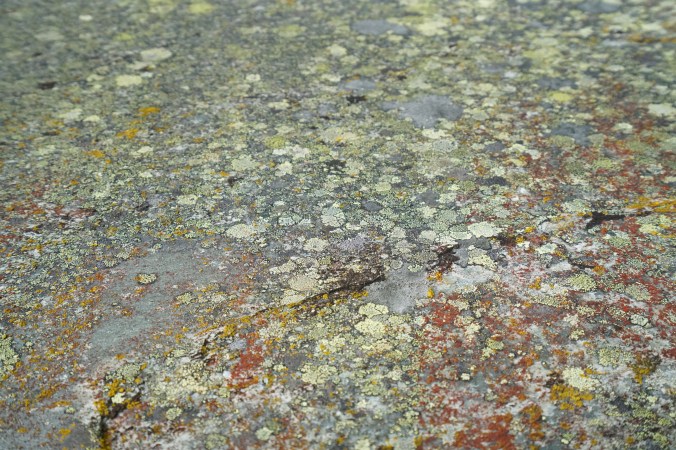
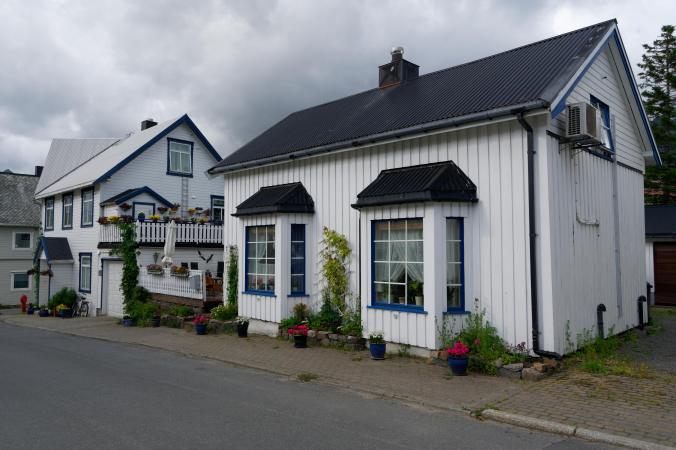
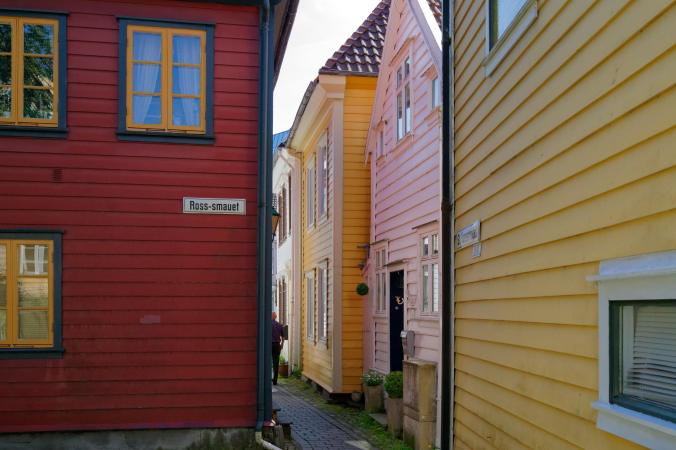 clouds and sky at different times of day. In landscapes, I’ve been gravitating toward imbalanced compositions – one side in deep shadow, the other suffused with rosy hues.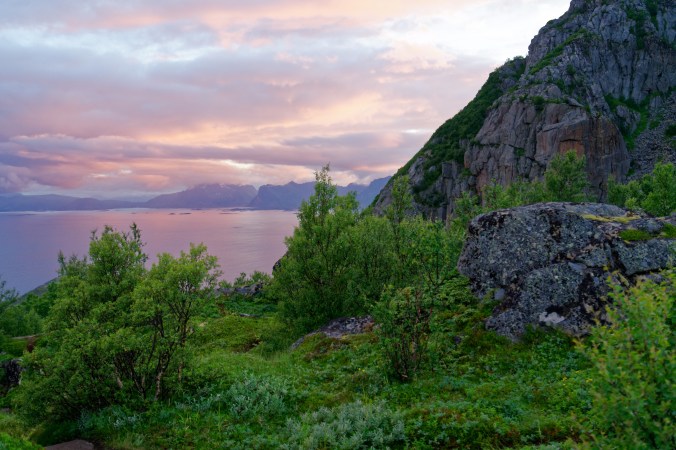

 Sarah and I set out on our adventure with the purpose of writing books, one by her and one by me, very different in character, each possible only through this long journey. More on them in a moment. We also set out committed to the writerly experiment of this let-the-spirit-move-us collaborative blog, which includes Gideon, who, I hope, will make his entry here soon and thereafter frequently. For Sarah and for me (about Gideon, who also has other writing projects, I’m not sure), the question of what goes where is live, and, at least for me, has not been resolved clearly.
  Roughly speaking, my schema is to offer you accounts and observations about the world out there which we encounter on our carefully chosen itinerary of barely scratching the world’s surface, even with a year of scratching at our disposal. The inner workings and inter-workings of the three of us – what it is like to travel with two loved ones for a year, and how the many and ongoing encounters with one another and with the offerings and demands of the world we will wend our way through affect and change us as individuals and in our relationships as parents and child, as married people, as individuals positioned differently in the ever-changing arrays of living – these things about us are the stuff and soul of the book. The rub might be obvious: the line, actually lines demarcating what’s out there from what’s in here (the family circle and each of our minds and hearts) is hard to draw, especially as the inside is implicated in the outside, most essentially because both constitute and are filtered through experience, thought, and language. (Taking and posting photos – Sarah’s and Gideon’s domains – are more clear cut.) So, deciding what’s in and out of the blog, because what constitutes the in(side) and the out(side) of the respective worlds we are living and seeking to understand is often indeterminate, is an ongoing and inherently messy and probably shifting process which I am negotiating with that very tough and a bit ambivalent negotiator, myself. As to the other negotiator involved here, I think less beset by this manner of thinking, I’ll leave it to her to engage her blog/book issues herself.
 Lofoton, above the Arctic Circle in midnight summertime sun Norway, was a spectacular place to begin our journey. The breath-taking and -giving monumental landscapes, which can be imaginatively discerned well enough through the miniaturized photos (which I expect Sarah will happily insert), as a undulating symphony of approachable mountains and hills, and lakes and fjords. We drove for hours through it at nearly every hour of the 24-hour day, including 1 in the morning, 5 in the morning, 9 in the evening, 11 in the evening and the more conventional sightseeing times in-between. Riveted and scanning, still and pointing, quiet and in full conversation (see shadows above), we drove, we walked, we looked, we breathed, we experienced Lofoton. For two days our ordinary rhythms of sleeping and waking, eating and… we cast asunder. We walked (see Gideon, double above), we hiked (straight up a small mountain nearing midnight), we drank coffee outdoors in the just warm enough weather, as we lived according to our own time- and activity-wants. We valiantly twice tried to see the sun at solar midnight descend, bounce, and rise slightly above the horizon, and failed for differently reasons. The attempts felt (in our exaggerating subjectivity) near-heroic, so we, the reasonable agents we are, felt disappointed yet satisfied that we had done our best. And so, we have yet another reason to return to Lofoton, to find and follow the midnight sun.

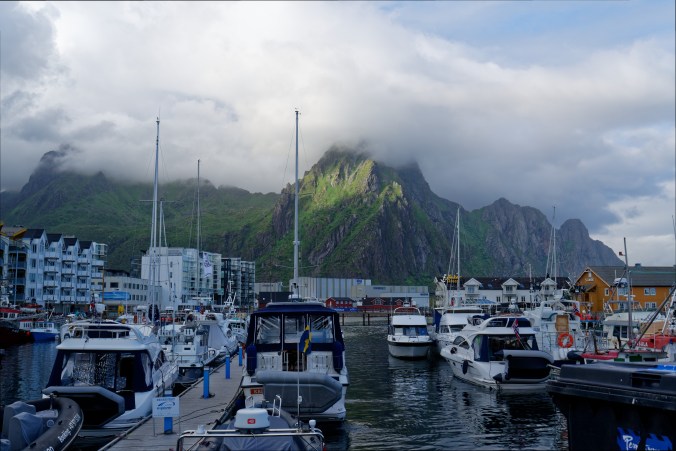 Evidence of human settlement stretches back 11,000 years. Since 800 CE men (that’s right, men; I know because of a photograph of Sunday worship in Lofoten Cathedral, ca. 1895) have migrated here in the winter and early spring, following the cod, who come to the area to spawn. One of the early Norse sagas tells of one Viking who sailed to England after a fishing expedition, and traded reams of dried fish for other essential goods. Whole, split dried fish hangs everywhere, even in the local equivalent of a 7/11.
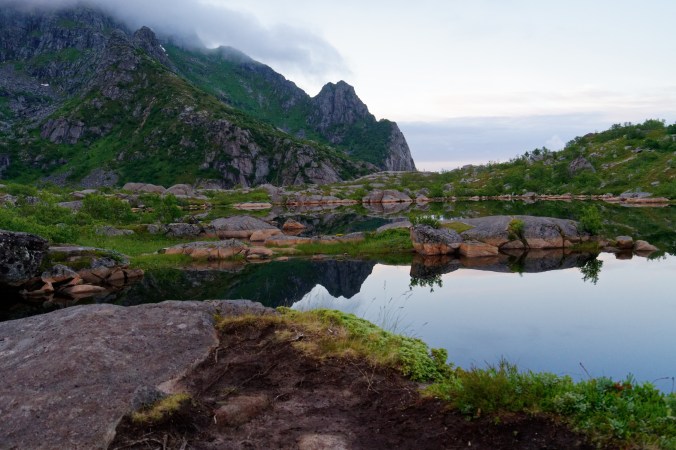 Dawn follows sunset within the space of half an hour: one moment, daylight is a golden red; the next, a cool morning blue. Astonishing. As if the world is birthing itself anew before your eyes; the diurnal cycle of hours unending, a joyful noise unto the interstices of time. And yet my mind rushes to imagine its biannual opposite: here, Nordspeople living in unremitting darkness for many winter months.
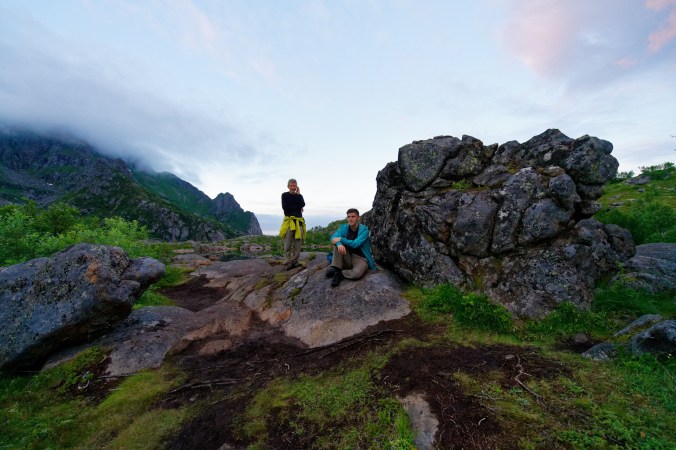 Last night, as we drove back to our Svolvaer flat at 1:30 am following a midnight hike in Henningsvaer in failed chase of a full view of the storied midnight sun (failed because, at the critical moment, we lacked the necessary northern sightlines), I noted that home after home in this town left a light illuminated indoors. They couldn’t get enough of it, even during the summer, I thought, perhaps a bit morbidly.
 Looking out a window: rays of sun shine between the mountaintop ridge and the fluffy cumulus. Walking the street from home to café beneath a looming cliff. Crisp air everywhere: it’s mid-July, and hovering around 50 degrees.
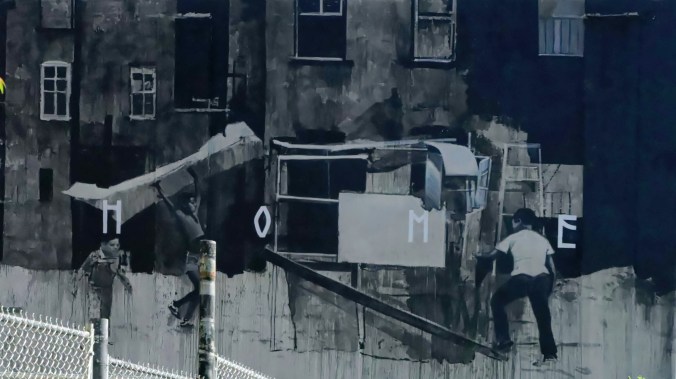 We’re traveling. To a lot of places, on six out of seven continents.
 The quotidian: we’re frantically trying to organize everything, financial, virtual, physical. Transfer responsibility for bills to a virtual bank. Prepay maintenance fees, due in January. Who’s going to shovel the sidewalk this winter? Water the plants? Will the vacation override from our health insurance come through in time to allow us to secure needed medications?

 Coordinating Goldhagens